


A lack of access to capital, business skills and markets continues to hold back many small business owners, limiting their ability to expand despite having the ambition and potential to grow.
NCBA Bank is seeking to address these challenges by combining financing with mentorship, training and community investment, with women and young entrepreneurs at the centre of its programmes.
Through its “Change the Story” sustainability agenda, the bank has committed KSh100 million annually to community initiatives targeting education, skills development, sports and enterprise support.
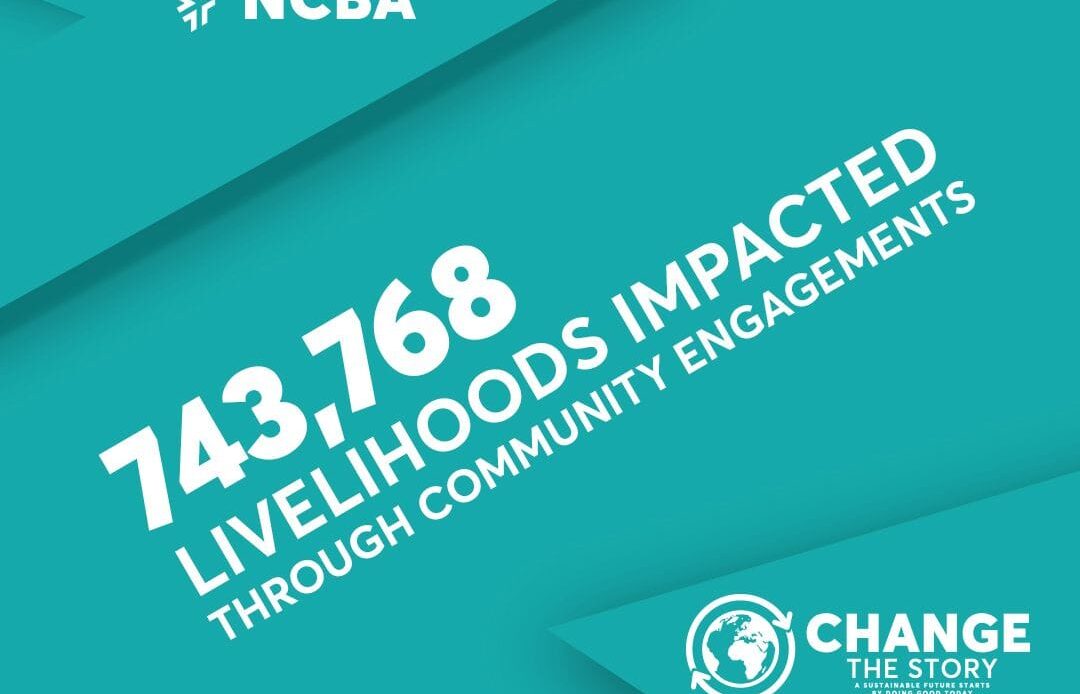
In the first half of 2026, NCBA says it invested KSh80.1 million in community initiatives that reached more than 480,000 people, while empowerment programmes benefited over 13,000 young people.
One of the programmes placing women entrepreneurs in the spotlight is the Affirmative Finance Action for Women in Africa (AFAWA) Acceleration Programme.
In April, NCBA onboarded 42 women agripreneurs working in human food and animal feed value chains, building on an earlier cohort of 38 women.
The programme, implemented with the African Guarantee Fund (AGF), SME Support Centre and Unga Group Plc, combines financing with technical training, mentorship and market access.
The first cohort received cumulative funding and training valued at USD 1.5 million, while NCBA expects to extend up to USD 5 million in lending across the two cohorts.
For women running businesses in agriculture, the intervention is designed to tackle one of the most persistent barriers to expansion: access to affordable financing, particularly where conventional collateral requirements can lock entrepreneurs out of formal credit.
NCBA estimates that the initiative could help create about 300 jobs while strengthening around 80 women-owned SMEs involved in food production and related value chains.
Beyond financing, the bank is investing in the skills entrepreneurs need to manage and scale their businesses.
Through its Enterprise Development Programme with Strathmore Business School, more than 300 NCBA customers have so far benefited from training covering financial management, operations, marketing, innovation, leadership and digital transformation.
In late 2025, 24 SME customers drawn from manufacturing, retail, agribusiness, construction, logistics and professional services completed a 16-week programme combining classroom learning with practical coaching.
Similar efforts have been extended through partnerships such as the Business Development Programme with Kabarak University, which focuses on strategy, finance, innovation, and sustainability.
NCBA has also been taking financial literacy and advisory services closer to entrepreneurs. In February 2026, the bank brought together more than 100 Nairobi traders for an engagement focused on financial literacy and business advisory support.
For young people, the bank’s community investment extends to education and mentorship. NCBA has invested KSh12 million in scholarships supporting more than 150 students, while mentoring has reached over 300 others. Staff have also volunteered in youth-focused initiatives, including the 2026 Edumed Trust programme.
The bank’s SME support ecosystem also includes partnerships with institutions such as AGF, Proparco, and Water.org, alongside digital solutions including NCBA Boosta and cash-management platforms designed to help businesses manage their finances.
Together, these interventions reflect a shift from viewing SME support simply as lending to building an ecosystem around entrepreneurs.
For a trader seeking better financial skills, a young person looking for mentorship or a woman-owned agribusiness struggling to secure capital, such support can determine whether a promising enterprise remains small or takes the next step toward sustainable growth.
As NCBA advances its Ubuntu strategy and sustainability ambitions to 2030, the bank says its community investment will continue focusing on inclusive growth, enterprise development, job creation, and stronger, more resilient communities.