


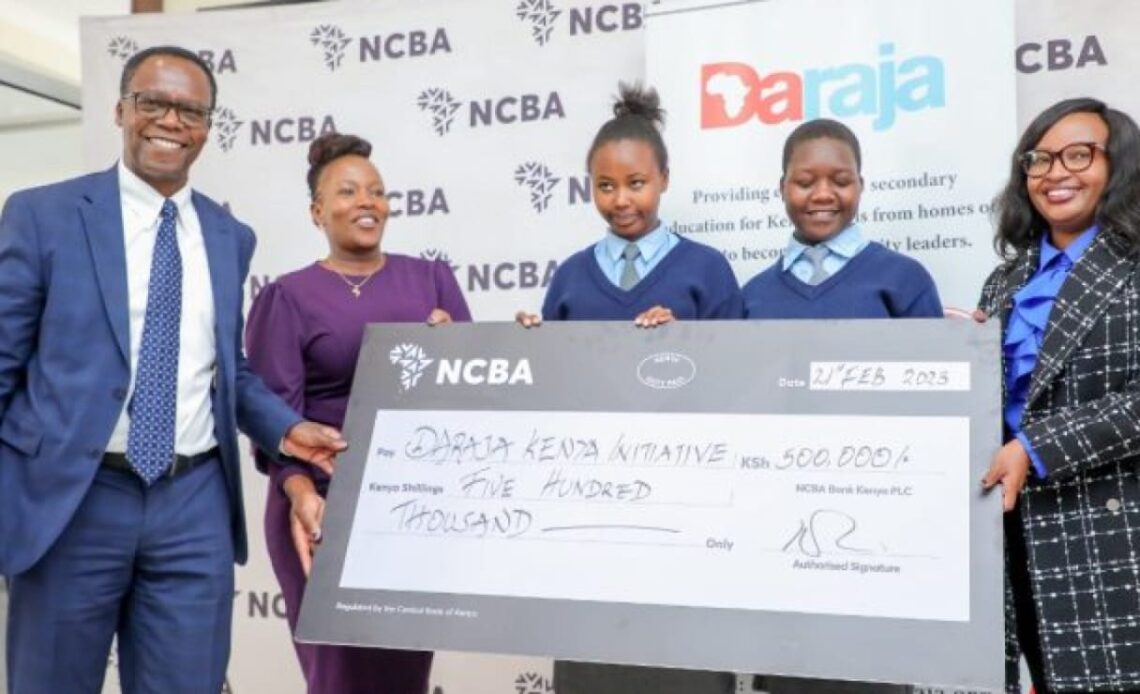
A school fee can determine whether a bright child walks through the school gate or stays home. But for learners facing poverty, loss of parents, disability or displacement, staying in school often requires more than a fee payment.
This is where NCBA Group’s education scholarship programme comes in, supporting hundreds of Kenyan learners whose academic potential could otherwise be undermined by difficult circumstances.
Anchored in the bank’s Youth Education and Enterprise Citizenship pillar and its wider “Change the Story” sustainability agenda, the programme combines financial assistance with learning materials and mentorship.
The goal is not simply to pay fees, but to help vulnerable learners remain in school, complete their education, and develop into future leaders.
Read: More Than KES 100 Million Invested
Since 2007, NCBA has channelled more than KES 100 million into its education scholarship initiative. Education remains a central part of the bank’s community investment, supported by its commitment of KES 100 million annually to community programmes across the region.
The investment has grown over the years.
In 2023, NCBA allocated KES 11.1 million to support 100 students. By 2025, the amount had increased to about KES 12 million, benefiting more than 150 learners.
In February 2026, the Group announced more than KES 13 million for 177 students through nine partner organisations, marking the programme’s largest single-year cohort.
The support includes school fees, textbooks, uniforms, and dormitory supplies, helping address some of the practical barriers that can push disadvantaged learners out of school.
Supporting Learners Facing Difficult Circumstances
NCBA’s scholarships prioritise both need and potential. Beneficiaries typically include orphans and half-orphans, children from destitute families, survivors of domestic violence or displacement, and learners living with albinism or other disabilities.
The programme covers primary, secondary, and tertiary education, allowing students to progress through different stages of their academic journey without education being interrupted by financial hardship.
NCBA has built a network of partners to identify and support learners across the country. They include Palmhouse Foundation, which has worked with the bank for 16 years, Edumed Trust, SOS Children’s Villages Kenya, Dr Choksey Albinism Foundation, M-Pesa Foundation Academy, Daraja Academy, KenSAP, WEDCO Kenya, Kianda Foundation and Crystal Asige Foundation.
Beyond Fees: The Power of Mentorship
For NCBA, education support does not end when tuition is paid.
Mentorship has become an important component of the programme, giving students access to guidance on leadership, careers, life skills, and personal development.
In 2025, Group Director for Marketing, Communications and Citizenship Nelly Wainaina led more than 20 mentors in a session that reached over 350 students at Palmhouse Foundation, including 50 NCBA-sponsored beneficiaries.
The bank has further revived a Boys Mentorship Programme with the Kenya Community Development Foundation at Upper Hill School, reaching hundreds of young men with leadership, career and life-skills guidance.
Creating a Cycle of Opportunity
NCBA has described education as “one of the most powerful equalisers,” reflecting its belief that access to learning can help reduce inequality and unlock opportunities.
In June 2026, the bank highlighted its KES 12 million investment, supporting more than 150 students, including learners with albinism, through its partnership with the Dr Choksey Albinism Foundation.
Group Managing Director John Gachora has described education as essential to Kenya’s social and economic development, while Chairman James Ndegwa has called it a cornerstone of the bank’s Citizenship agenda and a second chance for young people.
With more than 300 students enrolled under the Youth Education and Enterprise pillar in recent years, the impact is increasingly cumulative.
The ambition extends beyond helping students graduate. NCBA hopes beneficiaries will become professionals, entrepreneurs, leaders, and community builders who eventually return value to society.
In a country where more than 1.8 million school-age children remain out of class, the bank’s sustained investment offers a glimpse of what targeted private-sector support can achieve.
For the learners receiving the opportunity, the scholarship is not simply financial assistance. It is a chance to stay in school, pursue a dream, and, ultimately, change the story for someone else.