


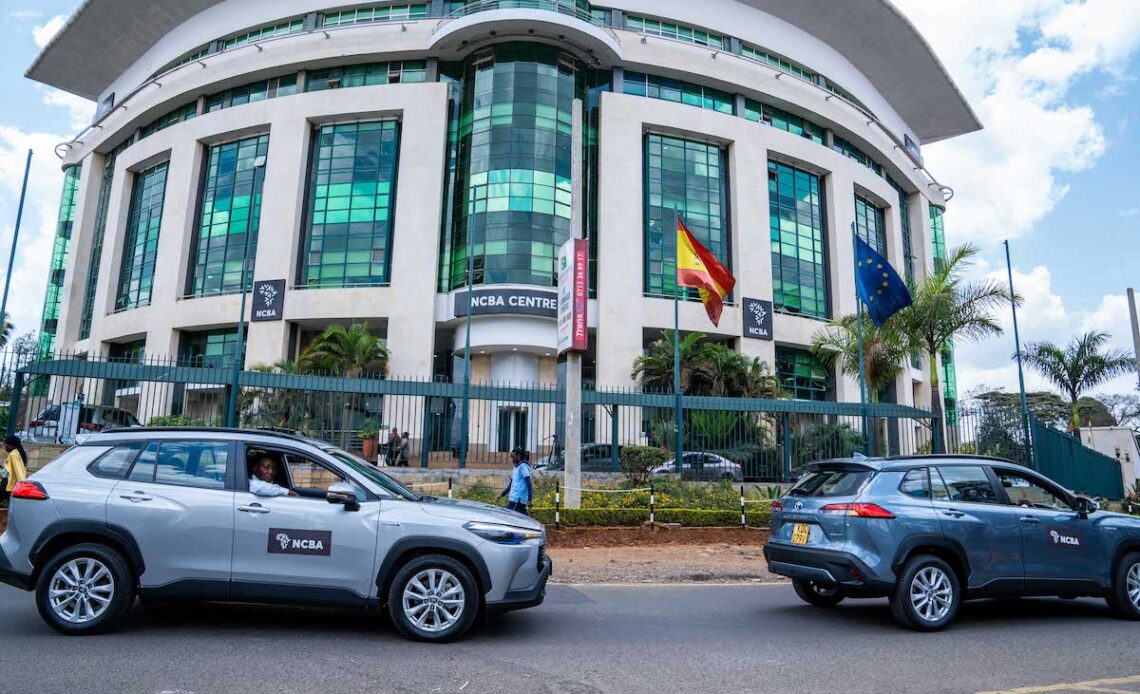
A cleaner car can look like an expensive dream until financing changes the equation. For a taxi driver weighing the cost of fuel against daily earnings, a logistics business trying to reduce operating expenses, or a small enterprise considering its first electric vehicle, the biggest barrier to electric mobility is not always willingness to change.
Access to affordable financing and reliable charging infrastructure can determine whether the switch happens at all.
The bank has established a KES 2 billion dedicated electric vehicle (EV) fund to finance electric mobility across its markets, positioning itself as the first bank in the region to establish such a facility.
The initiative is designed to support both personal and commercial EV purchases as demand for cleaner transport grows in East Africa.
The fund forms part of NCBA’s wider Change the Story sustainability strategy, under which the Group has committed to mobilising KES 30 billion in green and sustainable financing by 2030.
The move comes as transport remains an important part of the climate conversation, while businesses and motorists continue to contend with fuel costs and the need to operate more efficiently.
Rather than treating electric mobility simply as a technology story, NCBA is approaching it as a financing opportunity.
Its asset finance business is being used to help businesses and individuals acquire electric vehicles without having to meet the entire purchase cost upfront. The approach could be particularly important for commercial operators, where vehicle running costs directly affect profitability.
NCBA has also expanded its support beyond the vehicles themselves.
The Group has installed six EV charging stations across Kenya, Uganda and Rwanda. Such infrastructure is critical because the availability of charging points can influence whether motorists feel confident enough to move away from conventional petrol and diesel vehicles.
For a driver, an electric vehicle that cannot be conveniently charged is of limited practical value. For a business operating a fleet, charging availability can determine whether electric vehicles can reliably complete their daily routes.
NCBA’s strategy therefore combines financing with efforts to build the ecosystem required to make electric mobility more practical.
The bank’s regional activity offers an indication of how this approach is being translated into real businesses.
In Rwanda, NCBA Bank partnered with Kabisa to launch Umurabyo, described as the country’s first affordable electric taxi fleet. The initiative targets the transport sector while giving drivers access to vehicles that can potentially reduce their operating costs and emissions.
In Kenya and other markets, the bank has also highlighted financing for commercial electric vehicles, including trucks and vehicles used by businesses and logistics operators.
The broader green-finance programme is already gaining momentum. NCBA says KES 11.5 billion has been mobilised towards its KES 30 billion green and sustainable financing target, with more than KES 2 billion deployed in green financing across the Group in 2025.
Electric mobility is being financed alongside other areas such as renewable energy, energy efficiency, circular economy initiatives, water management, smart agriculture, clean cooking and carbon financing.
The significance of the EV fund, however, goes beyond the KES 2 billion headline figure.
It signals a shift in how financial institutions can influence everyday choices. When banks make cleaner technologies easier to finance, the decision to adopt them becomes less dependent on upfront purchasing power and more connected to long-term operating costs and business viability.
For a taxi operator, this could mean accessing an electric vehicle through structured asset finance. For a logistics company, it could mean gradually replacing a conventional fleet. For an individual motorist, it could provide a pathway to cleaner personal transport.
NCBA’s sustainability ambitions extend beyond mobility. The Group has committed to reducing its Scope I and II operational emissions by 50 per cent by 2030, eliminating single-use plastics, increasing recycling and supporting the planting of 10 million trees by the same year.
Group Managing Director John Gachora has previously described sustainability as embedded in NCBA’s DNA, with the bank seeking to provide financial solutions that address climate challenges while supporting economic growth.
As electric mobility takes root in East Africa, the real test will be whether financing and infrastructure can move the technology beyond early adopters and into the hands of ordinary businesses, drivers and households.
NCBA’s KES 2 billion EV fund is an attempt to close that gap, one vehicle, one fleet and one charging station at a time.