


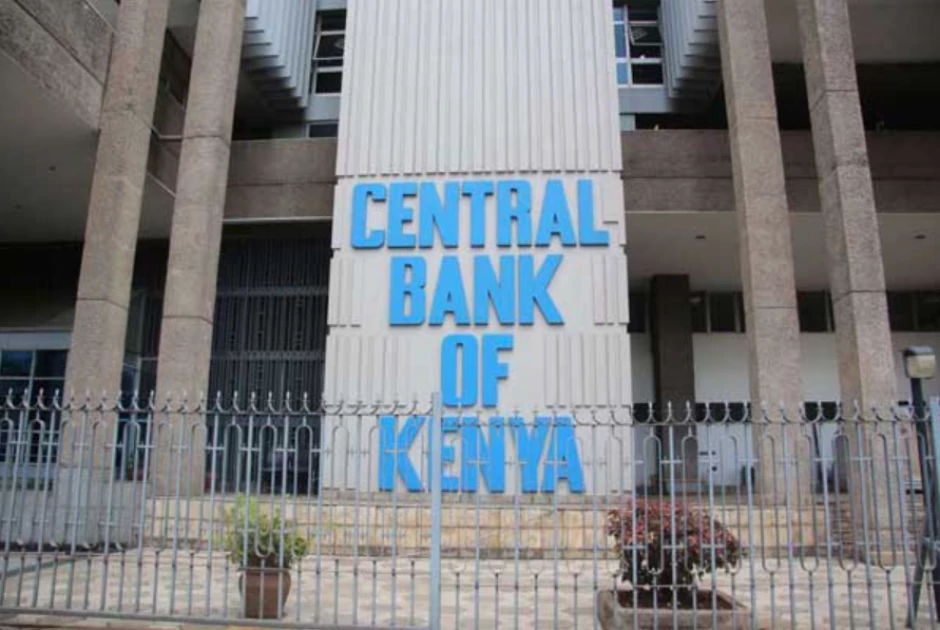
The Central Bank of Kenya (CBK) has retained the Central Bank Rate (CBR) at 8.75 percent, citing stable inflation expectations, improving private-sector credit growth and stability in the Kenya Shilling.
The decision was reached by the Monetary Policy Committee (MPC) during its meeting on August 11, 2026, amid continued uncertainty in global markets arising from elevated energy prices and disruptions to oil supplies linked to the conflict in the Middle East.
The MPC said Kenya’s overall inflation is expected to remain within the target range in the near term, assuming a gradual de-escalation of the conflict.
CBK said the outlook would be supported by appropriate monetary policy measures, government interventions, including subsidies and the temporary reduction of VAT on fuel, as well as a stable exchange rate.
The regulator noted that average commercial bank lending rates have declined further, contributing to an improvement in private-sector credit growth.
“The current monetary policy stance, with the CBR unchanged at 8.75 percent, remains appropriate,” the MPC said, noting that the policy would help keep inflation expectations anchored within the target range while supporting exchange-rate stability.
Shilling Remains Stable
The Kenya Shilling remained broadly stable against major international and regional currencies during the week ending August 13.
The currency traded at KSh129.40 against the US dollar on August 13, compared with KSh129.41 on August 6.
Kenya’s foreign exchange reserves remained adequate at USD15.245 billion, equivalent to 6.3 months of import cover, as of August 13. The level is comfortably above the CBK statutory requirement of at least four months of import cover.
Remittances Rise 16.2 Percent
Remittance inflows increased significantly in July, reaching USD436.6 million, compared with USD375.6 million in June, representing a 16.2 percent increase.
CBK attributed the rise to higher inflows from key source markets.
However, cumulative inflows for the 12 months to July 2026 declined by 1.8 percent to USD4.987 billion, from USD5.080 billion recorded during the corresponding period in 2025.
Remittances remain an important source of foreign exchange earnings and continue to support Kenya’s balance of payments.
Money Market Remains Liquid
The domestic money market remained liquid during the week ending August 13, with commercial banks’ excess reserves averaging KSh17.8 billion above the 3.25 percent Cash Reserve Ratio requirement.
The Kenya Shilling Overnight Interbank Average Rate (KESONIA) remained unchanged at 8.75 percent.
Interbank market activity increased, with the average number of transactions rising to 25 from 21 the previous week. The average value traded also increased to KSh18.8 billion, from KSh13.4 billion.
Investor demand for government securities remained strong.
The August 13 Treasury bill auction attracted bids totalling KSh40.8 billion against an advertised KSh28 billion, representing a performance of 145.7 percent.
Meanwhile, the August 12 Treasury bond auction received bids worth KSh460.4 billion against an advertised KSh150 billion, representing a strong 307 percent performance.
NSE Records Gains
At the Nairobi Securities Exchange, the NASI increased by 1.40 percent, while the NSE 25 and NSE 20 share price indices rose by 1.39 percent and 0.43 percent, respectively.
Market capitalisation increased by 1.40 percent, although total shares traded and equity turnover declined.
Bond turnover in the domestic secondary market increased by 27.59 percent, while yields on Kenya’s Eurobonds declined by an average of 2.68 basis points.
Global Markets
Globally, inflation concerns eased during the week. US headline inflation declined to 3.4 percent in July, from 3.5 percent in June, while the US Dollar Index weakened by 0.4 percent.
However, oil prices rose sharply. Murban crude increased to USD79.29 per barrel on August 13, from USD72.54 on August 6, amid heightened Middle East tensions.
Spot gold prices also climbed to USD4,350.16 per ounce, from USD4,239.23 the previous week.