

Kenya’s economy is projected to grow by 4.8 per cent in 2026, down from an earlier forecast of 5.1 per cent, as global economic uncertainties and domestic fiscal pressures weigh on the country’s growth prospects.
In its revised 2026 Economic Outlook released during the NCBA Economic Forum in Nairobi on Tuesday, November 3, NCBA Group Plc warned that successive external shocks could further test the resilience of the Kenyan economy.
The regional financial services provider projected economic growth of between 4.0 and 5.0 per cent in 2027, citing geopolitical tensions, volatile commodity prices, changing weather patterns and uncertainty surrounding the upcoming General Election.
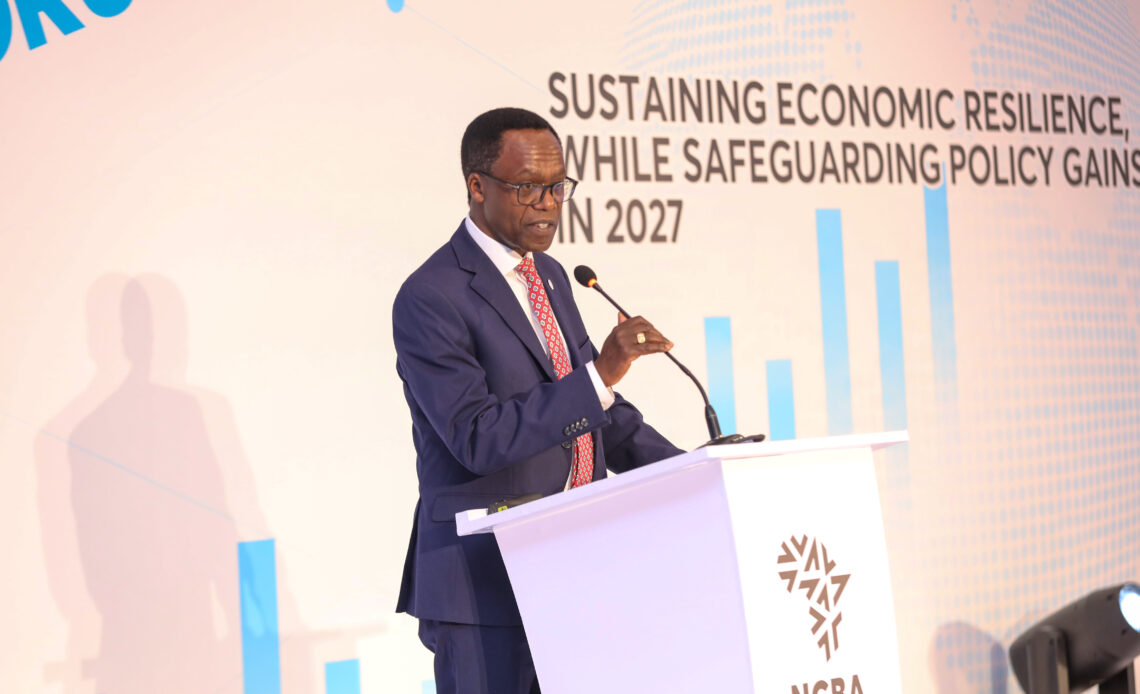
Speaking during the forum, held under the theme “Sustaining Economic Resilience, While Safeguarding Policy Gains in 2027,” NCBA Group Managing Director and Chief Executive Officer John Gachora said Kenya had demonstrated resilience despite a challenging global economic environment.
However, he cautioned that the country’s ability to withstand repeated economic shocks was not unlimited, calling for measures to protect existing macroeconomic gains while accelerating economic growth.
“The year 2026 has been characterised by a convergence of shocks, including the crisis in the Middle East, the ongoing Russia-Ukraine conflict, a sudden tightening of monetary policy in several key economies and volatility in sovereign bond markets,” said Gachora.
He added that Kenya needed to balance the protection of economic stability with efforts to expand investment, strengthen productive sectors and create employment opportunities.
National Treasury Cabinet Secretary John Mbadi, who attended the forum, highlighted improvements in Kenya’s economic performance since 2022, noting that the economy recorded an average growth rate of 5 per cent between 2022 and 2025.
“We project economic growth of 5.1 per cent in 2027, with inflation remaining within target and the shilling maintaining stability. Safeguarding these gains will require sustained fiscal discipline, improved revenue mobilisation and better management of public expenditure. We are also undertaking reforms to improve access to credit, including transparent, risk-based credit pricing anchored on KESONIA, modernised payment systems and the transformation of the Credit Guarantee Scheme to unlock more lending to SMEs,” said Mbadi
He noted that rising government expenditure, particularly domestic debt interest payments and pension obligations, continued to limit the resources available for development spending.
The Treasury Cabinet Secretary also outlined ongoing reforms aimed at improving access to credit for businesses, particularly small and medium-sized enterprises (SMEs).
These include introducing transparent, risk-based credit pricing anchored on the Kenya Shilling Overnight Interbank Average (KESONIA), modernising payment systems and transforming the Credit Guarantee Scheme to encourage financial institutions to extend more loans to businesses.
Meanwhile, Chairperson of the President’s Council of Economic Advisors Dr David Ndii said improving performance across agriculture, manufacturing and other productive sectors pointed to stronger economic activity.
“Kenya’s next phase of growth will depend on steering investment and improving productivity in sectors that generate jobs, expand exports and create economic value. We are tracking an investment pipeline of approximately USD 45.7 billion across infrastructure, manufacturing, agriculture and ICT, alongside a proposed National Infrastructure Fund expected to mobilise USD 10 billion. Major opportunities, including the proposed USD 24 billion Lamu Port and oil complex investment, could further strengthen export capacity, infrastructure development and regional integration,” said Ndii
He cited increased milk production, sugar output, coffee production and vehicle registrations as indicators of improving economic momentum, some of which were yet to be fully reflected in official statistics.
The forum brought together government officials, development partners and private sector leaders, including World Bank Division Director for Kenya, Rwanda, Somalia and Uganda, Dr Qimiao Fan.
Participants emphasised the importance of closer collaboration between government, businesses and development partners to safeguard macroeconomic stability, attract investment and sustain job creation.
They noted that geopolitical tensions, unpredictable commodity prices, adverse weather conditions and tighter global financial conditions would remain significant risks to Kenya’s economic outlook in 2027.
The discussions underscored the need for disciplined fiscal management, increased investment and improved productivity to sustain Kenya’s growth momentum.