


Sexual harassment remains deeply entrenched in media workplaces globally, with the majority of cases continuing to go unreported, according to a new international study released by WAN-IFRA Women in News, City, St George’s, University of London, and BBC Media Action.
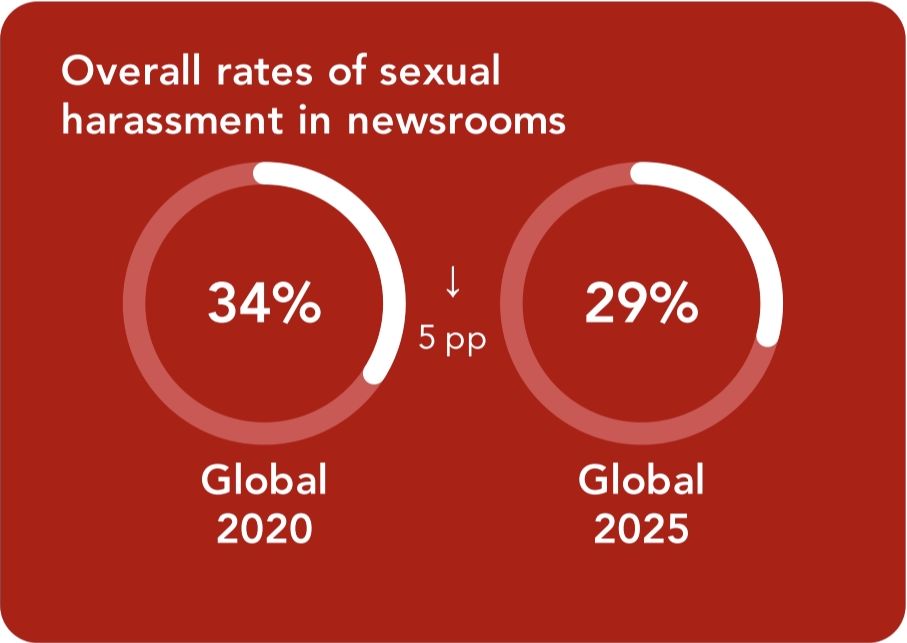
The study, conducted across 21 countries in Sub-Saharan Africa, the Arab region, Southeast Asia, and Ukraine, reveals that nearly one in three media professionals surveyed experienced some form of sexual harassment in their workplaces.
Researchers gathered responses from more than 2,800 media employees working in journalism, administration, human resources, production, marketing, and management, making it one of the most comprehensive datasets ever compiled on sexual harassment in newsroom environments.
Underreporting Remains a Major Concern
According to the findings, 69 per cent of those who experienced sexual harassment did not report the incidents, highlighting a continuing culture of silence within media organisations.
The report found that fear of retaliation, weak reporting systems, and lack of confidence in how organisations handle complaints remain among the leading reasons survivors choose not to come forward.
Even in cases where incidents were reported, organisations acted only 65 per cent of the time, with many responses described as limited or informal.
Researchers say the findings reveal persistent structural barriers that prevent accountability and reinforce unsafe workplace cultures in the media industry.
Women Face Higher Risk of Harassment
The study shows women continue to face significantly higher levels of harassment compared to men.
Globally, women were found to be 2.4 times more likely than men to experience verbal sexual harassment and 1.8 times more likely to encounter online sexual harassment.
Although physical harassment and rape were reported at lower rates, researchers warned that the threats remain widespread and serious. Around a quarter of respondents reported experiencing physical harassment, while five per cent of women and four per cent of men identified themselves as rape survivors.
The report also notes that lower participation and reporting rates among men suggest sexual harassment is still largely viewed as a women’s issue, despite its broader implications for newsroom safety, workplace culture, and journalistic integrity.
Africa and the Arab Region Record Highest Cases
Regional disparities emerged strongly in the findings, with Africa and the Arab region recording the highest prevalence rates.
The study found that 33 per cent of respondents in Africa experienced sexual harassment, followed closely by 31 per cent in the Arab region.
In contrast, Southeast Asia recorded a prevalence rate of 19 per cent, while Ukraine, which was included in the study for the first time, recorded the lowest level at 12 per cent.
The 2025 research expanded on earlier studies conducted in 2018 and 2020 by including countries such as Ukraine, Sierra Leone, Bangladesh, Ethiopia, Somalia, and South Sudan.
Harassment Linked to Declining Job Satisfaction
Dr. Lindsey Blumell said sexual harassment continues to have severe professional, emotional, and physical consequences on victims and survivors.
She noted that regardless of the type of harassment experienced, victims often report lower job satisfaction and an increased likelihood of leaving the journalism profession altogether.
According to Dr. Blumell, the widespread underreporting of sexual harassment reflects both a lack of trust in reporting mechanisms and an alarming normalisation of violence in newsroom environments.
Experts Call for Stronger Institutional Action
Media development experts involved in the study are now calling for urgent reforms within media organisations to address unsafe workplace cultures.
Valeria Perasso said addressing sexual harassment is critical not only for individual protection but also for newsroom governance and editorial integrity.
She argued that unsafe and unequal workplace environments create structural barriers that limit participation, leadership opportunities, and diversity in editorial decision-making.
Meanwhile, Susan Makore said the continued underreporting of sexual harassment demonstrates a deeper failure of workplace trust, accountability, and culture.
Makore emphasised that combating harassment requires more than policies alone. She called on media organisations to invest in long-term awareness campaigns, staff training, survivor support systems, and stronger reporting mechanisms to prevent harassment from becoming normalised.
Push for Safer and More Inclusive Newsrooms
The report concludes that meaningful reforms are necessary to build safer, more inclusive, and equitable media workplaces.
Researchers say the findings provide important insights into how newsroom cultures have evolved over the past five years and where progress has stalled.
They argue that strengthening workplace protections and accountability mechanisms will be essential to ensuring journalism remains resilient, inclusive, and representative in increasingly complex media environments.