

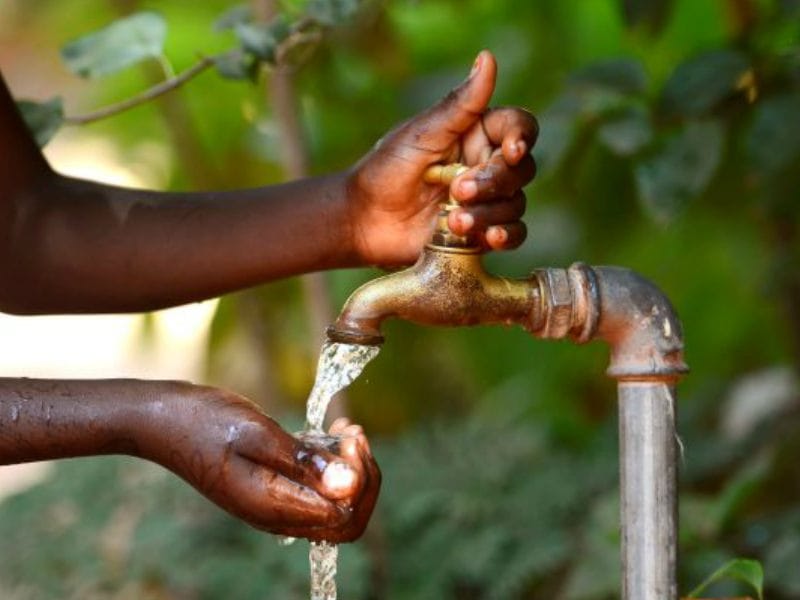
For a family struggling with unreliable water, a tank can mean more than storage. For a farmer, a dependable water source can determine whether a crop survives. And for a small business, reliable supply can mean the difference between staying open and shutting down.
Across Kenya, access to water continues to shape household welfare, agricultural productivity, and business growth. NCBA Bank is seeking to address some of these challenges by directing financing and environmental investments towards water security.
Turning Water Into Opportunity
At the centre of the bank’s efforts is its Water, Sanitation and Hygiene (WASH) Loan, developed in partnership with Water.org to support Water Service Providers (WSPs) and small and medium enterprises operating across the WASH value chain.
The facility finances a range of needs, including water infrastructure upgrades, network expansion, boreholes, solar-powered water systems, metering equipment, sanitation solutions, and other essential equipment.
Loan amounts range from KSh300,000 to KSh500 million, with repayment periods of up to 60 months for equipment and up to 120 months for capital expenditure and project financing.
For smaller enterprises, flexible security arrangements are intended to make financing more accessible, including unsecured facilities of up to KSh6 million backed by receivables.
Also Read: When a Water Loan Becomes a Lifeline
The impact of such financing can extend far beyond balance sheets.
NCBA reported in its 2023 Integrated Report that it had disbursed KSh181.1 million in water loans between December 2023 and February 2024.
The financing enables water providers and businesses to expand their reach, improve infrastructure, and reduce water losses, helping more households and enterprises access reliable supplies.
The bank has also promoted its #NCBAH2OLoan for practical investments such as water tanks, expansion of water enterprises, and biodigester systems.
For households, a water tank can provide a buffer against interruptions. For entrepreneurs, expanding a water business can create income while serving communities. Sanitation investments can meanwhile improve hygiene and reduce health risks.
Protecting the Water Beyond the Tap
NCBA’s approach extends beyond financing infrastructure. The bank recognises that long-term water security depends on protecting the ecosystems that supply it.
Through its “Change the Story” sustainability strategy, NCBA has committed to planting and nurturing 10 million trees across Kenya, Uganda, Tanzania, and Rwanda by 2030.
In Kenya, tree-growing initiatives include efforts to restore important water towers and catchment areas.
Healthy forests help regulate water flows, reduce soil erosion, recharge groundwater and protect rivers and other sources relied upon by communities.
This means that planting a tree today can become part of protecting a water source for tomorrow.
Building a More Water-Secure Economy
NCBA has also committed to mobilising KSh30 billion in green and sustainable financing by 2030, supporting projects in areas including water conservation, renewable energy, and sustainable agriculture.
The strategy links financial capital with the wider need for climate resilience and supports Sustainable Development Goal 6, which calls for clean water and sanitation for all.
The significance is ultimately felt in ordinary routines: a farmer able to irrigate crops, a business able to operate consistently, or a household able to store water for difficult days.
By combining WASH financing with conservation and sustainable finance, NCBA is positioning water security as both a social necessity and an economic priority.
For communities facing water challenges, the change is not simply about numbers on a loan statement. It can be seen in fuller tanks, stronger businesses, healthier households, and restored landscapes, showing how finance, when directed towards essential needs, can help bring life back through water.