


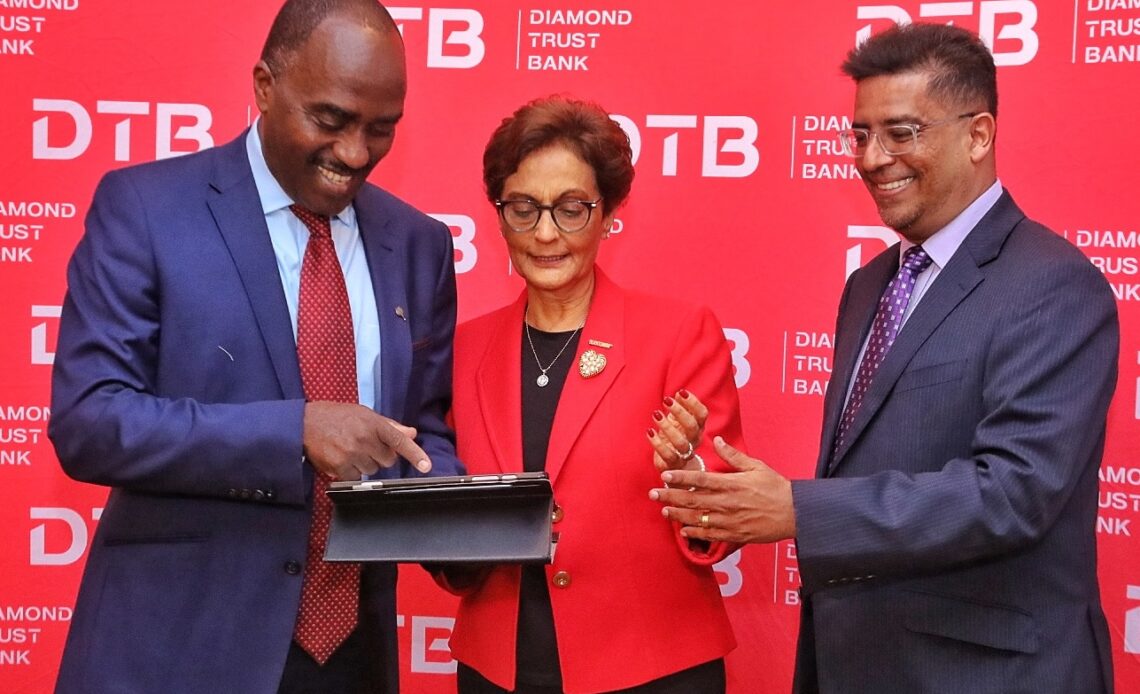
Diamond Trust Bank (DTB) Group has posted a 37 per cent year-on-year increase in pre-tax profit to KSh9.8 billion for the six months ended June 2026, as stronger revenues, customer growth and increased digital adoption supported the lender’s performance.
The Tier 1 East African banking group said its turnaround and growth initiatives gained momentum during the period, with the bank expanding its customer base, loan and deposit portfolios across Kenya, Tanzania and Uganda.
Customer Base Hits 5.9 Million
DTB’s customer base grew by 44 per cent over the past year to 5.9 million customers across its three markets.
Group Chief Executive Officer Nasim Devji attributed the growth to increased focus on retail, SME and corporate banking, supported by digital-led products, targeted lending, deposit mobilisation and technology-driven efficiencies.
“Across the three operating markets, DTB continues to pursue growth opportunities across retail, SME and corporate segments,” Devji said.
The bank’s Kenya business is also expanding its physical footprint, with DTB Kenya Managing Director Murali Natarajan saying the lender expects to open its 100th branch in Kenya by December 2026.
This will bring DTB’s branch network to 163 branches across East Africa.
Loans and Deposits Expand
DTB’s total assets increased by more than 10 per cent year-on-year to KSh675 billion by June 2026, supported by growth in both loans and customer deposits.
Customer deposits rose 11 per cent to KSh534 billion, while loans and advances increased by 14 per cent to KSh328 billion.
The bank also reported an improvement in asset quality, with its non-performing loan ratio declining to 11.6 per cent from 13 per cent a year earlier.
At the same time, its specific provision coverage ratio increased to 56.6 per cent from 40.7 per cent, reflecting higher provisioning against non-performing loans.
Digital Banking Drives Customer Acquisition
Digital banking remained a major driver of DTB’s expansion, with 99 per cent of new customers acquired over the past year onboarded through digital platforms.
More than 86 per cent of all customer transactions were also conducted through digital channels during the period.
The bank’s digital lending business extended KSh10 billion in loans to retail, micro, small and medium-sized enterprise customers during the first half of the year.
DTB said it plans to deepen automation across its operations through robotic process automation (RPA) and digitised business process management.
The lender is also exploring the deployment of agentic artificial intelligence solutions to enhance customer experience, operational delivery, controls and compliance.
Revenue Growth Supports Profitability
The 37% growth in pre-tax profit was supported by a 21 per cent increase in top-line revenue during the period.
Net interest income grew by 26 per cent, while non-interest income increased by 7 per cent compared with the first half of 2025.
Operating costs rose by a more moderate 6 per cent, although loan provisions increased by 37 per cent during the period.
DTB Finance and Strategy Director Alkarim Jiwa said the results reflected the benefits of the group’s growth initiatives and continued investments in digital capabilities.
DTB Targets New Growth Sectors
DTB Kenya said it will continue expanding its presence in traditional sectors such as trade, manufacturing, real estate, construction, tourism and transport while increasing its focus on agriculture, education and public sector agencies.
Natarajan said the bank plans to use partnerships with key players in these ecosystems and bespoke digital solutions to reach customers in the emerging sectors.
The expansion forms part of DTB’s DTB3.0 Business Growth Strategy, which targets stronger customer acquisition and retention while increasing the bank’s retail, SME and mid-market portfolios.
Bank Eyes Sustained Growth
Devji said DTB remains optimistic about sustaining its balance sheet and profitability growth over the medium term.
The lender plans to build on its established brand, customer relationships and eight-decade presence in East Africa while using digital innovation and operational efficiencies to support its next phase of growth.