


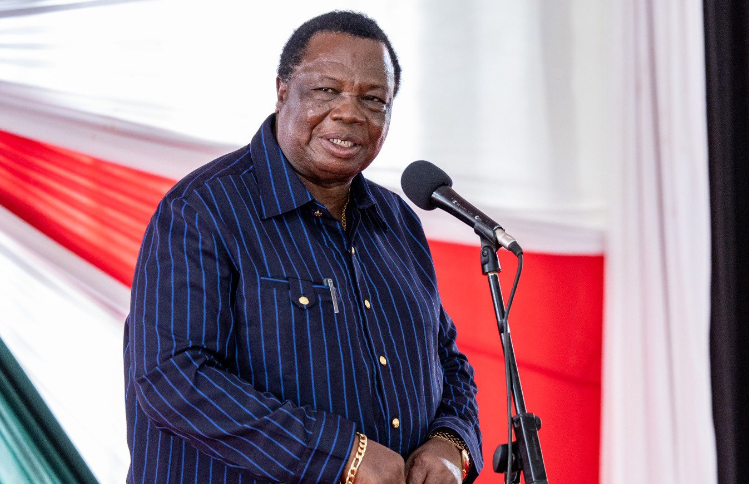
In a bold statement, Francis Atwoli, Secretary General of the Central Organization of Trade Unions (COTU), has called for the arrest of Deputy President Rigathi Gachagua, accusing him of overstepping his bounds in the absence of President William Ruto.
aSpeaking at the COTU National Trade and Investment Workshop in Nairobi on September 23, 2024, Atwoli criticized Gachagua for what he described as excessive political maneuvering and a lack of respect for government protocol.
Atwoli’s remarks come at a time when Gachagua has been increasingly vocal in public forums, particularly while Ruto is abroad. “He thinks he’s the president,” Atwoli declared, suggesting that Gachagua’s actions could mislead the public and disrupt the government’s agenda. He emphasized that the role of the deputy president should be redefined, proposing that the position be an appointed one rather than a running mate to the president.
“The deputy president must remain an appointee. This circus we are witnessing is a result of making him a running mate. Once he becomes a running mate, he thinks he is also a president,” Atwoli asserted, indicating that this dynamic could lead to confusion and conflict within the leadership structure.
Atwoli’s criticism highlights a growing concern within the political landscape about the implications of Gachagua’s rising prominence. He accused Gachagua of contradicting both Ruto and the government’s policies, which he claims undermines the administration’s unity and effectiveness. “You can’t be contradicting government policies and contradicting your own president,” Atwoli stated. “A deputy president is supposed to play a supportive role, not be a rogue element.”
The COTU leader’s comments raise questions about the stability of the current administration and the relationship between Ruto and Gachagua. Political analysts suggest that Atwoli’s remarks reflect deeper tensions within the ruling party, as factions vie for influence and authority.
Atwoli concluded his remarks with a call for action, emphasizing that the country cannot operate effectively with “two presidents at the same time.” His strong stance indicates a growing frustration among some political leaders regarding the conduct of the deputy president, setting the stage for potential conflict within Kenya’s political hierarchy.
As the nation watches closely, the implications of Atwoli’s statements may prompt discussions on the future of the deputy presidency and its role in Kenya’s governance.