


The 2026 Gender Report by the Usawa Agenda has revealed persistent inequalities in Kenya’s basic education system, with refugee children, girls in STEM education, and teenage mothers among the most affected groups.
Launched at the Kenya Institute of Curriculum Development, the report paints a mixed picture of progress and challenges in achieving gender equality in education.
The findings show that more boys than girls are out of school nationally, although the trend reverses within refugee communities, where girls are more disadvantaged.
According to the report, 5 in every 100 boys of school-going age are out of school nationally compared to 4 in every 100 girls. However, among refugee children, 22 in 100 girls are out of school compared to 19 in 100 boys.
The report further indicates that refugee children face significantly higher barriers to education compared to children in Kenyan households. While 14 in 100 pre-school children nationally are out of school, the number rises sharply to 57 in 100 among refugee children. Similarly, 3 in 100 children of primary school age are out of school nationally, compared to 1 in every 5 refugee children.
Marginalised Areas Recording Improvement
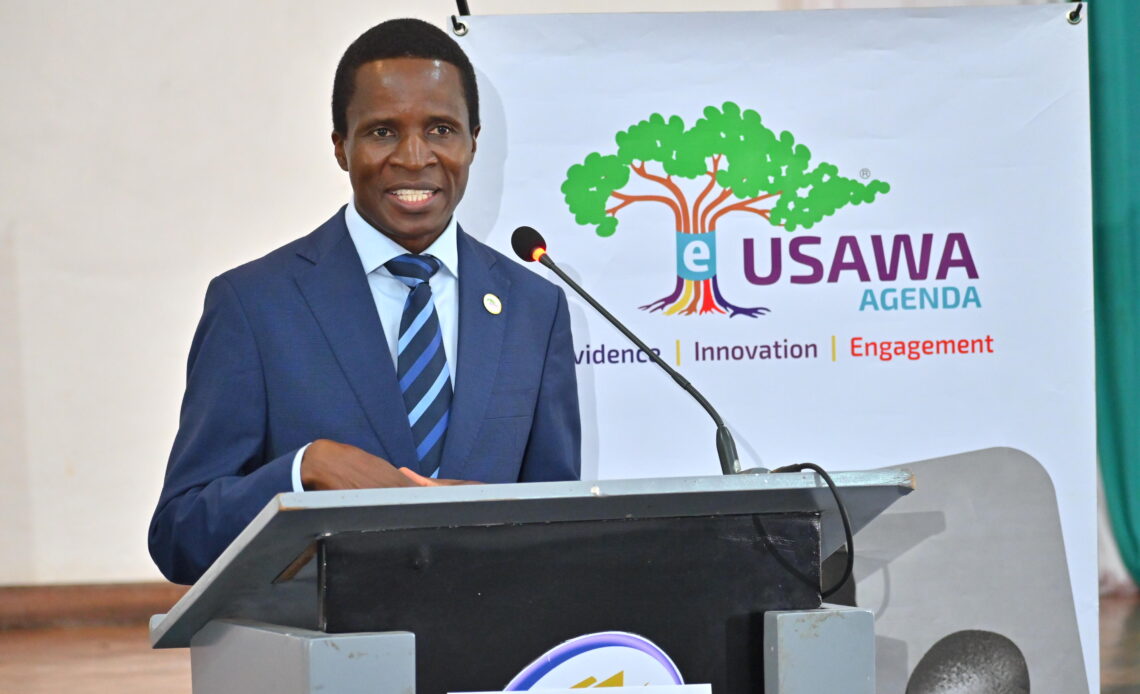
Speaking during the launch, Professor Dickson Andala from the National Research Fund said the report offers timely evidence that can help policymakers and stakeholders strengthen gender equality interventions in education.
He noted that research-driven policies remain critical in addressing educational disparities across the country. “This report presents an opportunity for the country and its partners to generate timely evidence on gender equality in education,” said Prof. Andala.
He added that the National Research Fund continues to support research initiatives through government funding and partnerships. “We get our resources from the exchequer, and using those resources as a seed, we also attract more funding from our partners,” he said.
The report also highlighted improvements in school enrollment among girls in marginalised and previously underserved regions. Stakeholders noted that gender-responsive research and targeted interventions have contributed to increased enrollment of girls in remote areas.
Senior Schools Still Dominated by Boys and Religious Sponsors
The findings show that most senior schools in Kenya are mixed schools at 76 per cent, followed by girls’ schools at 14 percent and boys’ schools at 9 per cent.
However, boys’ schools appear to have a longer history and stronger establishment compared to girls’ schools. Seven in ten boys’ schools have existed for more than 30 years, compared to only three in ten girls’ schools.
The report also found that religious institutions dominate sponsorship of senior schools in Kenya.
Seven in ten senior schools are sponsored by religious institutions, including 8 in 10 girls’ schools and 6 in 10 boys’ schools.
STEM Subjects Still Male-Dominated
The report raised concern over the gender imbalance among teachers handling STEM subjects in senior schools.
Boys’ schools were found to have higher average numbers of science and mathematics teachers compared to girls’ and mixed schools.
Male teachers continue to dominate STEM subjects across all school categories. In girls’ schools, mathematics teachers have a gender ratio of 2:1 in favour of men, while physics teachers have a ratio of 3:1
Education stakeholders warned that the imbalance could affect mentorship opportunities for girls pursuing science-related careers.
Facilities in Schools
The report also exposed major gaps in menstrual hygiene support across schools.
While 85.2 per cent of public primary schools provide sanitary towels to girls, only 25.1 per cent offer bath or changing room facilities.
Nationally, only 27.6 per cent of primary schools provide bath or changing rooms for girls, despite increased awareness on menstrual health and dignity.
Refugee community schools recorded some of the lowest access levels to sanitary facilities.
Teenage Pregnancies Remain a Major Challenge
Teenage pregnancy emerged as another major concern highlighted in the report.
The majority of pregnant learners were found in Junior Schools, accounting for 60 per cent of all reported cases. Teenage pregnancy prevalence was highest in Cluster 4 schools at 4.3 per cent, followed by private schools at 3.2 percent.
Meanwhile, return-to-school rates after delivery varied significantly across school categories.
Cluster 2 schools recorded the highest return rates at 62.8 per cent, while private schools and special schools recorded the lowest rates at 46.5 per cent and 48.6 per cent, respectively.
Prof. Andala emphasised the need to support learners returning to school after pregnancy.
“Regardless of gender, we need to have an equal chance to succeed because teenage pregnancy is still a big challenge. There is need to ensure those who fall off because of pregnancies go back to school,” he said.
The report calls for stronger investments in gender-responsive education policies, improved school infrastructure, and targeted support for vulnerable learners to bridge the existing gaps in Kenya’s education sector.