


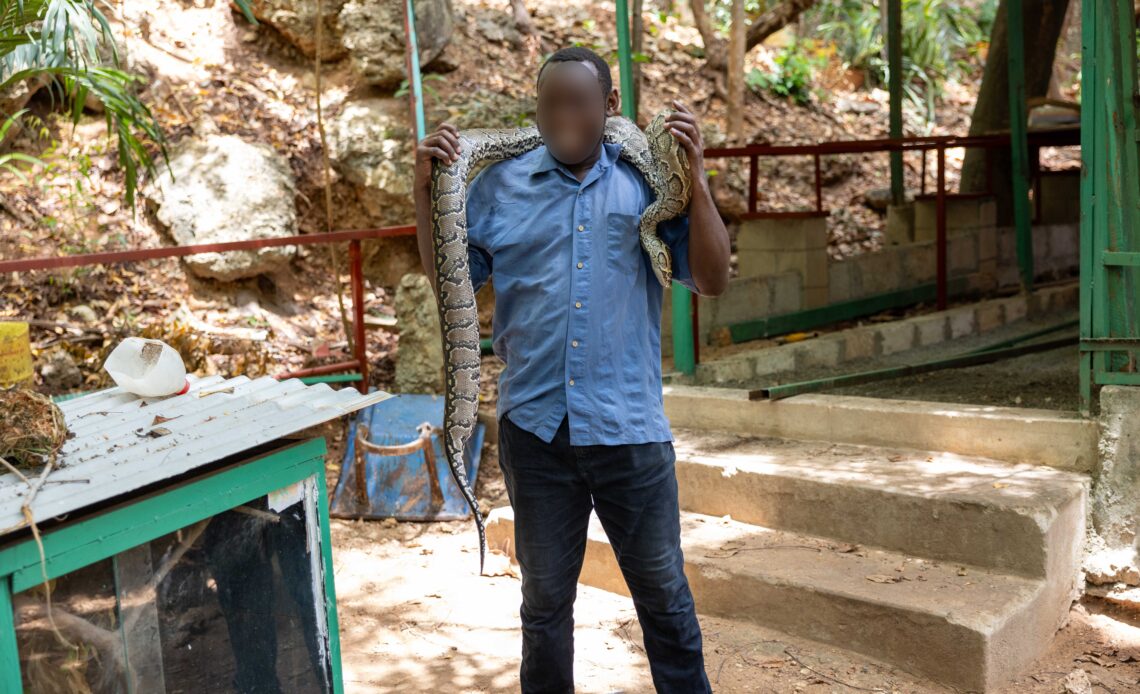
On Tuesday morning, the World Animal Protection released a new report that has uncovered the terrible abuse of animals in Kenya’s commercial wildlife farming. These practices not only violate animal welfare, but also put public health at risk and affect the country’s global conservation reputation.
The document, “Behind Bars: Lifting the Lid off Kenya’s Cruel Wildlife Farming,” details the findings of the researchers and their undercover field visits over several months. In it, it is narrated how wild animals such as crocodiles, giraffes, ostriches, tortoises, monkeys, and hippopotamuses are being bred, confined, and used in closed areas promoted as being part of conservation and tourism efforts.
The report also unveils several cases of wildlife being stolen from the wild and sent abroad as if they had been bred in captivity hence endangering biodiversity in the region.
Edith Kabesiime, Wildlife Campaign Manager at World Animal Protection, commented on the evidence pointing to wildlife farming in Kenya as being centered on financial gains.
“Our evidence shows that wildlife commercial breeding and farming in Kenya is solely for making money and not for the conservation of nature. Mirroring the illegal activities is a very unpleasant scenario that is raising questions about Kenya’s policy on wildlife trade,” she said.
One of the aspects of exploitation that were revealed was the suffering of animals in affected institutions – the overpopulation, lack of medical treatment to injuries, infestations, poor diets, and stress behaviors were seen at each place that was visited. Alongside this, issues concerning human health were also present, as these spots that attracted tourists allowed for close and unguarded contacts between people and animals without any safety precautions thus, fears of spreading of zoonotic infections arose.
Ultimately, the report conveys that wildlife farming not only hampers conservation endeavors but also facilitates illegal extraction and trade of animals.
World Animal Protection is already demanding that Kenya’s government act immediately. The institution calls for the prosecution of offenders and shutting down of their facilities, a ban on captive-farming expansion, more rigorous implementation of wildlife trade regulations, and prohibition of wild animal-watcher contacts such as petting and hand feeding.
During the unveiling of the report, Tennyson Williams, Director for Africa at World Animal Protection, requested the authorities to act promptly.
“Kenya has an opportunity to fill in these gaps especially with the country currently working on a new wildlife law. We implore the Ministry of Tourism and Wildlife and Kenya Wildlife Service to take charge and stop wildlife suffering,” he said.
The report ends with the conclusion that the practice of wildlife farming is unsustainable, that it continues to the torment of animals, that it undermines conservation and that it exposes public health to dangers—all of which leave the authors imploring collective action as a way of preserving animals in their natural habitats.