


In a landmark effort to revolutionize food systems across Africa and Asia, Yara International, in partnership with the World Bank and Thryve Innovation CoLab, has launched a high-impact accelerator program aimed at scaling innovations that promote sustainable agriculture and soil health.
The initiative was unveiled during a high-level summit held in Nairobi, bringing together key stakeholders from the private sector, government, and innovation ecosystem.
The newly announced Thryve Accelerator Programme will identify and support startups that offer cutting-edge, data-driven solutions to address soil degradation and boost productivity for smallholder farmers.
The program will offer selected startups a three-month intensive engagement with subject matter experts from Yara’s regional arm, Yara (Innovation and Impact Africa and Asia), providing technical mentorship, data access, and go-to-market support.
“Our goal is to use data and technology to drive better decision-making for smallholder farmers,” said Marisa Soares Rebelo, Senior Vice President of Innovation and Impact Yara. “Healthy soils are the foundation of food production. Without them, no fertilizer or input will produce the desired yields. That’s why we’re focusing on scalable innovations that offer targeted recommendations based on soil health.”
The initiative will culminate in the announcement of two winning startups who will gain full access to Yara experts and platforms to refine and test their ideas for scalability.
A central theme of the summit was the importance of data governance in enabling innovation. Fragmentation, lack of standardization, and unclear data ownership remain key barriers.
According to Rebelo, the World Bank has been playing a convening role in pushing for an ecosystem approach to data sharing, while the Kenyan government, in collaboration with stakeholders like KALRO (Kenya Agricultural and Livestock Research Organisation), is developing frameworks to standardize and share agricultural data.
“We need interoperable platforms and clear governance to unlock the value of agricultural data,” said Rebelo. “The more accessible and standardized this data is, the more we can develop precise, impactful solutions for farmers.”
Platforms like VADA, a Yara-founded foundation, and SoilHive are playing instrumental roles in organizing and making this data available to innovators.
Esther Van de Voort, Director of the Innovation Portfolio at Yara and lead for Thryve, highlighted the program as a blueprint for public-private collaboration.
“This program is the result of a year-long effort with the World Bank and other partners,” said Van de Voort. “We’re not just sourcing innovators we’re giving them access to our platforms, our networks, and our field-tested distribution channels to scale their solutions. Startups can now plug into decades of Yara’s experience and trust across local communities.”
She added that Kenya has proven to be a “lighthouse for Africa,” with strong engagement from both national and county governments. Institutions like KARLO have already begun sharing critical legacy data to support the program.
“The Kenyan government’s involvement is both practical and symbolic. It shows a willingness to modernize and take real steps towards enabling data-driven agriculture. This sets the tone for transformation across Africa and even Asia.”
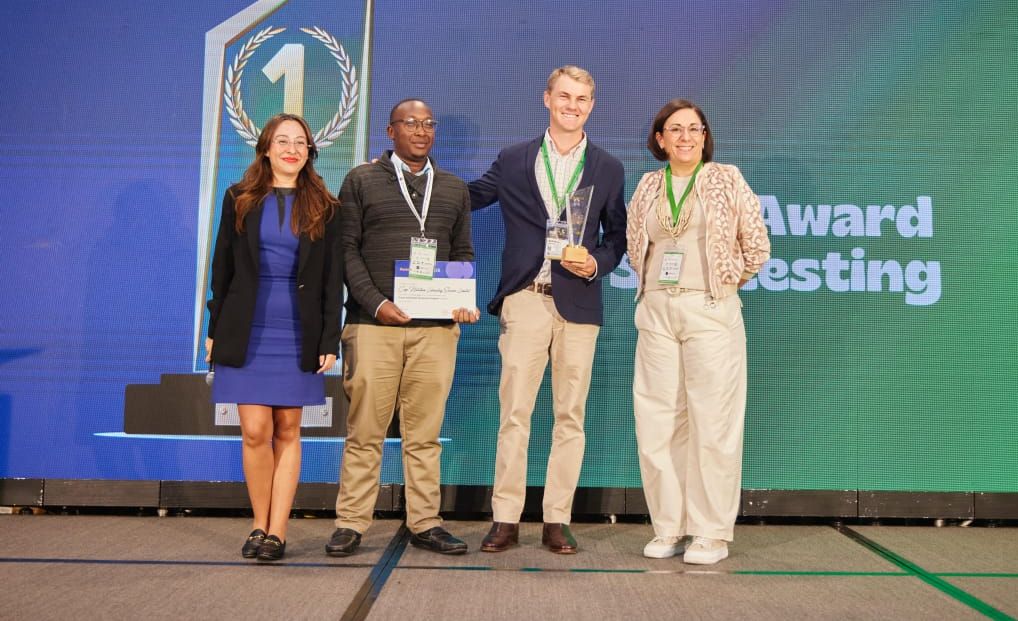
As the program launches, anticipation is high regarding the announcement of the first two Thryve Award winners. While the number of startups to be supported remains confidential until the official reveal, stakeholders expect the initiative to be a significant leap forward for agri-tech innovation on the continent.
With growing concerns over climate change, food insecurity, and land degradation, the Thryve Accelerator offers a hopeful and strategic response rooted in collaboration, innovation, and data to secure a sustainable future for farmers across Africa and Asia.