


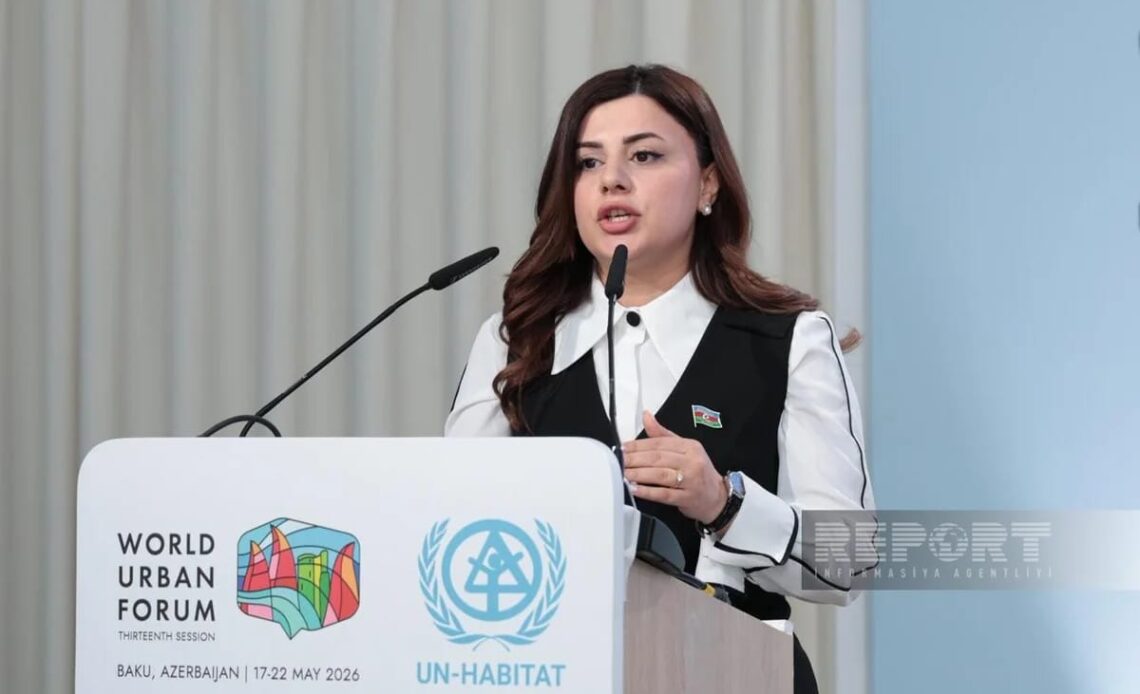
Article by Parvana Valiyeva, Member of the Foreign and Interparliamentary Relations Committee
Milli Majlis of the Republic of Azerbaijan
The 13th session of the World Urban Forum (WUF13) held in Baku, Azerbaijan marked a major milestone in shaping the global urban agenda, placing housing at the centre of discussions on sustainability, climate action, and social justice.
Held under the theme “Housing the World: Safe and Resilient Cities and Communities,” the forum emphasized that housing is a fundamental human right and a key pillar of inclusive and resilient societies.
Cities Must Prioritise People
Discussions during the parliamentary roundtable on May 20 stressed the urgent need to rethink how cities are designed and governed.
Participants noted that successful cities should be measured not by wealth or infrastructure alone, but by their ability to serve people. Community engagement, participatory budgeting, local councils, and bottom-up planning were highlighted as critical tools for building inclusive urban spaces.
Inclusive Urban Development Highlighted
During sessions focused on persons with disabilities on May 19, delegates emphasized that future cities must be designed around people rather than infrastructure alone.
Participants called for urban systems that ensure all residents — regardless of age, gender, disability, or social status — can participate fully in city life with dignity, safety, and independence.
Cultural Identity and Heritage Preservation
The forum also highlighted the importance of preserving cultural identity amid rapid urban transformation.
Delegates stressed that cities are shaped by heritage, memory, and shared human values, calling for sustainable urbanization strategies that protect architectural heritage and strengthen local cultural identity.
Climate Change Linked to Housing Challenges
Climate change emerged as a major theme during the forum, with participants warning that floods, heatwaves, displacement, and environmental degradation are increasingly affecting urban populations, particularly vulnerable communities and informal settlements.
The discussions also referenced the momentum created by United Nations Climate Change Conference 2024, hosted in Baku in 2024, emphasizing the growing connection between climate action and urban development.
Financing Low-Carbon Housing
Participants acknowledged that climate-resilient urban development will require innovative financing models and stronger investment frameworks.
Blended finance, climate investment, and public-private partnerships were identified as key tools for financing affordable low-carbon housing and preventing long-term carbon dependency in urban systems.
Azerbaijan’s Reconstruction Efforts Recognised
Azerbaijan’s post-conflict reconstruction efforts in Karabakh and East Zangezur received significant international attention during the forum and were highlighted in the “Baku Call to Action.”
The rebuilding programme, which includes the construction of 12 cities and more than 300 villages, was presented as an emerging model for sustainable post-conflict recovery and reconstruction.
WUF13 concluded with a strong message that cities must place people at the centre of urban development policies.