


By John Kariuki
For many Kenyans, M-Pesa has become an indispensable part of everyday life, providing a convenient way to send and receive money, pay bills, purchase goods and services, and meet urgent financial needs.
From buying groceries and paying for transport to settling household expenses and supporting family members, mobile money has transformed how people manage their finances. However, the convenience of making transactions with a few taps on a phone can also make it easier to lose track of spending.
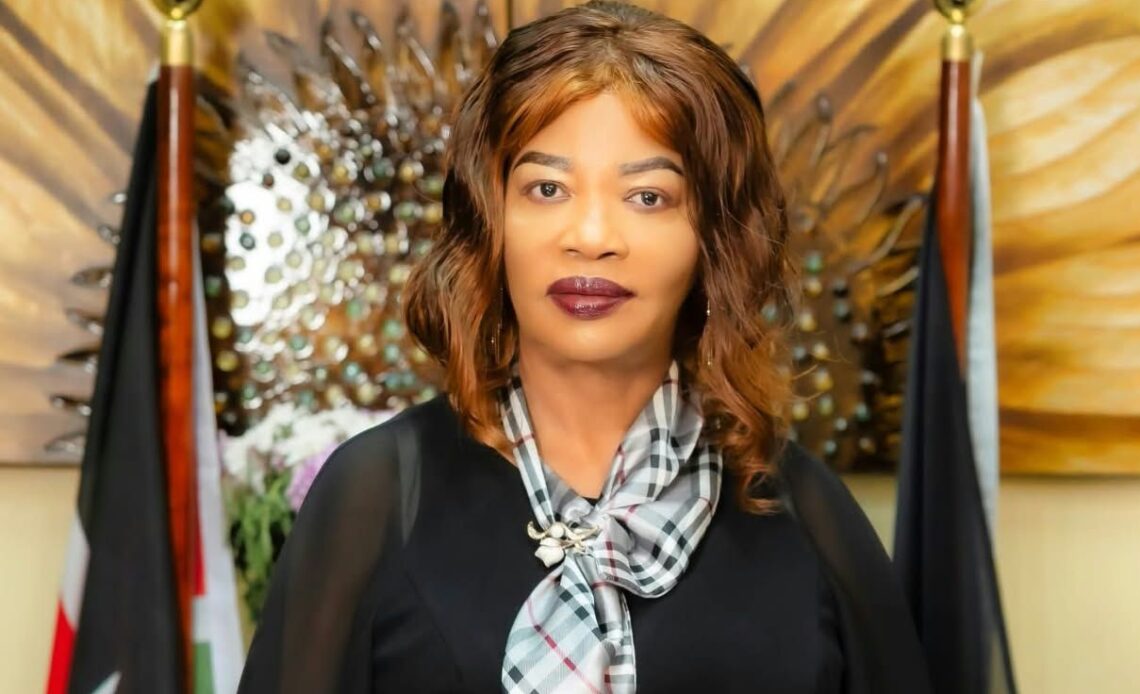
Samchi Group Chief Executive Officer Dr Esther Muchemi, popularly known as Madam CEO, believes that one of the simplest ways to improve personal financial management is to take a closer look at an often-overlooked resource: the M-Pesa statement.
In her financial literacy message, Dr Muchemi challenges individuals to examine their transaction histories and reflect on how their everyday spending habits influence their broader financial goals.
“Your M-Pesa statement tells a story,” is the central message behind her advice, which encourages people to move beyond making money and begin paying closer attention to how they use it.
The message comes at a time when households are increasingly required to make careful decisions about income, savings, debt obligations, education expenses and other competing financial priorities.
While financial planning is often associated with complex budgets, investment portfolios and professional advice, Dr Muchemi’s approach starts with something familiar and accessible to millions of Kenyans: reviewing their mobile money transactions.
Small expenses, significant consequences
One of the biggest challenges in personal finance is that money does not always disappear through major purchases. In many cases, it is the accumulation of small, frequent expenses that gradually reduces the amount available for saving and investment.
A modest purchase here, an unplanned payment there, and several seemingly insignificant transactions throughout the day can collectively account for a substantial portion of one’s income.
Individually, such expenses may appear harmless. However, when repeated over weeks and months, they can have a considerable effect on household finances.
For instance, money spent regularly on unplanned purchases, convenience services or unnecessary subscriptions could, if managed differently, contribute towards an emergency fund, school fees, business capital or long-term investments.
This does not mean that every small expenditure is wasteful or that people should deny themselves all discretionary spending. Rather, it highlights the importance of understanding the difference between necessary expenses, deliberate choices and spending driven by habit.
Dr Muchemi’s message encourages individuals to identify these patterns before they undermine their financial objectives.
The starting point is not necessarily to earn more money, but to understand how the money already available is being spent.
Your statement as a financial mirror
An M-Pesa statement provides a transaction history that can help users review their financial behaviour. It offers an opportunity to examine how frequently money is sent, the kinds of payments made and the cumulative effect of everyday spending.
For individuals who rarely review their transaction records, the exercise can provide a useful reality check.
A person may believe that most of their income goes towards essential household expenses, only to discover that numerous unplanned transactions account for a larger share than expected.
Others may find that they regularly send small amounts to different people, make repeated purchases or spend more on convenience than their budgets allow.
The value of reviewing a statement lies in turning such observations into informed decisions.
As Dr Muchemi’s message suggests, the statement is a mirror of spending habits. It allows individuals to confront their financial reality, recognise patterns and make adjustments where necessary.
Importantly, the exercise should not be about assigning blame or feeling guilty about past decisions. It should be about gaining a clearer understanding of one’s finances and using that knowledge to make better choices going forward.
Financial discipline begins with awareness, and awareness requires an honest assessment of how money is being used.
Giving every shilling a purpose
A central principle of effective money management is intentional spending.
Rather than allowing income to disappear through a series of unplanned transactions, individuals can benefit from deciding in advance how much should go towards essential expenses, savings, investments, debt repayment and discretionary spending.
Such planning does not require a complicated financial system. Even a simple monthly budget can provide a useful framework for allocating available resources.
Reviewing an M-Pesa statement can help determine whether actual spending reflects that budget.
If transport, food or other essential expenses consistently exceed expectations, the budget may need to be adjusted. If unnecessary purchases are consuming money intended for savings, spending limits may be necessary.
The objective is to ensure that financial decisions are guided by priorities rather than impulses.
For households with irregular incomes, small businesses and individuals supporting extended families, this discipline can be particularly valuable. Understanding cash flows can help them anticipate obligations, avoid unnecessary financial pressure and make more realistic plans.
Dr Muchemi’s advice also reinforces the importance of distinguishing between money that is available for immediate spending and money that should be preserved for future needs.
Without a clear plan, even a reasonable income can be stretched thin by competing demands.
Saving and investing require consistency
Saving is often treated as an activity reserved for people who earn substantial incomes. However, the more important consideration is developing a sustainable habit that reflects one’s financial circumstances.
Setting aside a manageable amount regularly can help establish discipline, even when the amount saved initially appears modest.
Over time, consistent contributions can build a financial cushion that provides protection against emergencies and reduces dependence on borrowing when unexpected expenses arise.
Once essential needs and appropriate emergency reserves are addressed, individuals can explore investment options that match their objectives, risk tolerance and financial capacity.
The sequence matters. Spending without a plan can leave little room for saving, while saving without a clear purpose may make it easier to withdraw money unnecessarily.
Dr Muchemi’s call to save intentionally, spend wisely and invest consistently therefore brings together three interconnected elements of financial well-being.
Saving creates a reserve, prudent spending protects available resources, and investing can help individuals pursue longer-term financial objectives.
None of these habits guarantees wealth, but together they can support more informed and sustainable financial decisions.
Turning awareness into action
The practical lesson from Madam CEO’s message is straightforward: people cannot effectively change financial habits they have not taken time to understand.
A review of one’s M-Pesa statement can be the first step towards a broader assessment of income, expenditure, savings and financial commitments.
Individuals can begin by identifying recurring payments, distinguishing essential transactions from discretionary spending and estimating how much could reasonably be redirected towards savings.
They can then set specific targets, review their progress regularly and make adjustments when circumstances change.
Financial discipline is not about achieving perfection overnight. It is about making deliberate choices consistently and learning from past decisions.
As digital payments continue to shape everyday commerce, the ease of transacting must be matched by an equally strong commitment to financial awareness.
For Dr Muchemi, the message is ultimately about personal responsibility and the willingness to confront financial reality.
The money that passes through a mobile wallet represents more than a series of transactions. It reflects decisions, priorities and habits that can influence an individual’s financial future.
By paying attention to those patterns, Kenyans can gain greater control over their spending and make more deliberate choices about the goals they want their money to achieve.
The next time an M-Pesa statement arrives, it may be worth looking beyond the balance and transaction entries.
The more important question is whether the money spent is helping to build the financial future one wants.
After all, as Madam CEO’s message reminds us, changing where money goes begins with understanding where it has been going.