

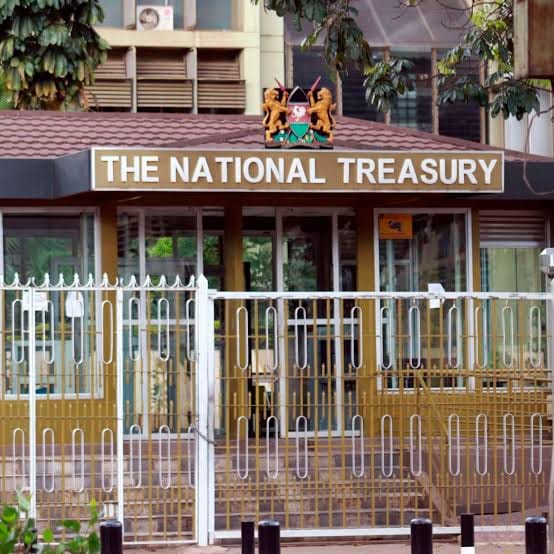
The National Treasury has proposed a Ksh.5.235 trillion budget for the 2027/28 financial year, marking an increase from the Ksh.4.8 trillion allocated for the 2026/27 fiscal year. According to the 2027 Budget Policy Statement, the proposed spending plan seeks to support the Government’s Bottom-Up Economic Transformation Agenda (BETA) while maintaining efforts to control public expenditure and increase revenue collection.
The expenditure plan includes Ksh.3.8 trillion for recurrent spending, representing 16.6 per cent of the country’s Gross Domestic Product (GDP). Development projects will receive Ksh.917.1 billion, while Ksh.506.5 billion will be transferred to county governments. A further Ksh.2 billion has been set aside for the Contingency Fund.
The National Government is expected to receive Ksh.3.248 trillion, with the Executive taking the largest share of Ksh.3.164 trillion, compared to Ksh.2.92 trillion in the current financial year. Parliament has been allocated Ksh.52.57 billion, while the Judiciary will receive Ksh.31.4 billion.
The Treasury has also provided Ksh.1.57 trillion for the Consolidated Fund and Ksh.449.46 billion as shareable revenue for county governments. On revenue collection, the Government expects to raise Ksh.3.923 trillion, equivalent to 17.1 per cent of GDP, compared to the projected Ksh.3.63 trillion in the 2026/27 financial year.
The projected revenue will comprise Ksh.3.249 trillion from Appropriation-in-Aid and Ksh.673.8 billion from Ministerial Appropriation-in-Aid, representing 2.9 per cent of GDP. The Treasury says planned tax policy reforms will help expand the tax base, improve compliance and strengthen revenue collection.
Meanwhile, the fiscal deficit, including grants, is projected to rise to Ksh.1.228 trillion, or 5.4 per cent of GDP, from Ksh.1.1452 trillion in the current financial year. The Government plans to finance the deficit through Ksh.570 billion in external borrowing and Ksh.658.9 billion in net domestic borrowing.
The Treasury says the fiscal strategy aims to slow the accumulation of public debt while ensuring that essential public services continue to receive adequate funding.