


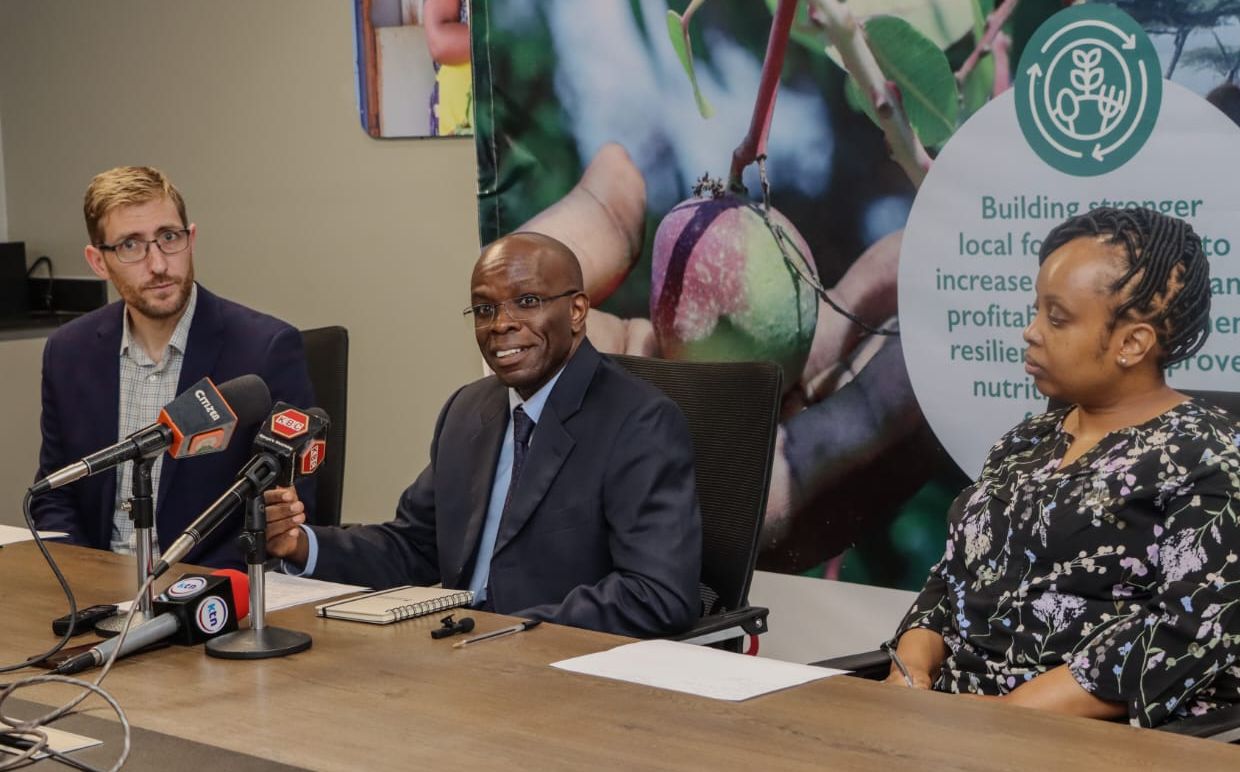
TechnoServe, in collaboration with the United States Agency for International Development (USAID), has launched the Feed the Future Kenya Food Systems Activity, a 6.3 billion shilling initiative aimed at strengthening Kenya’s agricultural value chain. The initiative seeks to enhance food production, improve food distribution systems, and expand access to markets in some of Kenya’s most food-insecure regions.
The announcement, made at a press conference held on Wednesday, marks a significant step towards addressing the challenges facing Kenya’s agricultural sector, which is vital to the country’s economy. Small-scale farmers, who are crucial to Kenya’s food production, are set to benefit from the funding, which will streamline the agricultural value chain, reduce post-harvest losses, and provide start-ups within the agricultural sector with better access to affordable credit.
According to Sebastian Oggema, Deputy Country Director for TechnoServe, the funding will help bridge gaps in market linkages, empowering smallholder farmers and agri-businesses to achieve better market access. “This funding will reduce inefficiencies in the agricultural supply chain, allowing farmers to access markets more effectively and scale their businesses,” Oggema said.
The initiative also aligns with TechnoServe’s broader mission of leveraging private enterprise to tackle poverty and drive economic development. With over 40 years of experience working in Kenya, TechnoServe has built a strong track record of promoting sustainable agricultural practices and enhancing food security through market-led solutions.
Kris Ansin, TechnoServe’s Country Director in Kenya, highlighted the organization’s longstanding presence in the country and its commitment to empowering local communities. “For over four decades, TechnoServe has worked alongside government bodies, private sector partners, and local communities to create thriving, resilient, and healthy food systems in Kenya. We believe in the transformative power of private enterprise and are confident that this partnership will lead to even greater impact,” said Ansin.
The Feed the Future Kenya Food Systems Activity is not just about increasing agricultural output; it also focuses on improving food distribution systems, ensuring that vulnerable populations—particularly women and youth—have access to safe and nutritious food. The project will work closely with local communities and county governments across Bungoma, Busia, Homa Bay, Garissa, Isiolo, Kakamega, Makueni, and Siaya counties, which are among the most food-insecure regions in Kenya. These regions will benefit from enhanced economic opportunities, job creation, and better nutritional outcomes.
In the next five years, the initiative will aim to create a long-term framework for agricultural and food systems development. The focus will be on fostering partnerships with public and private sector actors to accelerate the impact of the program. Elizabeth Eckert, Chief of Party for USAID’s Feed the Future Kenya Food Systems Activity, emphasized the importance of collaboration in tackling food insecurity. “Kenya’s agricultural sector is central to its economy, but it remains vulnerable. Together with TechnoServe and other partners, we are committed to creating sustainable solutions that ensure food security for all Kenyans,” Eckert said.
By improving supply chains, enhancing food storage, and supporting local food processing, the initiative seeks to increase the marketability and shelf life of agricultural products, which in turn will create new opportunities for smallholder farmers and local businesses.
Monice Githige, Senior Food Systems Manager for the project, called on the private sector to partner with the initiative and help empower local farmers. “We are inviting businesses of all sizes to collaborate with us in improving food distribution, investing in transport and storage infrastructure, and providing access to finance and technology for smallholder farmers,” Githige said.
The private sector’s involvement is expected to help create more efficient food supply chains and improve market access, which will drive job creation, enhance food security, and support sustainable growth. As part of the initiative, TechnoServe has already helped hundreds of food processors boost sales by over $500 million USD, resulting in the sale of more than 400,000 metric tons of healthy products in Kenyan markets. The initiative has also attracted $37 million USD in private sector investment and has trained over 3,600 individuals in essential leadership and operational skills.
With a focus on creating sustainable and inclusive food systems, the Feed the Future Kenya Food Systems Activity will help foster long-term economic development and greater resilience in Kenya’s agricultural sector. By improving food production, supporting local entrepreneurs, and facilitating better market access, the program aims to transform the lives of millions of farmers, pastoralists, entrepreneurs, and local communities across Kenya.
As the initiative progresses, collaboration with government agencies, development organizations, and the private sector will be key to ensuring its success. With strong partnerships and a shared commitment to sustainable solutions, TechnoServe and USAID are poised to drive lasting change in Kenya’s food systems, contributing to the country’s broader development goals and ensuring a healthier, more prosperous future for all Kenyans.