


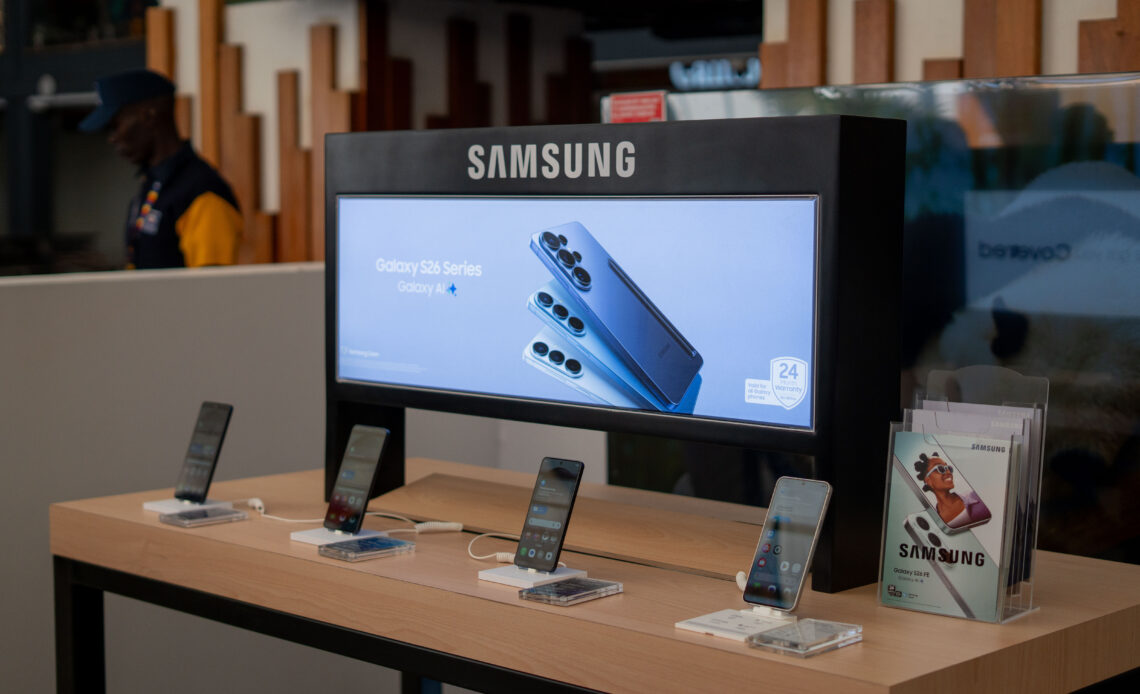
Samsung’s technology journey has been shaped by a series of innovations that have challenged conventional ideas about smartphones, televisions, home appliances and connected devices.
Founded in 1938, with Samsung Electronics established in 1967, the company has grown from an electronics manufacturer into a global technology business spanning smartphones, displays, televisions, home appliances, semiconductors, wearables and artificial intelligence.
One of the company’s notable milestones came in 2010 with the launch of the Galaxy S, which featured Super AMOLED technology. Samsung described it as the world’s first smartphone launched with a Super AMOLED display.
The technology delivered vivid colours, strong contrast and a thinner display, helping make the smartphone screen a more central part of the user experience. Samsung later continued developing AMOLED and Dynamic AMOLED displays across its Galaxy devices.
A year later, Samsung introduced another product that would create a new category in mobile technology. The Galaxy Note combined a large smartphone display with the S Pen, allowing users to write, draw, take notes and interact with their devices using a digital pen.
The concept positioned the smartphone as more than a communication device, while establishing the S Pen as a key feature within Samsung’s Galaxy ecosystem.
As smartphones became increasingly important for work and personal activities, Samsung also focused on security. In 2013, it introduced Samsung Knox, an end-to-end security platform designed to protect devices and information.
Knox included technology that could separate work information from personal data on the same device. The platform has since expanded into a wider security system supporting Samsung’s connected ecosystem.
Samsung’s efforts to make technology easier to interact with also led to the introduction of Bixby in 2017 alongside the Galaxy S8. The intelligent assistant gave users another way to interact with their smartphones through voice and other features.
The company’s innovation has extended beyond smartphones. In 2013, Samsung unveiled what it described as the world’s first Curved UHD TV, combining ultra-high-definition picture quality with a curved screen intended to provide a more immersive viewing experience.
In 2018, the company introduced The Wall, a 146-inch MicroLED display described by Samsung as the world’s first modular TV for consumers. Its modular structure allowed the display to be configured to suit different spaces, highlighting Samsung’s focus on screen design as well as picture quality.
Samsung has also introduced innovations into everyday household appliances. Its Twin Cooling technology, introduced in 1995, used separate cooling systems for refrigerator and freezer compartments. The approach allowed the two sections to be managed independently while helping maintain different temperature and humidity conditions.
Another household innovation came through Eco Bubble technology in washing machines. The system mixes air, water and detergent to create bubbles that help detergent penetrate fabrics more quickly. This allows effective washing at lower temperatures, potentially reducing the energy required to heat water.
Samsung later challenged traditional smartphone designs with the 2019 launch of the Galaxy Fold. When opened, the device featured a 7.3-inch Infinity Flex Display, providing users with a larger screen while retaining a more compact form when folded.
The launch opened a new chapter for foldable smartphones and led to the development of the Galaxy Z Fold and Galaxy Z Flip families.
Samsung’s latest innovation push has focused heavily on artificial intelligence. In 2024, the company introduced Galaxy AI with the Galaxy S24 series, bringing AI-powered features directly into the smartphone experience.
Features such as Circle to Search, Live Translate and Chat Assist demonstrated how artificial intelligence could support everyday activities, including searching, communication and content creation.
Samsung has since continued expanding AI capabilities across its Galaxy ecosystem, reflecting a broader shift towards connected and intelligent devices.
From Super AMOLED displays and the S Pen to Knox, Bixby, curved televisions, Twin Cooling, Eco Bubble, foldable smartphones and Galaxy AI, Samsung’s innovations have covered different aspects of everyday technology.
The company’s journey reflects an approach centred on challenging familiar ideas and exploring what technology could become.