


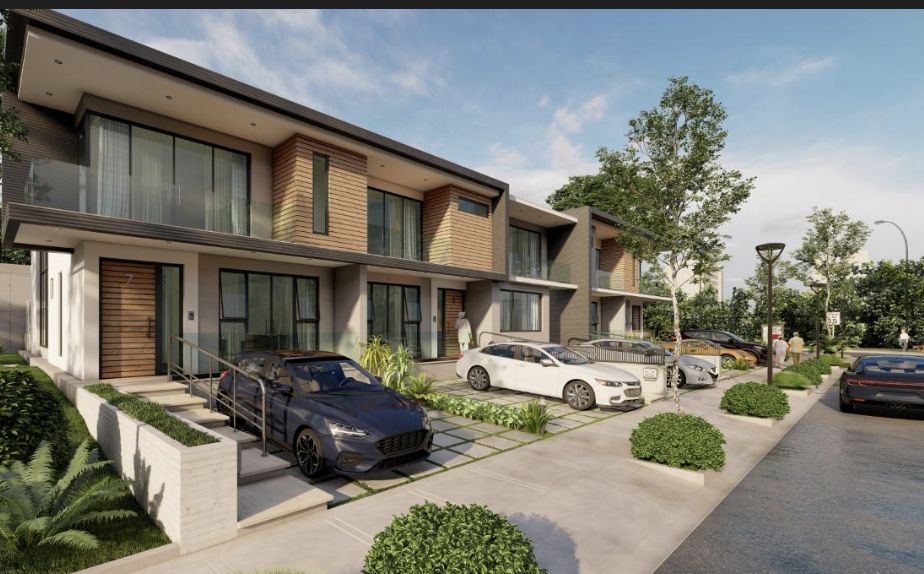
Kenyan property developer Mi Vida Homes has unveiled a KES5.6 billion luxury townhouse project in Tatu City, reflecting rising demand for premium, low-density housing as affluent buyers shift away from Nairobi’s traditional high-rise developments.
The project, branded 156 Elara, will feature 156 upscale townhouses on a five-acre site within the mixed-use Special Economic Zone in Kiambu County. This marks Mi Vida’s first major entry into Kenya’s premium residential segment after years of focusing on affordable and mid-market apartments.
Rising demand for spacious and secure homes
The launch comes at a time when demand for high-end residential properties continues to grow, with premium home sales rising by 28 per cent year-on-year in the first quarter of 2026, according to industry estimates.
Buyers are increasingly seeking larger homes that offer privacy, exclusivity, and security as congestion and density in Nairobi continue to rise.
Prices for the new units start at KES25.6 million for three-bedroom duplexes and go up to KES44.5 million for four-bedroom triplexes, placing them firmly within Nairobi’s premium low-density housing bracket.
Mi Vida says the move reflects market evolution
Mi Vida Homes Chief Executive Officer Samuel Kariuki said the company’s move into the premium segment is a strategic response to changing market preferences.
“Our entry into the premium segment with 156 Elara is a deliberate evolution driven by market maturity and growing demand for low-density, high-quality homes,” said Kariuki.
“This strategic expansion positions us to deliver across affordable, mid-market and luxury tiers over the next five years.”
The development will revolve around Club Elara, a residents’ wellness facility that will include a heated swimming pool, gym, landscaped gardens, and recreational green spaces.
Kiambu corridor emerging as premium housing hotspot
Mi Vida’s latest investment strengthens its presence in Kiambu County, where it had earlier launched the Keza Laika project.
The wider Ruiru-Kiambu corridor is rapidly becoming one of Kenya’s fastest-growing real estate zones, with premium housing supply expanding by an estimated 35 per cent as more buyers opt for suburban living.
Industry analysts project that owner-occupiers will make up about 80 per cent of buyers, while investors are targeting annual rental yields of between 7 and 9 per cent within Tatu City.
Tatu City is positioning itself as a live-work-play destination
Located on Nairobi’s outskirts, Tatu City has continued to attract both residents and investors by offering a self-contained urban environment with reliable infrastructure, including electricity, potable water, roads, and underground fibre connectivity.
The development already hosts schools, retail outlets, restaurants, and more than 110 businesses.
Rendeavour Founder and Chief Executive Officer Stephen Jennings said Tatu City’s current population of over 7,000 residents is expected to triple within the next five years as more families and businesses relocate there.
He added that upcoming projects, such as the opening of Wellington College International Kenya in 2028, will further strengthen the area’s appeal.
A growing upper-middle-income market is driving demand
The launch of 156 Elara comes as Kenya’s upper-middle-income segment continues to expand, with projections indicating an additional 1.2 million households by 2030.
Developers are increasingly targeting this growing demographic with family-oriented housing solutions, even as the country continues to face a housing deficit estimated at two million units.