

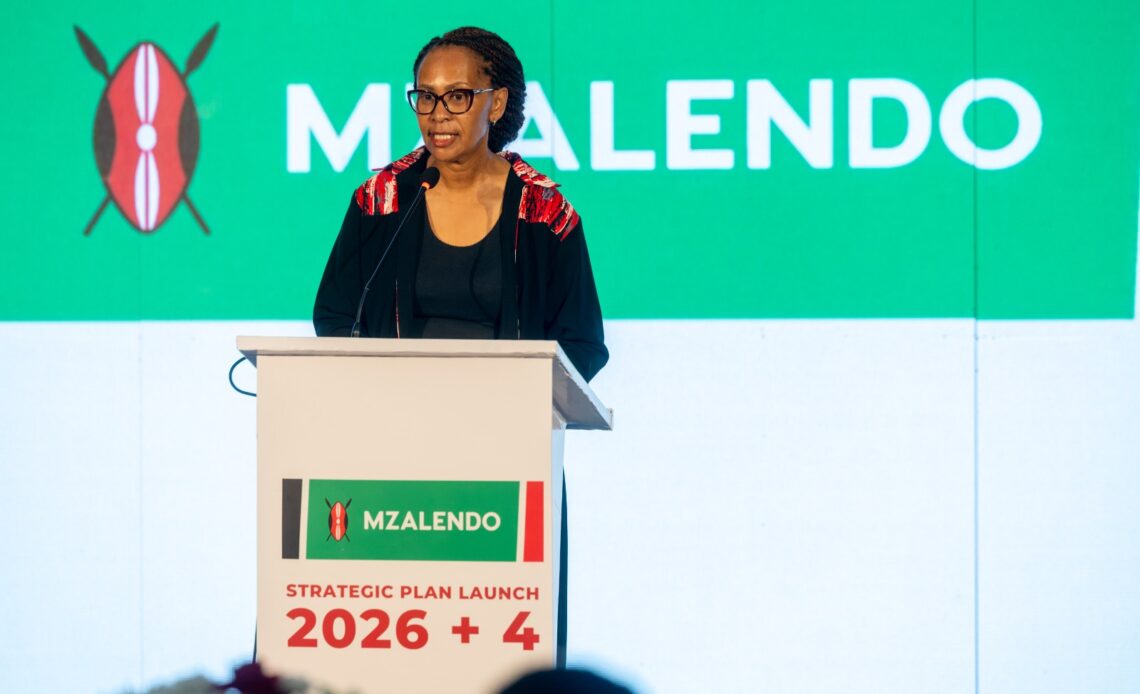
Mzalendo Trust has launched a five-year strategic plan seeking to strengthen parliamentary openness, public participation and accountability in Kenya and across Africa, placing citizens at the centre of democratic governance.
The 2026–2030 Strategic Plan aims to ensure Kenyans can access credible information about parliamentary proceedings, understand proposed legislation, contribute to decision-making processes and monitor the performance of their elected representatives.
Launched in Nairobi on November 25, 2026, the plan comes amid growing public demands for transparency, responsible management of public resources and greater accountability from government institutions.
Despite constitutional provisions guaranteeing public participation and transparency, Mzalendo Trust says citizens continue to face challenges accessing parliamentary information and meaningfully engaging with legislative processes.
The organisation wants to strengthen the relationship between citizens and Parliament by making legislative information more accessible and ensuring public participation translates into meaningful influence over decisions.
Speaking during the launch, Principal Secretary in the State Department for Foreign Affairs Dr Korir Sing’oei said parliamentary openness was essential to effective governance, enabling citizens to understand how laws are developed, public resources utilised and elected representatives exercise their constitutional responsibilities.
He emphasised the importance of collaboration between government institutions and civil society, noting that Parliament must fulfil its legislative and oversight responsibilities while civil society organisations retain their independence to monitor and question public institutions.
Public debt highlights need for oversight
The strategic plan comes against the backdrop of increasing pressure on public finances, with figures from the Parliamentary Budget Office’s November 2026 Budget Options Paper highlighting the importance of stronger legislative oversight.
According to the report, Kenya’s public debt reached KSh13.1 trillion at the end of June 2026, while interest payments during the 2025/26 financial year amounted to KSh1.074 trillion.
Government revenue also fell KSh60.2 billion below the target, raising concerns about fiscal management and the sustainability of public expenditure.
Mzalendo Trust says these developments reinforce the need for citizens to access information and scrutinise decisions affecting taxation, public spending, businesses and essential services.
Three pillars to guide implementation
The five-year strategy is anchored on three main pillars designed to strengthen legislative transparency and democratic accountability.
The first focuses on promoting and monitoring legislative openness through independent parliamentary monitoring, research, digital innovation and institutional collaboration. The objective is to improve the accessibility, credibility and use of parliamentary information.
The second pillar seeks to promote inclusive Parliaments and political processes by addressing barriers that prevent women, young people, persons with disabilities and historically marginalised communities from participating in governance.
The third pillar focuses on civic engagement, scrutiny and parliamentary accountability by supporting informed public participation, citizen oversight and monitoring of parliamentary decisions and commitments.
Mzalendo Trust Chairperson and Co-Founder Ory Okolloh said the organisation’s work, which began in 2005, was founded on the belief that citizens can only hold elected leaders accountable when they understand their actions.
She said the new strategy would build on the organisation’s 20-year experience by ensuring information generated translates into stronger participation, inclusive representation and measurable accountability.
Constitutional mandate and institutional reforms
The strategy is grounded in Articles 1, 10 and 118 of the Constitution, which provide for the sovereignty of the people, public participation, transparency and openness in parliamentary proceedings.
Executive Director Caroline Gaita said the organisation would continue producing credible legislative information while placing greater emphasis on whether citizens use that information and whether their participation influences public decisions.
Commission on Administrative Justice Vice-Chairperson Dorothy Jemator called for practical measures to improve access to public information, including timely publication of Bills, committee notices, parliamentary reports and other official records.
She also emphasised the need to address barriers related to disability, language and geographical location to ensure all Kenyans can exercise their right to information.
The plan will be supported by six institutional priorities covering governance and independence, human capital, financial sustainability, strategic partnerships, digital infrastructure and information integrity, as well as monitoring, evaluation, research and learning.
Additionally, Mzalendo has developed a Strategic Foresight Framework covering 2026–2036, outlining four possible democratic futures for Kenya: business as usual, institutional collapse, deliberate reform and total disruption.
Gaita said the scenarios were not predictions but planning tools to help the organisation anticipate risks and adapt to changing political, economic, social and technological conditions.
Through partnerships with Parliament, civil society, academia, media and grassroots organisations, Mzalendo Trust intends to strengthen democratic accountability and promote institutions that remain answerable to the citizens they serve.