

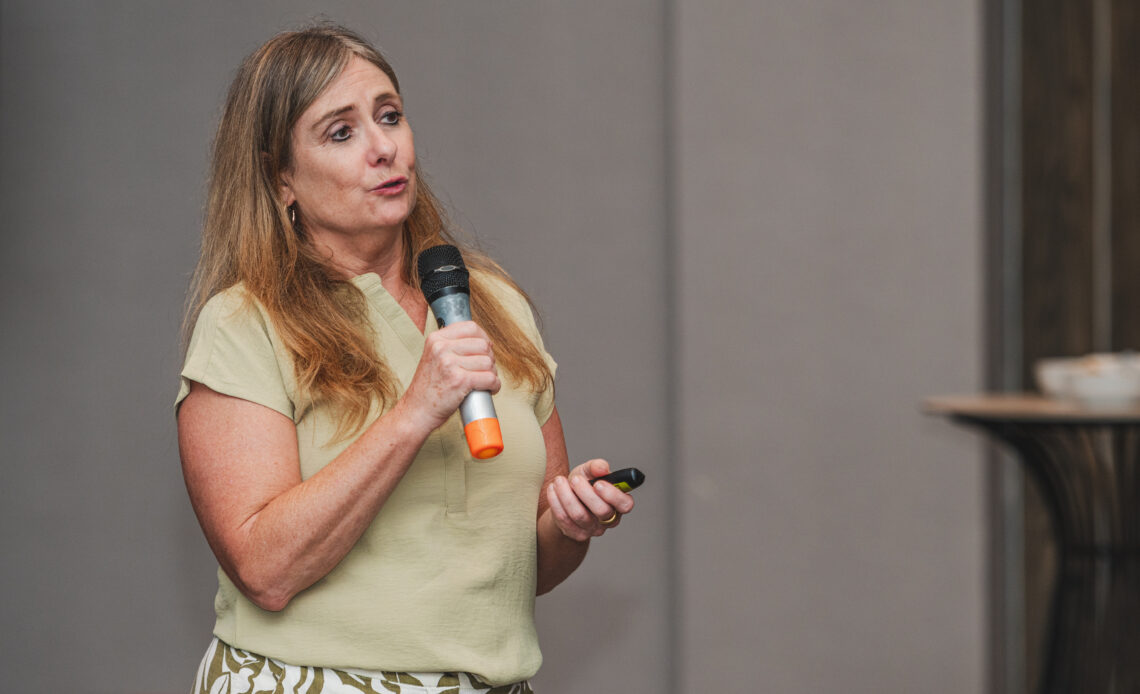
Kenya must strengthen its technology ecosystem, invest in skills development and create more opportunities for local engineers to remain competitive as global technology companies restructure their operations, Moringa Chief Executive Officer Nikki Germany has said.
Germany said Microsoft’s reported decision to close its Africa Development Centre (ADC) in Nairobi, seven years after its establishment, had raised important questions about Kenya’s position as a leading technology hub and its ability to retain experienced technology professionals.
Employees were reportedly informed of the changes on October 12, 2026. However, Microsoft has described the move as part of a global restructuring affecting its engineering operations in Kenya without confirming a complete shutdown of the centre.
In an opinion article, Germany said the development represented more than job losses, noting that affected employees had accumulated valuable experience, professional relationships and technical expertise while working on products serving international markets.
She said Kenya’s reputation as Africa’s Silicon Savannah should be measured not only by the number of multinational companies establishing offices in the country but also by its ability to retain and develop local talent when international investors change their strategies.
“Restructuring may eliminate jobs, but it does not erase skills,” Germany said, emphasising the need for the local technology industry to ensure experienced professionals continue contributing to the country’s digital economy.
Microsoft established its Africa Development Centre in 2019, announcing a $100 million investment over five years and plans to employ 500 engineers across its Nairobi and Lagos centres by 2023.
By March 2022, the Nairobi centre had more than 450 full-time employees, with Kenyan engineers participating in international teams developing technology products for global markets.
Germany noted that the experience gained by these professionals remained one of the most valuable contributions of the investment, despite uncertainty surrounding the centre’s future.
She also highlighted challenges facing Kenya in attracting and retaining major technology investments, pointing to Microsoft’s closure of its Lagos centre in 2024 and the subsequent announcement of a $1 billion digital investment initiative in Kenya alongside UAE-based G42.
The proposed initiative, which included a geothermal-powered data centre at Olkaria, has since stalled amid reported concerns over power capacity and payment guarantees.
According to Germany, such developments demonstrate the risks of relying heavily on investment decisions made outside the country.
She said local employers in financial services, fintech, telecommunications and emerging technology sectors could provide opportunities for engineers affected by multinational restructuring.
However, she cautioned that absorbing experienced professionals would require competitive salaries, strong engineering cultures, clear career progression and opportunities to develop products capable of competing internationally.
Germany further called for education providers to shift their focus from preparing students for immediate employment towards building long-term career resilience, particularly as artificial intelligence continues transforming the technology industry.
At Moringa, she said, training programmes emphasise technical foundations, problem-solving, product development and continuous learning to help graduates adapt to changing employer requirements.
The Moringa Graduate Impact Study 2026 found that 70.9 per cent of surveyed alumni who secured opportunities did so before graduation or within six months after completing their studies.
However, while all 14 employers surveyed identified technical execution as a strength among Moringa graduates, 63.4 per cent said communication skills needed improvement.
The institution’s Workforce Capability Report 2026 also established that 77 per cent of organisations use online learning platforms, but only 16 per cent considered their upskilling programmes very effective.
Germany urged employers to introduce structured internships, apprenticeships and mentorship programmes, noting that internships and apprenticeships accounted for 29.1 per cent of alumni’s first employment opportunities.
She also called on education institutions to work closely with employers when designing curricula, introduce specialised training in artificial intelligence and cybersecurity, and equip learners with communication and business skills.
Meanwhile, she said the government had a responsibility to create a favourable environment for technology businesses through predictable taxation policies, reliable and affordable electricity, supportive procurement policies and access to early-stage financing.
She added that improving cross-border payment systems and supporting local technology entrepreneurs would enable engineers leaving multinational companies to establish businesses in Kenya and serve international markets.
Germany said Microsoft’s restructuring should not be interpreted as the end of Kenya’s ambitions as a global technology destination but rather as an opportunity to strengthen local capabilities.
She maintained that the country’s long-term success would depend on how effectively it develops homegrown technology companies, retains experienced professionals and creates sustainable employment opportunities beyond multinational investments.
“The true measure of Kenya’s success will not be how many global companies open offices here, but how much local capability remains, grows, and creates new opportunities when they change direction,” she said.