


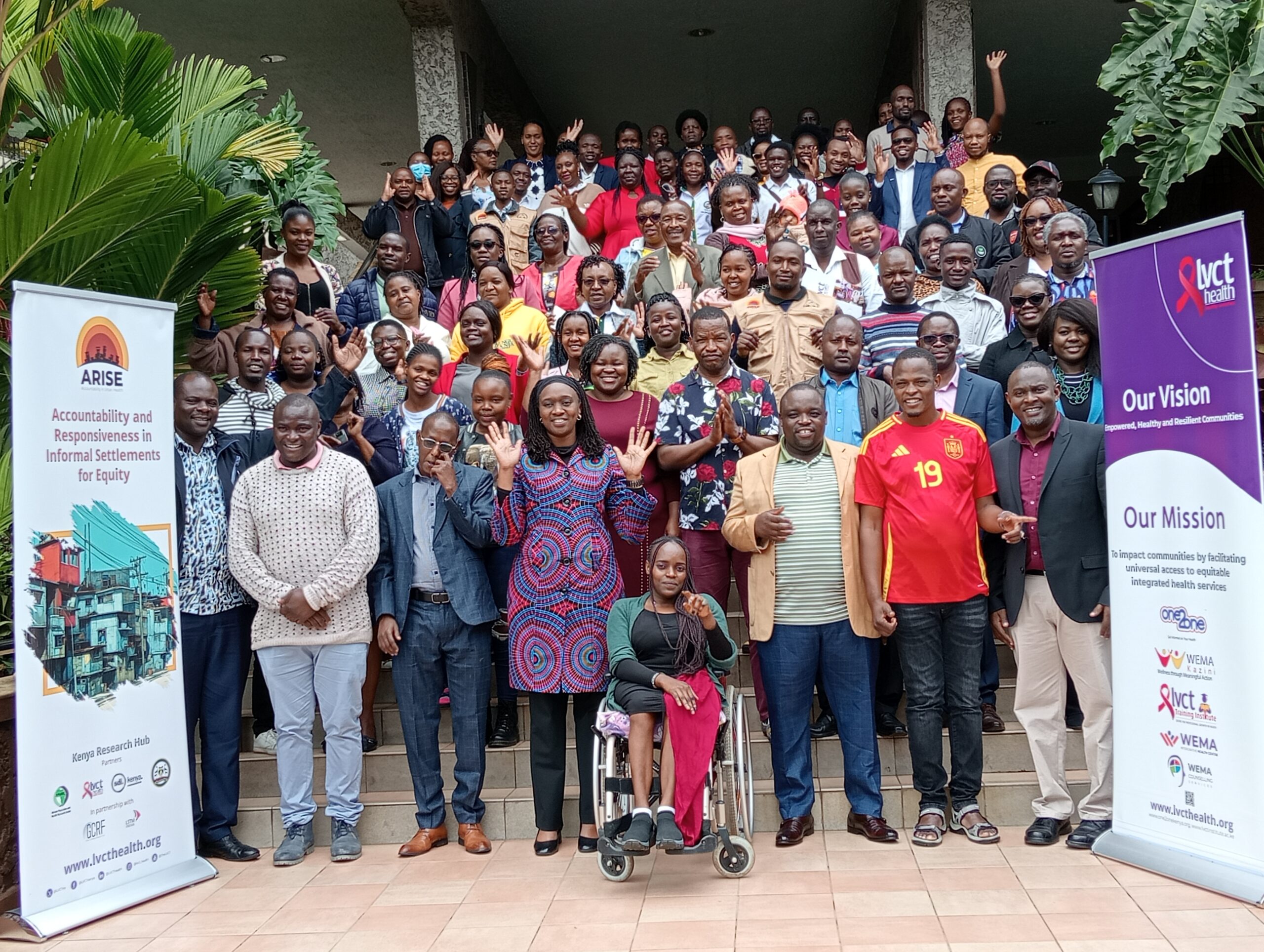
LVCT Health has wrapped up its ARISE workshop and exhibition, drawing attention to the urgent needs of marginalized and vulnerable populations in informal settlements.
The event, which spotlighted the experiences of persons with disabilities and other underserved groups, aimed to address critical issues including mental health, health budgets, teenage pregnancy, and infrastructure development.
Held in informal sectors such as Viwandani and Korogocho, the ARISE event featured thought-provoking imagery and personal narratives that underscored the challenges faced by these communities. Research conducted since 2019 highlighted the pressing need for improved infrastructure to support these vulnerable populations.
Dr. Lillian Otiso, Executive Director of LVCT Health, emphasized the findings of their extensive research. “Our study has shown that the elderly, persons with disabilities, and pregnant teenagers are disproportionately affected in urban settings. The project, funded by UK Research and Innovation, calls for continued focus on these groups in resource allocation and program development.” Otiso stated
LVCT Health calls for accountability, responsiveness and equity in urban settlement
The workshop included detailed discussions on the experiences of people with disabilities, including the burdens of self-care, access to healthcare, and the impact of social stigma. The information was collected using Photovoice, a participatory research method involving community members who captured their realities through photography, supported by Community Health Volunteers (CHVs).
Aron Kang’ara, MCA for Viwandani, praised the initiative for its role in bringing attention to community needs. “ARISE has been instrumental in highlighting the issues faced by our vulnerable members. Regular engagement with communities is essential for addressing their needs effectively.” Kang’ara said
LVCT Health continues to advocate for policies and programs that reflect the specific needs of marginalized groups. The organization calls on both government and non-governmental entities to use the research findings to guide resource distribution and program implementation, ensuring that the most vulnerable populations receive the support they need..