


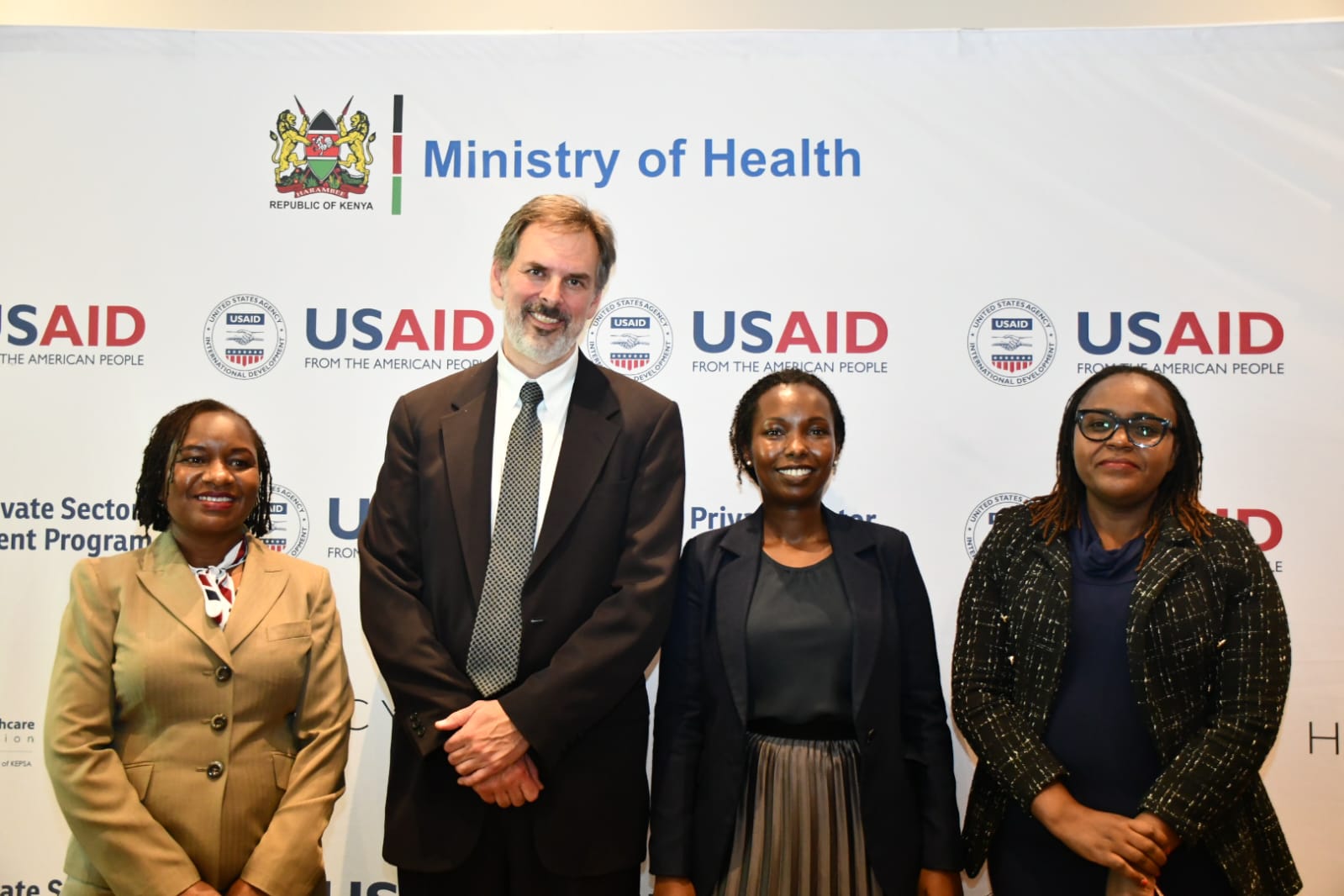
A new report titled ‘The State of Kenya’s Health Market 2024 was launched today, highlighting critical gaps and opportunities in the nation’s healthcare system. Commissioned by the Ministry of Health in collaboration with the USAID Private Sector Engagement (PSE) Program, the assessment employs the Shaping Equitable Market Access (SEMA) framework to analyze healthcare services across six key counties: Nairobi, Kisumu, Uasin Gishu, Homabay, Nakuru, and Mombasa.
The report reveals a disjointed healthcare system with a mix of public, non-profit, and for-profit institutions. While a national management framework exists, local coordination efforts remain inadequate, resulting in inconsistent service delivery. The authors stress the urgent need for improved governance to align actions between county and national authorities.
A major barrier identified is the lack of effective data sharing between public and private sectors, which hampers healthcare planning and decision-making. The inaccessibility of private sector market data creates significant information gaps, limiting the development of effective healthcare solutions.
Despite allocating approximately 11 per of its budget to health, Kenya’s healthcare system continues to rely heavily on donor funding. Supply chain inefficiencies further complicate the delivery of reliable and affordable healthcare. The report highlights that the successful implementation of Social Health Insurance (SHI) is crucial for enhancing healthcare access.

The transition to mandatory SHI offers a unique opportunity to bolster local manufacturing capabilities to meet rising health service demands. However, the report notes that existing production capacities are underutilized, and the lack of price control measures jeopardizes the availability of affordable, locally-produced medicines.
Although private providers are often viewed as offering superior care, smaller operators face significant challenges due to high costs and limited revenues. The report advocates for the implementation of a unified quality policy, such as the Kenya Quality Model for Health, to ensure equitable access to healthcare across all private providers.
The assessment points out significant gaps in nationwide healthcare demand data, which is typically limited to specific health programs. Additionally, with only 26 percent of the population covered by insurance, socio-demographic barriers further restrict access to healthcare for many Kenyans.
The report outlines several recommendations aimed at fostering a sustainable and equitable health ecosystem. Central to these is the call for strengthened governance and enhanced coordination between public and private health sector stakeholders.
It emphasizes the need for health sector engagement to evolve from mere dialogue to comprehensive coordination across the market. The authors advocate for a paradigm shift in governance to oversee broader health market dynamics, thereby enhancing alignment and collaboration between public and private contributions.
As Kenya aims for Universal Health Coverage (UHC), the findings of this report present a crucial opportunity for meaningful reforms in the healthcare sector. The media is urged to play a vital role in disseminating these insights widely to ensure that pressing issues are addressed at all levels of society.
This report not only highlights existing challenges but also serves as a roadmap for transformative changes that could significantly improve healthcare access and outcomes for all Kenyans.