


Kenya is moving rapidly into a new energy era, with renewable power increasingly replacing the traditional dependence on fossil-fuel-based generation for homes, businesses and productive activities.
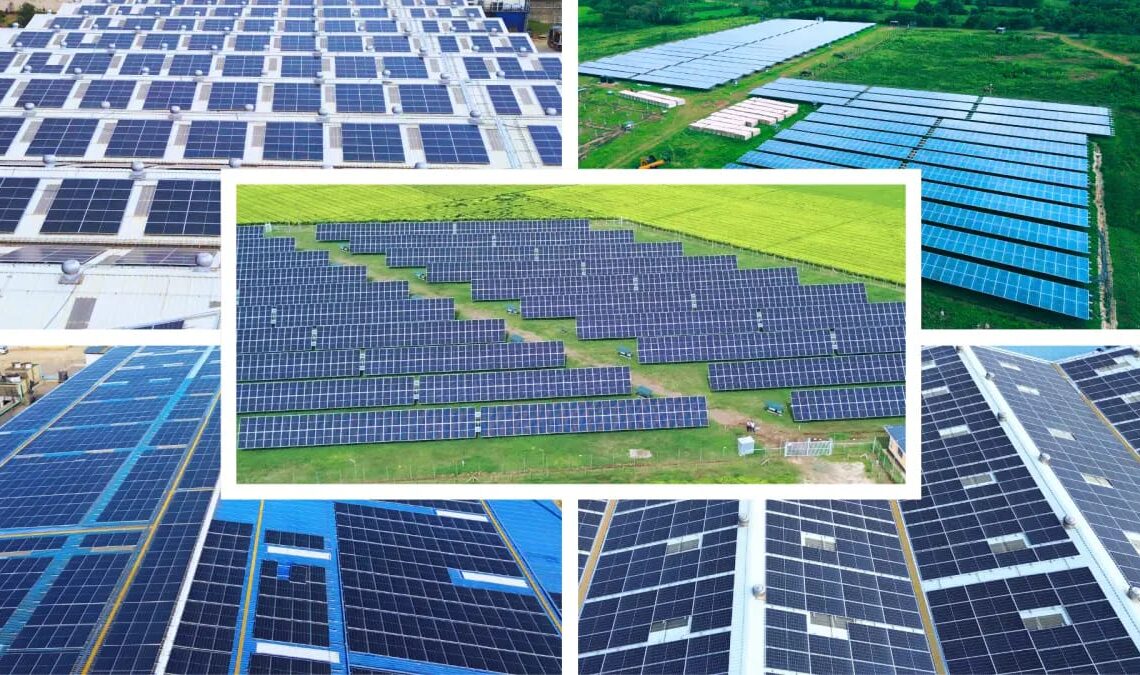
The transition is particularly visible in the growing adoption of solar energy, which is no longer confined to rural households and small-scale applications but is spreading across commercial buildings, farms, schools, warehouses and major manufacturing facilities.
Kenya already has one of Africa’s strongest renewable-energy profiles, with geothermal, hydro, wind, solar and other renewable sources forming the backbone of its electricity system. By June 2025, renewable sources accounted for more than 80 percent of Kenya’s installed electricity capacity, while captive solar capacity had reached 300.5 MW, according to the Energy and Petroleum Regulatory Authority. This development signals a significant departure from the fossil-fuel era, as the country seeks to meet rising energy demand while reducing emissions, strengthening energy security and supporting a more sustainable economy.
The transformation is perhaps most profound in rural Kenya, where solar power has emerged as a practical tool for expanding access to modern energy. Solar home systems, solar-powered water pumps, irrigation equipment, refrigeration, lighting and other applications are changing how households, farmers and small enterprises operate in areas where conventional electricity infrastructure may be limited or expensive to extend. But the same technology is simultaneously taking root at the opposite end of the economic spectrum: large urban and industrial establishments.
Factory roofs, warehouses and commercial properties are increasingly being viewed as potential power-generating assets rather than simply physical structures. For manufacturers, this shift has strategic importance because electricity is a critical production input, powering machinery, refrigeration, pumps, compressors, information systems and other industrial processes.
Generating part of that electricity on-site can potentially reduce exposure to energy costs while giving businesses greater control over their power supply and strengthening their environmental credentials.
Industrial solar, however, is considerably more complex than placing photovoltaic panels on a roof. Large factories require an energy system designed around their production patterns, electricity consumption, power quality, grid infrastructure, generators, future expansion and operational priorities.
This has created growing demand for industrial solar EPC, covering engineering, procurement and construction from initial assessment and load analysis through system design, equipment procurement, construction, commissioning and long-term maintenance.
A company such as Spenomatic Group illustrates this evolution in Kenya’s industrial energy market, with its published portfolio covering commercial and industrial solar PV, battery energy storage, electrical infrastructure, hybrid power and energy optimisation.
The company reports more than 162 MWp of C&I solar experience and more than 150 solar sites across Africa, including a 17.2 MWp solar installation serving steel manufacturing operations in Kisumu and Mombasa. Its industrial portfolio also includes projects serving food processing, tea, rubber and footwear, milling, sawmilling, engineering and other manufacturing activities.
Such projects demonstrate how Kenya’s green-energy transition is moving beyond household electrification towards the decarbonisation and modernisation of productive industries.
Battery storage is adding another dimension to this transformation. Solar power is generated during daylight hours, while factories and commercial facilities may require electricity around the clock. Battery Energy Storage Systems can bridge that gap by storing electricity and releasing it when required, while also supporting critical loads, peak management, generator optimisation and hybrid power systems.
This is particularly important for industrial facilities where an electricity interruption can result in production stoppages, damaged batches, equipment trips and costly delays. Spenomatic says it has more than 12.5 MWh of installed battery-energy-storage capacity, reflecting the growing shift towards integrated systems in which solar, batteries, the grid, generators and energy-management controls operate together.
The wider industrial-energy transition is therefore not simply about replacing one electricity source with another; it is about designing smarter systems around cost, reliability and decarbonisation.
For manufacturers, the most effective strategy may combine renewable generation with energy efficiency, storage, improved electrical infrastructure and, where necessary, conventional backup rather than relying on a single technology.
Kenya’s accelerating adoption of renewable energy also places its manufacturing sector within the broader global movement towards lower-carbon production. Under its updated Nationally Determined Contribution, Kenya committed to reducing greenhouse-gas emissions by 32 percent by 2030 against a business-as-usual scenario, linking domestic development to the country’s obligations under the Paris Agreement.
For Kenyan manufacturers competing in international markets, this transition increasingly has commercial implications. Global supply chains are paying greater attention to environmental performance, while international investors and customers are demanding greater transparency around emissions and sustainability.
Renewable electricity can therefore become more than a climate initiative: it can support competitiveness, energy-cost management and access to markets where carbon performance increasingly matters. Industrial decarbonisation is also broader than solar alone, incorporating energy efficiency, electrification, biomass, cogeneration, process optimisation, storage and fuel switching.
Kenya’s existing renewable-energy advantage allows it to position itself as a hub for cleaner manufacturing in Africa, provided investment in generation is matched by improvements in transmission, distribution, storage, technical skills and industrial energy management.
The direction of travel is becoming increasingly clear: Kenya is evolving from an economy in which households and businesses primarily consume centrally generated electricity into one where more energy users can also become energy producers. Solar panels are appearing in villages, farms, commercial premises and factories, while batteries and intelligent controls are making decentralised energy systems more capable and reliable.
Companies such as Spenomatic are helping drive this industrial side of the transition by bringing together solar generation, storage, electrical engineering, hybrid power, energy optimisation and EPC delivery. The factory of the future may therefore be not just a place where goods are manufactured, but also a sophisticated energy asset generating, storing and managing part of its own power. For Kenya, the green-energy revolution presents an opportunity to tackle emissions while simultaneously strengthening industrial competitiveness, rural productivity and energy security.
From the rural village to the urban factory floor, the country’s abundant renewable resources are increasingly becoming an economic asset, and Kenya appears determined to turn that natural advantage into one of the foundations of its next phase of growth.