


Kenya’s construction sector has unveiled a bold initiative aimed at closing the gender gap while accelerating climate-resilient housing development.
With women accounting for less than three percent of the country’s construction workforce, according to the National Construction Authority, and 55 percent excluded from formal financial services, stakeholders warn that the industry faces both social injustice and lost economic potential.
As Kenya pushes to deliver 200,000 climate-resilient homes annually, experts argue that excluding half the population from the workforce is not only inequitable but also unsustainable.
Industry Unveils JEDI Toolkit and Training Programme
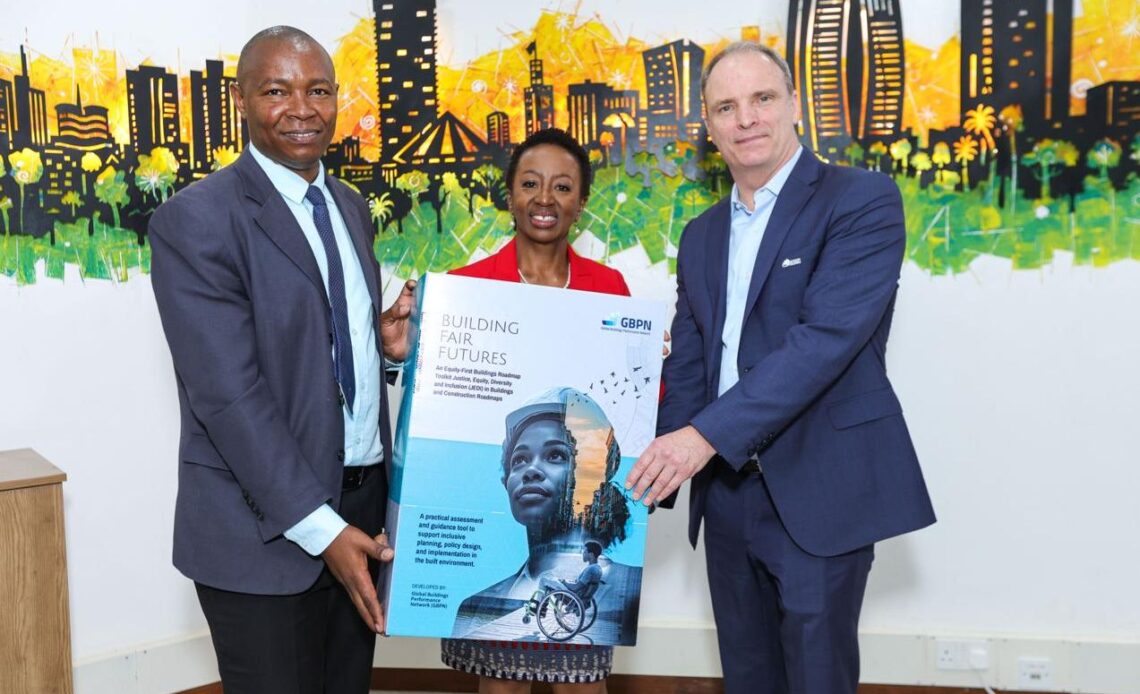
In response, the Global Buildings Performance Network (GBPN), in partnership with the National Construction Authority, State Department of Public Works, Women in Real Estate (WiRE), and the Architectural Association of Kenya (AAK), launched the “Building Fair Futures” initiative at the KBRC Auditorium in Nairobi.
The programme introduces a Justice, Equity, Diversity and Inclusion (JEDI) Toolkit alongside the She Builds Sustainably Training Programme. Together, they aim to ensure the sector’s transition to low-carbon buildings also advances fairness and inclusion.
Women Positioned as Leaders, Not Beneficiaries
Delivering the keynote address, Eva Muraya, founder and CEO of BSD Group, emphasized that women must be recognized as leaders in sustainable construction.
“The question is no longer whether women should be included in sustainable construction. It is how quickly we can remove the barriers that keep them out,” she said.
Ms. Patience Mulondo, President of Women in Real Estate, noted that sustainability discussions have often ignored the people behind the projects. “For too long, we have talked about sustainable buildings without talking about who builds them,” she said, adding that a just transition cannot leave key groups out of decision-making spaces.
Linking Climate Action and Social Justice
Dr. Peter Graham, CEO of GBPN, said Kenya is demonstrating how decarbonization and equity can move forward together.
Meanwhile, Ms. Mugure Njendu, GBPN’s Africa Programs Lead, stressed that climate goals cannot be achieved without inclusive participation.
“Climate action and social justice must advance together. We cannot achieve the 1.5°C pathway if half the population is locked out of the solutions,” she said.
Stakeholders say the initiative marks a significant step toward a more inclusive, climate-resilient built environment in Kenya.