

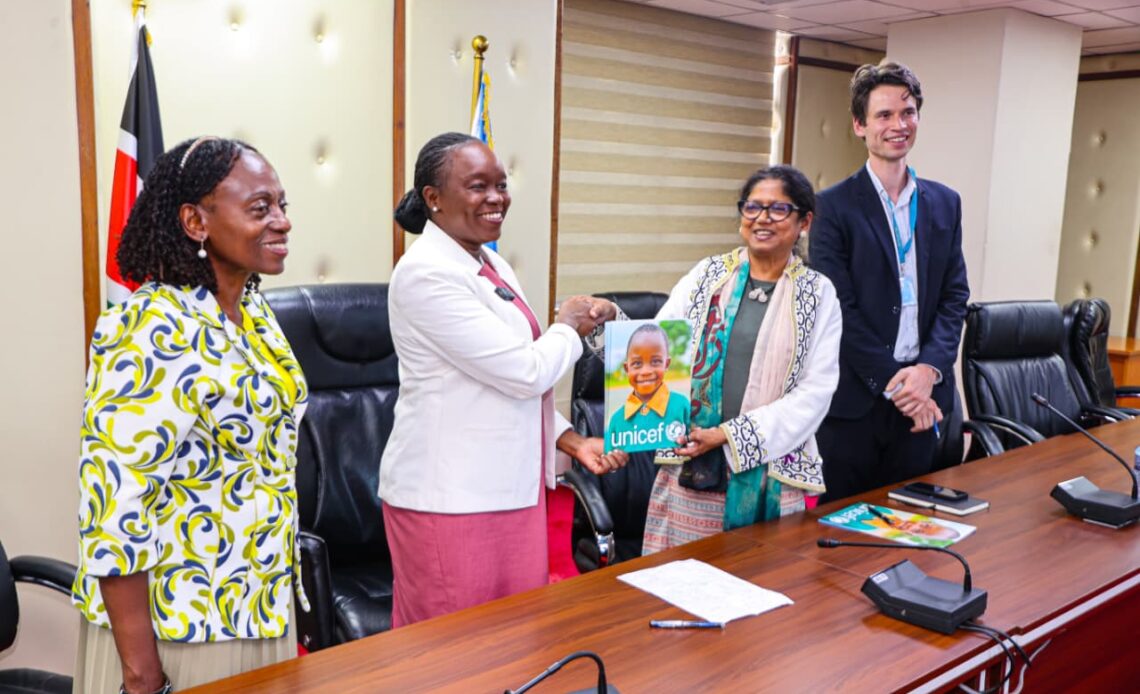
Ministry of Environment, Climate Change and Forestry has signed the Intergovernmental Declaration on Children, Youth and Climate Action in partnership with the United Nations Children’s Fund (UNICEF), strengthening the country’s commitment to protecting children and young people from the growing impacts of climate change.
Environment, Climate Change and Forestry Cabinet Secretary Dr. Deborah Barasa signed the declaration during discussions with UNICEF Representative to Kenya, Dr. Shaheen Nilofer, reaffirming the government’s commitment to placing children’s rights and interests at the centre of national and international climate action.
The declaration seeks to integrate children’s right to a healthy environment into national climate policies, strengthen investments in climate adaptation and disaster preparedness, expand climate education and ensure meaningful participation of young people in climate-related decision-making.
Speaking during the signing on Tuesday afternoon, Dr. Barasa said children and young people are not only among the most vulnerable to climate change but also innovators, agents of change and important partners in building climate resilience.
She noted that the declaration would provide an opportunity for Kenya to strengthen the integration of children’s concerns into its policies, plans and institutional structures, particularly in climate adaptation and mitigation.
“Children and the youth have their rights, they are innovators, they are agents of change, and again, they are partners when it comes to climate resilience,” said Dr. Barasa.
She added that the commitment aligned with Kenya’s Nationally Determined Contributions (NDCs) and the National Climate Change Action Plan, while emphasising the need to mobilise resources, strengthen implementation and establish effective monitoring mechanisms to achieve tangible results.
Dr. Barasa highlighted the disproportionate impact of droughts, floods, extreme heat and other climate-related disasters on children, explaining that such emergencies disrupt access to education, healthcare, nutrition, vaccination, clean water and sanitation services.
She said the government would work with UNICEF, youth-led organisations, communities and international partners to translate the declaration into practical interventions suited to Kenya’s national development priorities.
The Cabinet Secretary also pledged to amplify the voices of children and young people during international climate negotiations, particularly at the upcoming COP31, ensuring that their concerns feature prominently in discussions on climate finance, adaptation and resilience.
“As we are preparing for COP 31, we want to ensure that we have our negotiators in line to talk about the children, the youth and climate action, and also to ensure that we are amplifying our voices to protect these vulnerable people and have meaningful discussions with member states in matters of climate action, especially looking at the children and the youth,” she noted
She commended UNICEF for its technical support and partnership with the Kenyan government, particularly in environmental restoration, climate resilience and the development of climate-resilient schools and healthcare facilities.
Dr. Barasa also highlighted UNICEF’s support for the Kenya Scouts Association through the Green Initiative, noting the organisation’s achievement in mangrove restoration and its potential to inspire greater youth participation in environmental conservation.
On her part, UNICEF Representative to Kenya Dr. Shaheen Nilofer welcomed the signing, describing it as evidence of Kenya’s leadership in ensuring children remain central to climate change discussions.
She said the declaration, launched in 2019 during COP25 in Spain, builds on commitments Kenya has already made through its National Climate Change Action Plan 2023–2027 and its NDCs.
Dr. Nilofer revealed that Kenya has become the 80th country to sign the declaration, joining 79 other countries that had already endorsed the commitment.
She underscored the urgency of translating the declaration into concrete action, citing UNICEF estimates that approximately 12 million of Kenya’s 24.6 million children face climate-related vulnerabilities, while 2.4 million children in high-risk counties experience multiple vulnerabilities.
According to Dr. Nilofer, recurring droughts, floods, humanitarian emergencies and climate-related public health threats continue to disproportionately affect children and families in marginalised communities.
She called for stronger coordination between national and county governments, ministries and disaster management institutions to ensure effective preparedness and response.
Dr. Nilofer emphasised that signing the declaration must be followed by adequate financing, preparedness plans and coordinated implementation to prevent communities from relying on emergency responses after disasters strike.
She urged international partners and UN agencies to support the government’s efforts to ensure resources are available and climate interventions deliver meaningful benefits.
Both speakers reaffirmed the importance of working together to ensure children and young people are not merely beneficiaries of climate policies but active participants in shaping Kenya’s climate-resilient and sustainable future.