


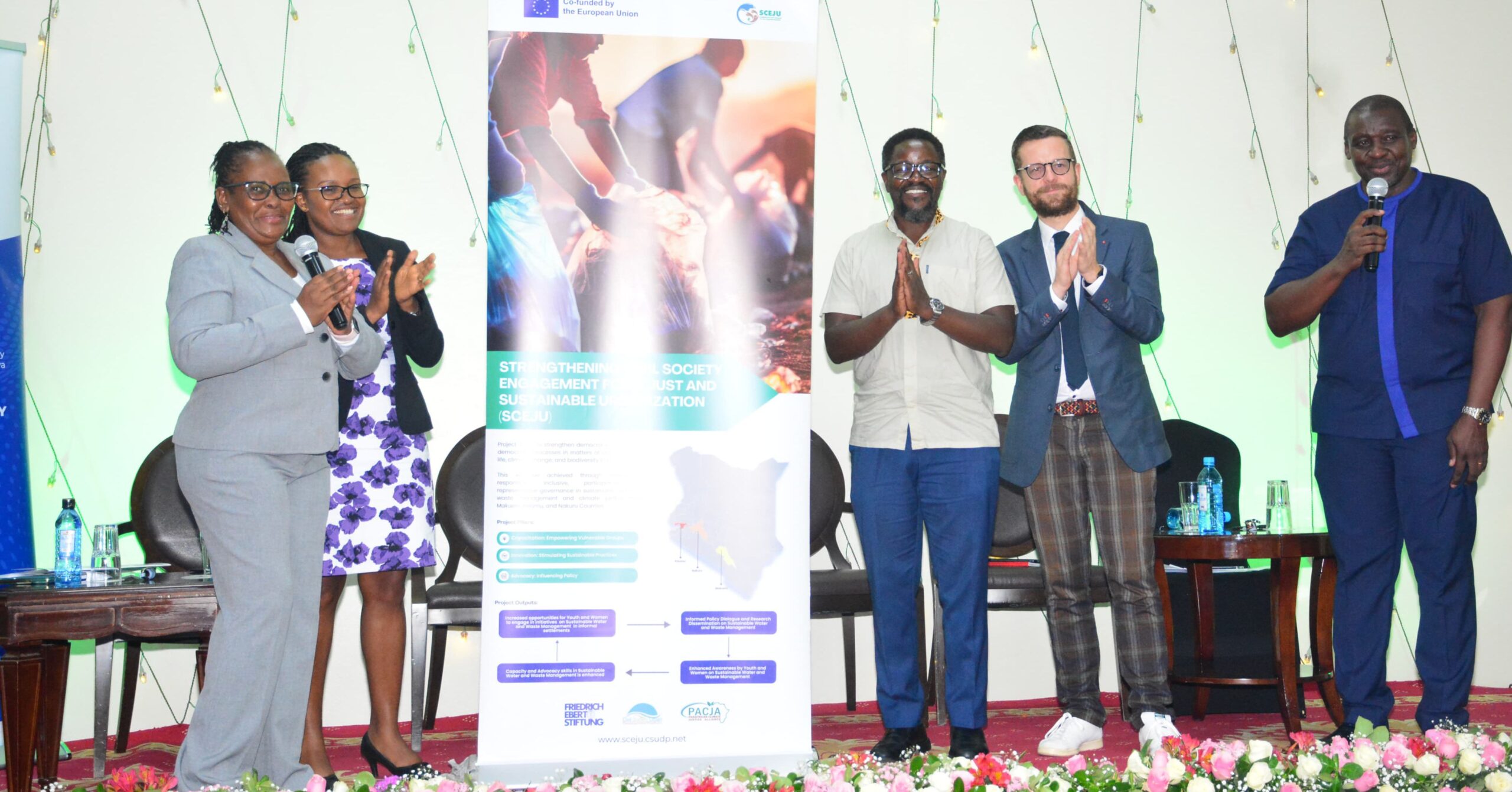
From Left Mary Ndugu Slum upgrading Department (National Government) Linda Munyao CSUDP Board Member, Prof. Alfred Omenya Technical Advisor- SCEJU Project Steering Committee, Bastion Schulz Country Representative Friedrich Ebert Stiftung, Kenya Office, George WasongaChief Executive OfficerCivil Society Urban Development Platform
In celebration of World Cities Day 2024, which focuses on “Youth climate changemakers: Catalysing local action for urban sustainability,” a consortium of non-governmental organizations today launched the Strengthening Civil Society Engagement for a Just and Sustainable Urbanization (SCEJU) project.
Supported by the European Union, this initiative aims to foster environmental justice and empower communities in Kenya’s urban informal settlements to tackle issues in water and waste management.
The SCEJU project, which will run from 2024 to 2026, is a joint effort between Friedrich-Ebert-Stiftung (FES-Kenya), the Civil Society Urban Development Platform (CSUDP), and the Pan African Climate Justice Alliance (PACJA).
SCEJU is focused on providing resources and amplifying the voices of vulnerable populations especially youth and women across Kisumu, Nakuru, and Makueni counties.
Despite progressive legislation, such as Kenya’s 2022 Sustainable Waste Management Act, which requires household waste sorting, informal settlements often remain overlooked. The SCEJU project seeks to address this gap by working alongside youth, women, and marginalized groups to build sustainable urban practices. Bastian Schulz, Country Representative of FES-Kenya, highlighted the project’s commitment to advancing equitable access to resources.
“PACJA, CSUDP, and FES are joining forces to make water and waste management more inclusive, sustainable, and equitable. We’re committed to helping vulnerable urban communities—especially women and youth—to address the challenges that threaten sustainable water and waste management,” Schulz said.
The project aligns with this year’s World Cities Day theme, recognizing youth as essential catalysts in the drive toward sustainable urbanization. According to George Wasonga, CEO of CSUDP, the SCEJU project seeks to leverage young people’s innovative potential.
“SCEJU will unlock the power of the youth to drive change within their communities,” Wasonga stated. “Young people are ready to mobilize, and with the right support, they can create sustainable change that benefits not only the environment but their communities as well.”

Urban informal settlements across Kenya face mounting challenges due to climate change, including limited access to clean water and insufficient waste management systems. Charles Mwangi, Head of Programs and Research at PACJA, highlighted the role SCEJU will play in creating resilient communities.
“Climate justice means amplifying the voices of those most affected by the climate crisis,” Mwangi explained. “With SCEJU, we’re empowering youth, women, and vulnerable communities in Kisumu, Makueni, and Nakuru to be architects of their climate-resilient future. This project is about more than just environmental solutions, it’s about equitable representation in shaping sustainable urban policies.”
Key Objectives and Vision for SCEJU
- Community Engagement: Unite stakeholders from government bodies, youth, women, media, and strategic partners to discuss the project’s objectives and potential impact.
- Networking and Knowledge Exchange: Foster collaboration among beneficiaries, agencies, and community representatives, creating a shared platform for sustainable urban solutions.
- Public Awareness: Elevate the project’s message and vision to attract broad public interest and media attention, amplifying SCEJU’s impact across Kenya.
With an aim to create a cycle of social, environmental, and economic benefits, SCEJU is set to drive inclusive, sustainable development in Kenya’s urban communities. By empowering youth and advocating for vulnerable groups, the project strives to lay the foundation for a climate-resilient future where every community member has a voice.