


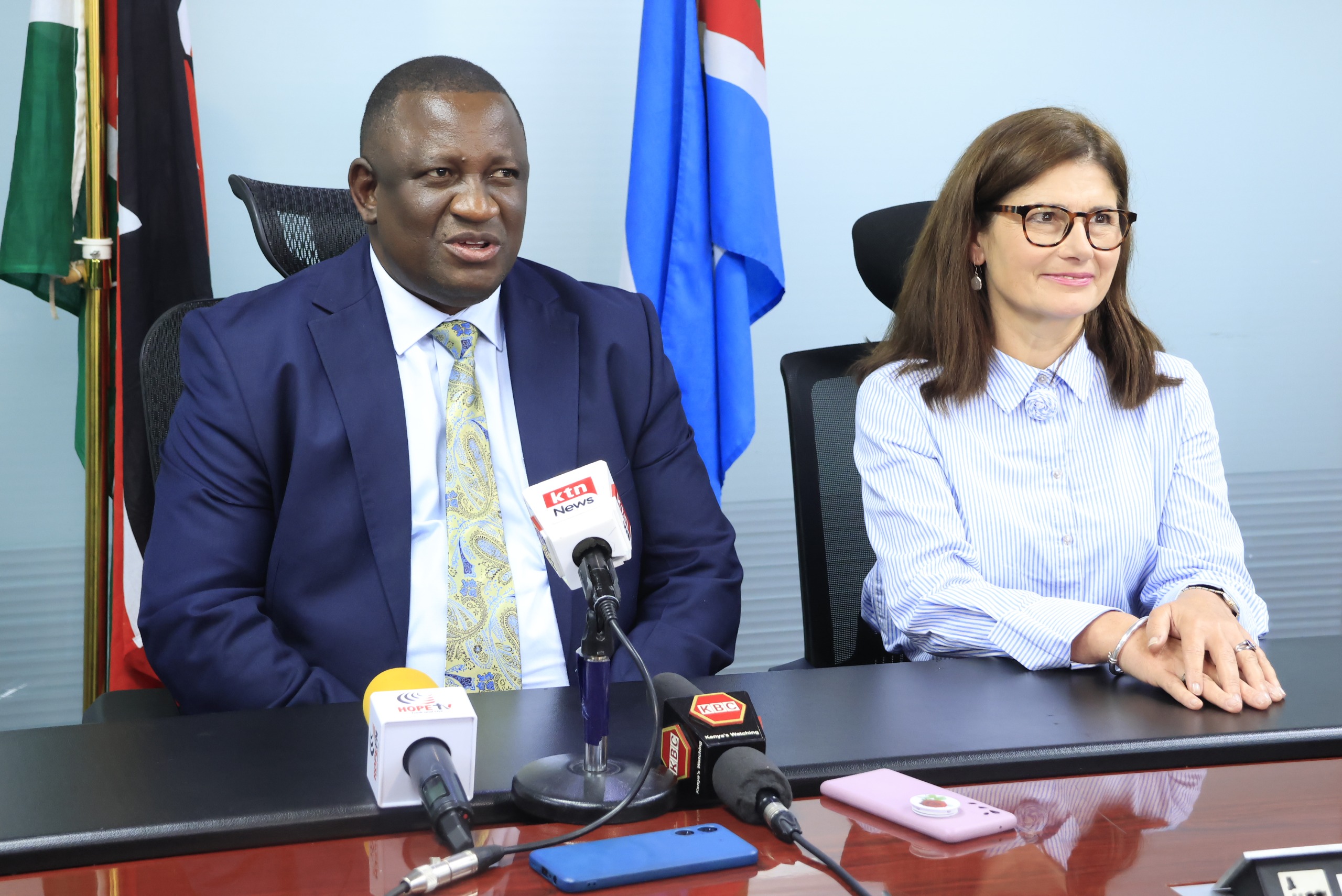
Investment, Trade and Industry Cabinet Secretary Salim Mvurya with EU Ambassador to Kenya Henriette Geiger during the launching of nationwide sensitization for EU Economic Partnership Agreement
The Kenyan government has announced a nationwide sensitization module to familiarize the business community with the European Union (EU) Economic Partnership Agreement (EPA), promising to unlock significant market opportunities across all 27 EU member states.
In a press briefing held on Tuesday Investments, Trade & Industry Cabinet Secretary Salim Mvurya emphasized the transformative potential of the EPA for Kenya’s trade prospects. “It is crucial that both the business and investor communities are fully informed about the stakes involved—not only for the private sector but also for public and government agencies,” Mvurya stated.
EU Ambassador to Kenya, Henriette Geiger, praised the Ministry’s initiative to operationalize the agreement. “The EPA provides a unique opportunity for Kenya’s business community to access the European market duty-free. Once fully embraced, this agreement will significantly boost employment and strengthen economic ties between Kenya and the EU,” Ambassador Geiger said.

To support the effective rollout of the agreement, a trade mission from Brussels, Germany, will visit Kenya in September. This mission aims to collaborate with the Ministry to establish a robust operational framework for the EPA, ensuring that Kenyan businesses can seize the opportunities in the European market.
The full implementation of the EPA is slated to begin next year, following the resolution of key issues between Kenya and the EU. Mvurya confirmed that regional court cases and tariff disputes have been addressed, with the agreement set to roll out alongside a 3.5 billion shilling program focused on further sensitization efforts. This program will lay the groundwork for the comprehensive adoption of the trade deal.
Mvurya noted that while the EPA will facilitate duty-free access to the EU market for many Kenyan products, agricultural imports from the EU will continue to attract duties to protect local producers and comply with Kenya’s regional trade commitments. This follows previous legal challenges by civil society groups to halt the EPA’s implementation, citing concerns about adherence to East African Community trade treaties.
In 2023, Kenya exported goods worth 150 billion shillings to the EU, while imports from the bloc totaled 223 billion shillings. The government anticipates that the EPA will enhance Kenya’s export potential and strengthen economic relations with Europe.