

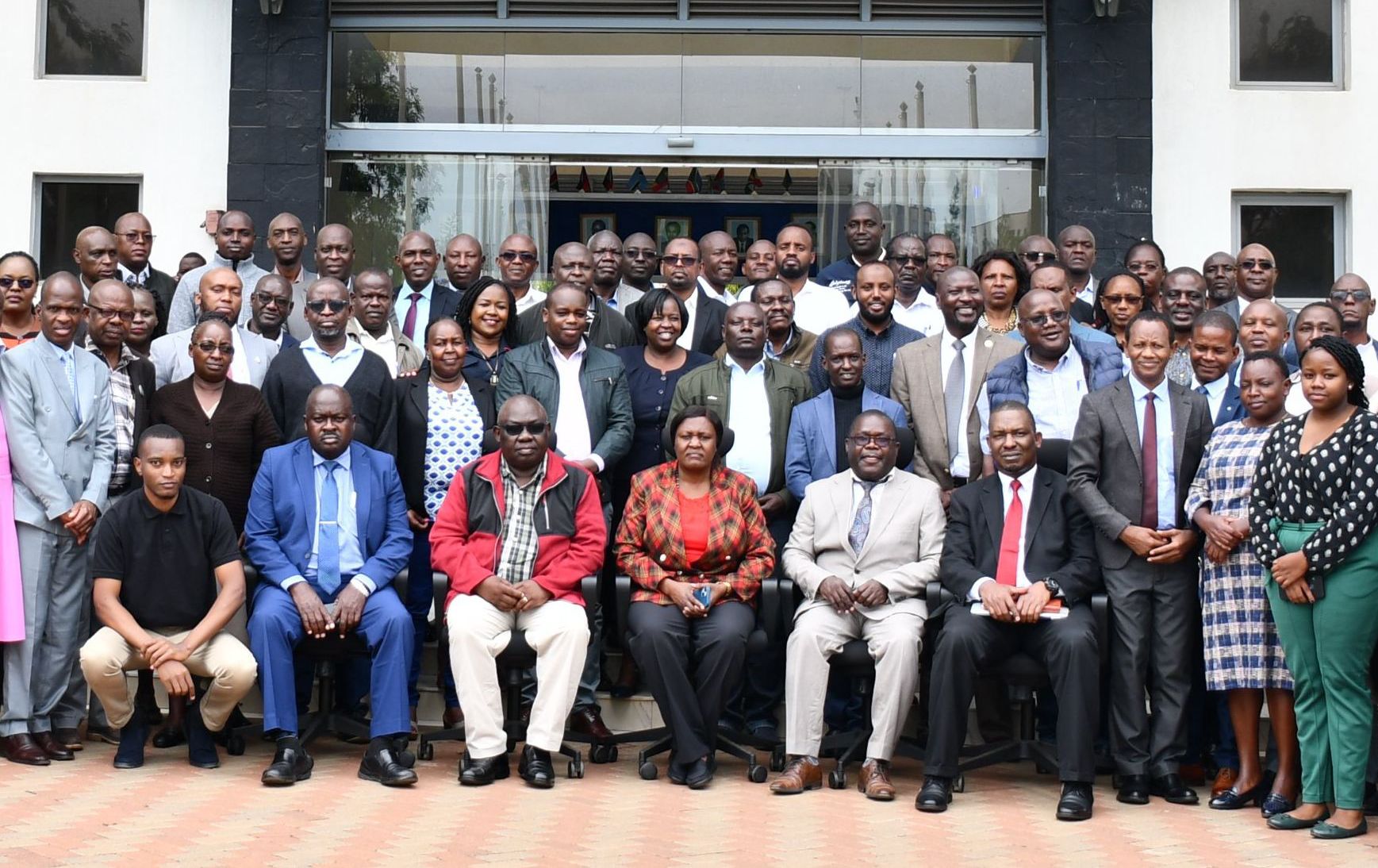
The Regional Centre for Mapping of Resources for Development (RCMRD), in partnership with the Sustainable Agriculture Foundation and Kenya’s Ministry of Agriculture and Livestock Development, today held the Kick-Off Workshop for the African Agriculture Adaptation Atlas (AAAA) Country Use Cases Project. Funded by the Bill and Melinda Gates Foundation, this initiative aims to drive climate-smart agriculture and inclusive growth across Kenya’s 47 counties.
The one-day workshop, held at the RCMRD Complex in Nairobi, brought together key stakeholders, including representatives from the Gates Foundation, the President’s Economic Transformation Secretariat (PETS), and County Executive Committee Members (CECM) in Agriculture. The event aligns with the Government of Kenya’s Bottom-Up Economic Transformation Agenda (BETA), which prioritizes grassroots economic empowerment through sustainable agricultural practices and value-chain development.
RCMRD is leveraging geospatial data and tools through the AAAA to empower county governments in addressing climate risks and vulnerabilities. This data-driven approach will support climate-smart agricultural strategies, such as crop diversification, improved water management, and livestock resilience.
“The African Agriculture Adaptation Atlas will be a game-changer for Kenya’s agriculture,” said Dr. Tom Dienya, a statistician at the Ministry of Agriculture. “Development and planning will now be based on accurate, centralized data. This will eliminate inconsistencies across various departments, allowing for better decision-making at all levels.”
The Atlas aims to enhance Kenya’s resilience against climate change by providing real-time data on production, market dynamics, and climate conditions. It also emphasizes gender inclusivity, aiming to address the unique challenges faced by women in agriculture.
Okoth Sylvester, CECM for Agriculture, Food Security, Livestock, and Blue Economy for Siaya County, highlighted the Atlas’s role in mapping agricultural value chains across counties. “Each county has unique strengths based on soil types, rainfall, and proximity to water bodies. The Atlas will help us focus on value chains like cotton, rice, and aquaculture that are best suited for our conditions,” he said.
Sylvester emphasized that farmers will be actively involved in identifying value chains and providing first-line data, ensuring that the Atlas reflects grassroots realities.
Counties are also setting up GIS labs to support the project. “The County Act of 2012 mandates GIS labs, and we are encouraging counties to establish these facilities. Geospatial data is crucial for planning and implementing climate-smart agriculture,” noted James Muturi, CEC for Agriculture in Nyeri County.
Muturi also discussed the importance of a centralized data system. “With a big data center in place, we can now share data efficiently across counties. This will empower farmers with critical information, from market prices to climate forecasts.”
The workshop also touched on the Financing Locally-Led Climate Action (FLOCA) fund, a World Bank-backed initiative aimed at climate change adaptation. Muturi explained that FLOCA has already supported various projects, including biogas installations and dairy goat farming, benefiting local farmers.
“FLOCA funds are accessible through community group proposals, with guidelines provided to ensure projects align with climate adaptation goals,” he said.
The AAAA project is expected to foster collaboration among counties and stakeholders, creating a unified approach to tackling climate change in agriculture. As the workshop concluded, participants expressed optimism about the project’s potential to transform Kenya’s agricultural sector.
“This initiative will document best practices and share lessons across counties, ensuring no one is left behind,” Muturi affirmed.