


Infotrak Report Links High Cost of Living to Corruption and Heavy Taxation
Corruption and high taxation have emerged as the leading perceived drivers of Kenya’s high cost of living in 2025, according to a new Infotrak Research and Consulting End-of-Year Poll that highlights deepening economic strain and public frustration.
The poll, conducted between December 19 and 20, 2025, surveyed 1,000 adult Kenyans across all 47 counties to assess how households are ending the year and what they expect in 2026. The findings show that economic pressures remain the most dominant concern for citizens, with unemployment and rising food prices topping household challenges.
According to the survey, 26 per cent of respondents cite unemployment as their biggest financial burden, closely followed by 25 per cent who point to high food prices. School fees account for 17 per cent of household strain, while 14 per cent say low wages are their main challenge, reflecting shrinking disposable incomes amid rising basic expenses.
Beyond finances, the report shows the cost-of-living crisis is taking a toll on well-being. Half of all respondents say economic hardship has increased their stress and anxiety levels, while 25 per cent report a negative impact on their mental health. Others indicate that prolonged financial pressure has contributed to physical health problems and strained personal relationships.
To cope, many households are adopting survival strategies. Nearly four in ten Kenyans (39 per cent) are seeking additional income sources, while 26 per cent are cutting back on non-essential spending. Meanwhile, 22 per cent report borrowing from friends or family, and 15 per cent are relying on loans and credit, signalling growing financial vulnerability.
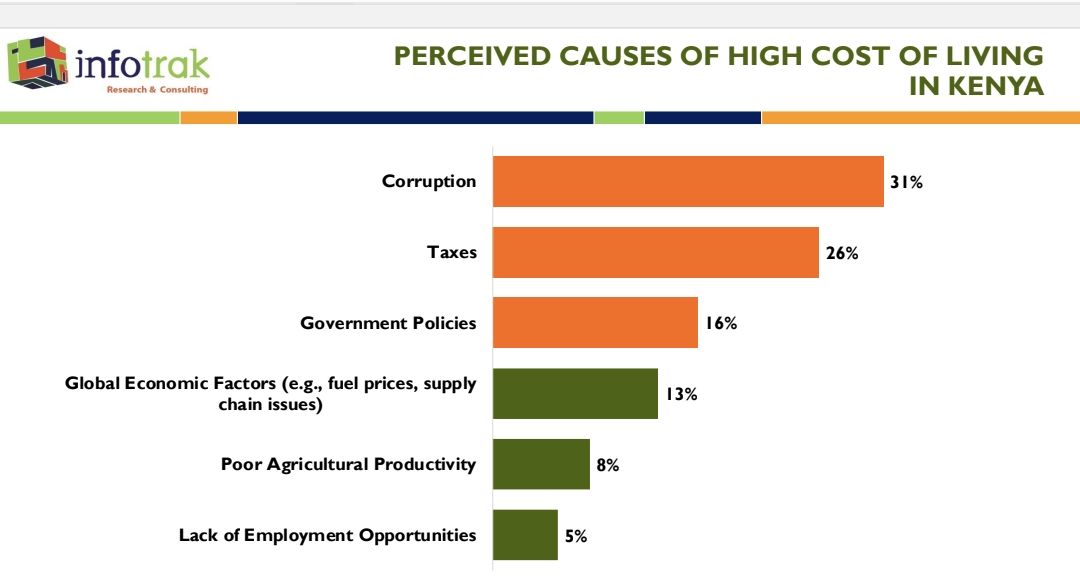
When asked about the causes of the high cost of living, respondents placed the blame largely on governance-related issues. Corruption leads at 31 per cent, followed by high taxes at 26 per cent and government policies at 16 per cent. Global economic factors such as fuel prices and supply chain disruptions account for 13 per cent, while poor agricultural productivity (8 per cent) and lack of employment opportunities (5 per cent) rank lower.
Looking back, 41 per cent of Kenyans describe 2025 as bad or terrible, compared to only 19 per cent who say it was good or excellent. As the country looks ahead to 2026, expectations remain uncertain, with 30 per cent fearing conditions will worsen, 29 per cent expecting improvement, and about a quarter anticipating no significant change.
The findings underscore growing public concern over affordability, governance and economic stability as Kenya heads into the new year.