

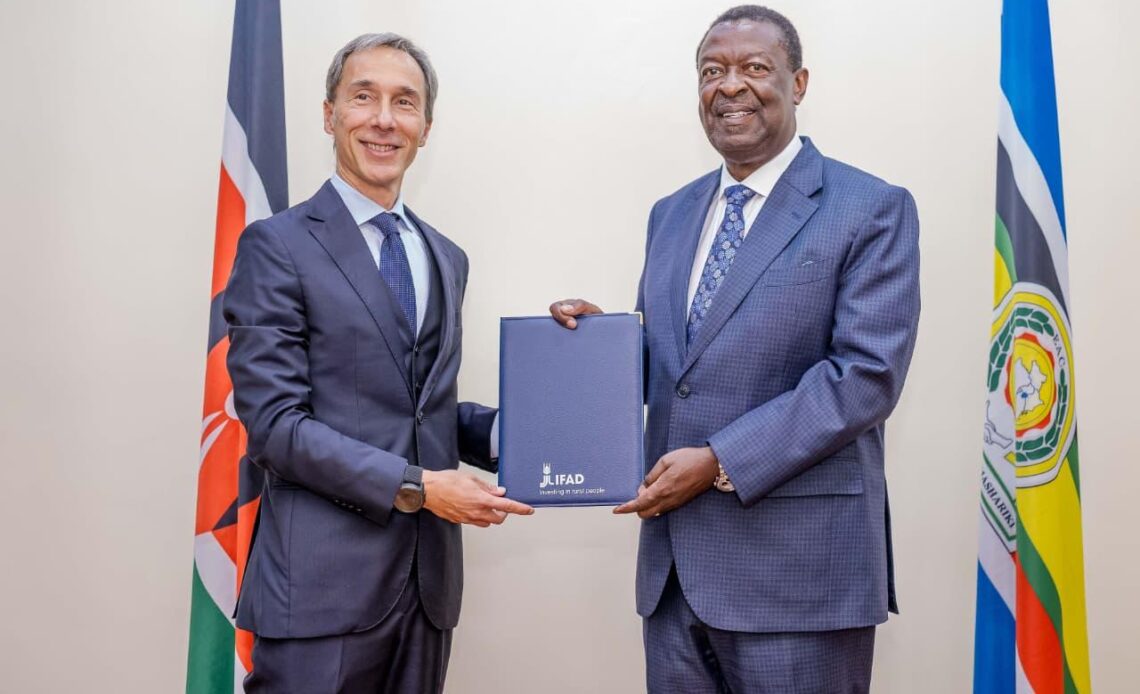
The International Fund for Agricultural Development (IFAD) has appointed Matteo Marchisio as its new Country Director and Representative to Kenya, with a focus on strengthening rural livelihoods, agricultural productivity and climate resilience.
Marchisio formally assumed office on Thursday, October 15, 2026, after presenting his credentials to Prime Cabinet Secretary and Cabinet Secretary for Foreign and Diaspora Affairs Musalia Mudavadi.
His appointment comes as Kenya and IFAD approach five decades of cooperation aimed at transforming rural communities through investments in agriculture, rural enterprises and financial services.
Marchisio said IFAD remained committed to supporting food security, sustainable livelihoods and climate resilience while working closely with the Kenyan government and development partners.
The partnership seeks to empower farmers, lower production costs, strengthen value addition and agribusiness, attract public and private investment, and create employment opportunities in rural areas.
IFAD is also supporting Kenya’s efforts to prepare for and respond to climate-related challenges, including El Niño. Its projects are identifying ways to improve early warning systems, reduce risks, protect vulnerable households and productive assets, and support recovery from climate shocks.
The agency plans to develop its next country strategy for Kenya in 2027, providing an opportunity to align future investments with government priorities and the country’s long-term development goals.
Marchisio also acknowledged Kenya’s contribution to IFAD’s governance and thanked the government for its pledge to the institution’s Fourteenth Replenishment, noting its importance amid fiscal challenges.
Kenya joined IFAD in 1977. Since then, the organisation has financed more than 20 programmes and projects in the country, mobilising nearly US$1.4 billion to support agricultural development, improve rural livelihoods and strengthen climate resilience.
The investments have reached millions of rural Kenyans, creating opportunities for communities and supporting the country’s broader agricultural transformation agenda.