

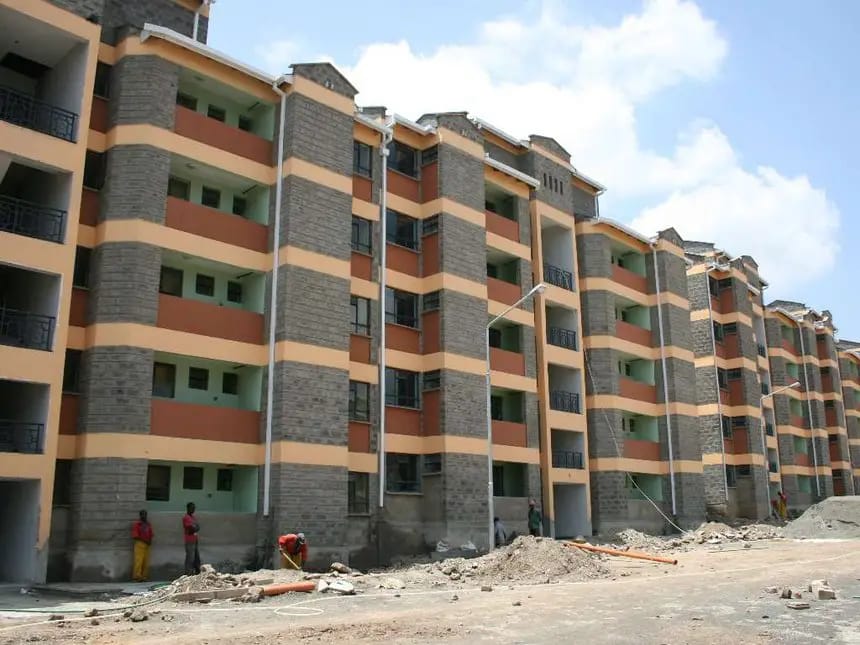
Millions of Kenyans continue to struggle to find decent and affordable homes as the country’s housing shortage rises beyond 2.8 million units, exposing the growing gap between demand for accommodation and the number of houses available.
Kenya’s housing deficit increased by 300,000 units between 2020 and 2023, despite government efforts to expand the supply of affordable homes. The rising shortage has increased pressure on the housing sector, with rapid population growth and urbanization making it harder for many households to secure decent accommodation.
The growing urban populations are the major driver of demand for housing, infrastructure and essential services. Kenya currently has a population of approximately 50 million people, with about one-third living in urban areas. However, population growth is increasingly concentrated in towns and cities, with most Kenyans expected to live in urban areas by 2033.
Across Africa, about 40 per cent of the population lives in towns and cities, making the continent home to some of the world’s fastest-growing urban centres. However, much of the new housing supply targets middle- and high-income earners because developers can make better profits from expensive properties, leaving low-income families with limited options.
To address the shortage, Kenya introduced the Affordable Housing Fund, which collects 1.5 per cent of workers’ monthly salaries to finance the construction of homes for lower-income households. The programme targets the development of more than 200,000 affordable housing units annually and is also expected to create thousands of jobs.
However, the housing challenge continues to grow, with Kenyan cities adding nearly one million people every year. Limited access to financing has also slowed efforts to increase the supply of affordable homes.
More than 10.3 million Kenyans live in informal settlements, while 55 per cent of households spend over 30 per cent of their income on rent, highlighting the financial burden facing families seeking decent accommodation.
The rising land prices, inequality, rapid urbanization, housing speculation and climate change are making it increasingly difficult for national and local governments to provide adequate and affordable homes.
Kenya’s situation reflects a wider regional challenge, with Sub-Saharan Africa facing a housing shortage of 120.5 million units. Nigeria has the largest deficit at 28 million units, followed by Ethiopia at 12 million and the Democratic Republic of Congo at 10.9 million.
Kenya’s shortage stands at 2.8 million units, compared with four million in Tanzania and two million in Uganda, showing the scale of the housing challenge facing East Africa.