

The GreenWorks 4 Africa
The Africa Green Skills and Jobs Summit has called for stronger coordination among governments, businesses, investors, and skills institutions to accelerate the development of the green jobs and skills needed to support Africa’s economic transformation.
The summit, which concluded in Nairobi, brought together senior government officials, development partners, private-sector leaders, researchers, educators, entrepreneurs and young innovators to discuss practical approaches to building Africa’s green economy.
Principal Secretary, State Department for Environment and Climate Change, Hon. Dr. Eng. Festus K. Ng’eno, welcomed the summit’s focus on practical solutions, saying Africa needs models that can translate discussions into implementation.
“We truly appreciate what you are doing as Jacob’s Ladder Africa. Governments across Africa are looking for models that work because our dignity and prosperity depend on it,” Ng’eno said.
He linked the development of green economic systems to Kenya’s wider development ambitions, particularly as the country begins shaping its Vision 2060 agenda.
“Investing in green energy is investing in national development,” he said, stressing the need to view green investment as part of broader national development.
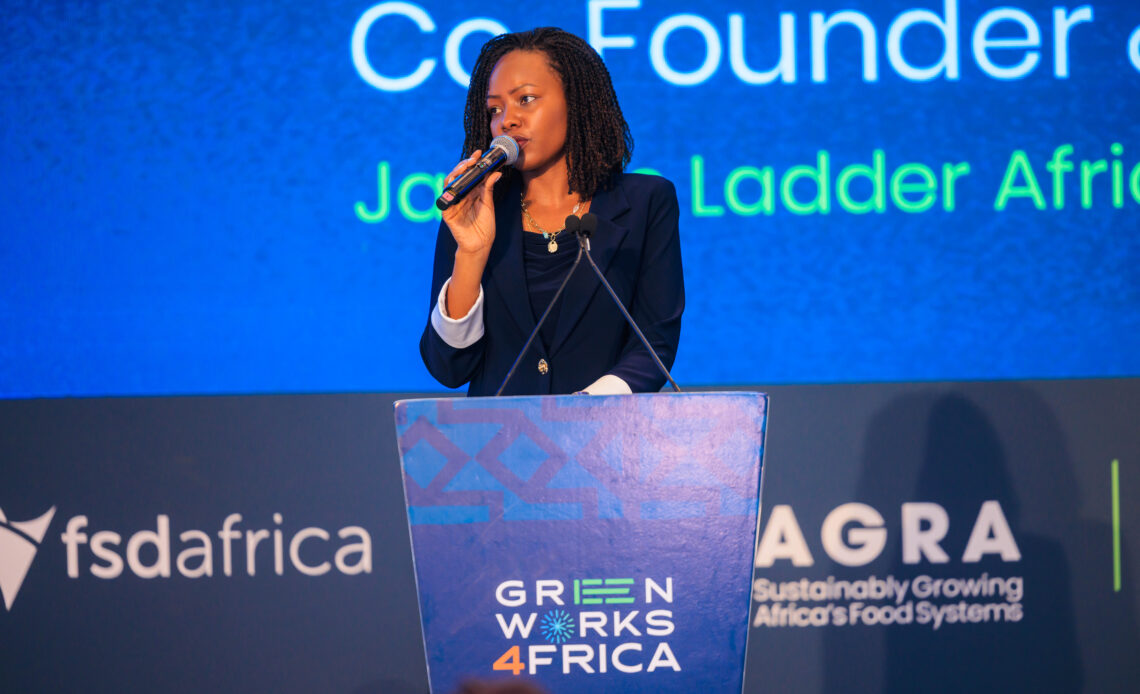
Sellah Bogonko, Co-Founder and Chief Executive Officer of Jacob’s Ladder Africa, said the value of the GreenWorks 4 Africa platform lies in bringing different stakeholders together to identify solutions that can be adapted and implemented across different African contexts.
“We must connect the dots that ensure that we are moving in the same direction, in a concerted manner and with the same effort,” Bogonko said.
Among the key recommendations from the summit was the integration of dual training and apprenticeships into green skills development, with greater involvement from employers and industry.
Participants also called for wider recognition of prior learning to ensure that young people and workers who acquire skills outside formal education can access emerging employment opportunities.
The summit further highlighted the need to align training programmes and curricula with labour-market demand. Participants said skills development should reflect the occupations and capabilities required by businesses and emerging green value chains.
There was also a call for greater investment in locally led solutions and capacity building, with communities, enterprises and practitioners playing a central role in designing and implementing green economic initiatives.
Participants agreed that collaboration among government, business, investors, development partners, and education and skills institutions is critical to ensuring that green economy interventions operate as connected systems rather than isolated programmes.
The discussions also placed Africa’s rapidly growing youth population at the centre of green economic planning, with participants calling for deliberate pathways to enable young people to participate in and benefit from emerging green industries.
The summit also advanced the expansion of the Alliance for Greening Skills and Opportunities Africa, creating a broader platform for continued collaboration among governments, employers, investors, academia, skills institutions and other stakeholders.
The expanded alliance is expected to support continued engagement on Africa’s green skills, employment and enterprise agenda as countries seek to build economies that are both sustainable and inclusive.