

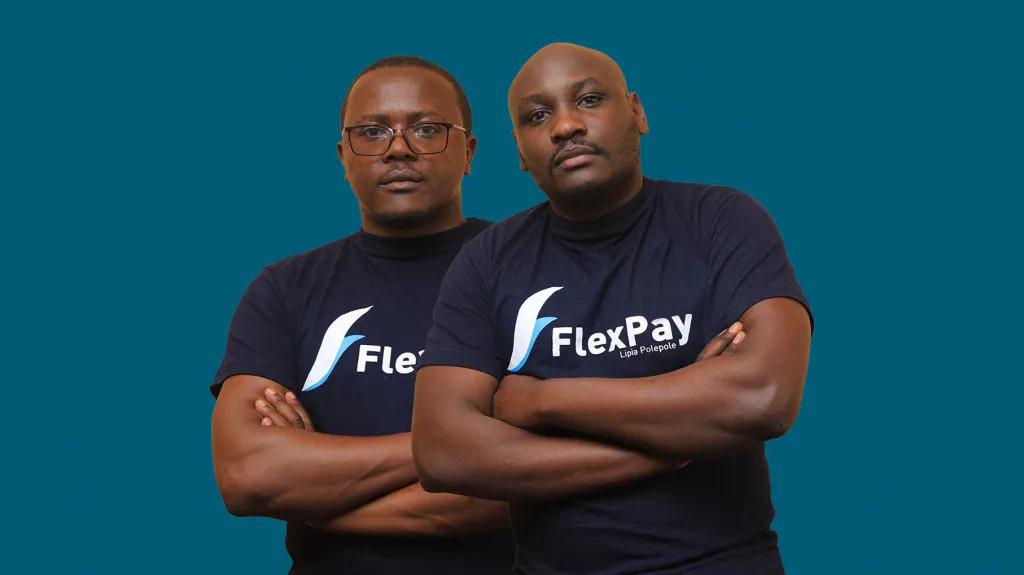
Flexpay is redefining how Africans access goods and services by championing a “Save Now & Buy Later” (SNBL) model that prioritises disciplined saving over debt.
Founded in 2017 by Johnson Gituma and Richard Machomba, the Kenyan-born fintech is quietly transforming consumer purchasing habits by offering flexible, savings-based instalment plans.
From Rural Energy to Financial Innovation
Before launching Flexpay, Gituma studied Energy Engineering at Kenyatta University, where he developed a strong problem-solving foundation rooted in sustainable innovation.
He later co-founded a biogas startup targeting rural farmers, designing portable digesters made from recycled plastic as a cheaper alternative to traditional concrete systems. The venture attracted funding and support from the World Wide Fund for Nature and the Kenyan government.
However, one challenge persisted: affordability. Farmers repeatedly asked, “Can I pay in instalments?”
That question became the seed for Flexpay.
A Shared Market Gap
At the same time Gituma was grappling with affordability in the energy sector, Machomba encountered a retailer facing similar concerns. The merchant needed a digital solution to manage instalment purchases.
Two different industries were asking the same question: how to make purchases more accessible without pushing customers into debt. Recognising the opportunity, the founders built Flexpay to bridge the payment gap through structured savings rather than credit.
Building Against the Odds
The early years were far from smooth. Neither founder had technical expertise, and developing a prototype took nearly three years. Limited funding meant relying on engineers who often left mid-project, slowing progress.
The turning point came when Moses Gathecha joined as Chief Technology Officer, bringing stability and technical leadership. The team later expanded with Dennis Karanu overseeing marketing and growth strategy, and Martin Maina strengthening financial systems and operations.
Just as momentum was building, COVID-19 struck, forcing many onboarded businesses to shut down. Flexpay regrouped and relaunched in 2021 with a clearer and more resilient strategy.
How the Save Now & Buy Later Model Works
Flexpay operates under a B2B2C model, serving both businesses and consumers. For merchants, the platform provides a structured savings system that allows customers to gradually pay toward purchases before checkout.
This increases affordability, boosts conversion rates, and strengthens customer loyalty. Consumers can download the app, set savings goals, make instalments aligned with their income, and complete purchases from a growing merchant network.
Today, Flexpay partners with major brands including Naivas, Quickmart, Hotpoint Appliances Ltd, Moko, LG Electronics, MIKA Appliances, Car & General, and Azon, among others.
A Philosophy Beyond Payments
Unlike traditional Buy Now Pay Later models that rely on credit, Flexpay’s SNBL system encourages intentional saving and responsible consumption.
For businesses, it unlocks access to a pool of committed savers and reduces abandoned purchases.
For consumers, it removes the pressure of debt while promoting financial confidence and dignity.
By turning savings into a pathway for access, Flexpay is positioning itself as more than a fintech platform; it is building a culture of disciplined spending and long-term financial resilience across Africa.