

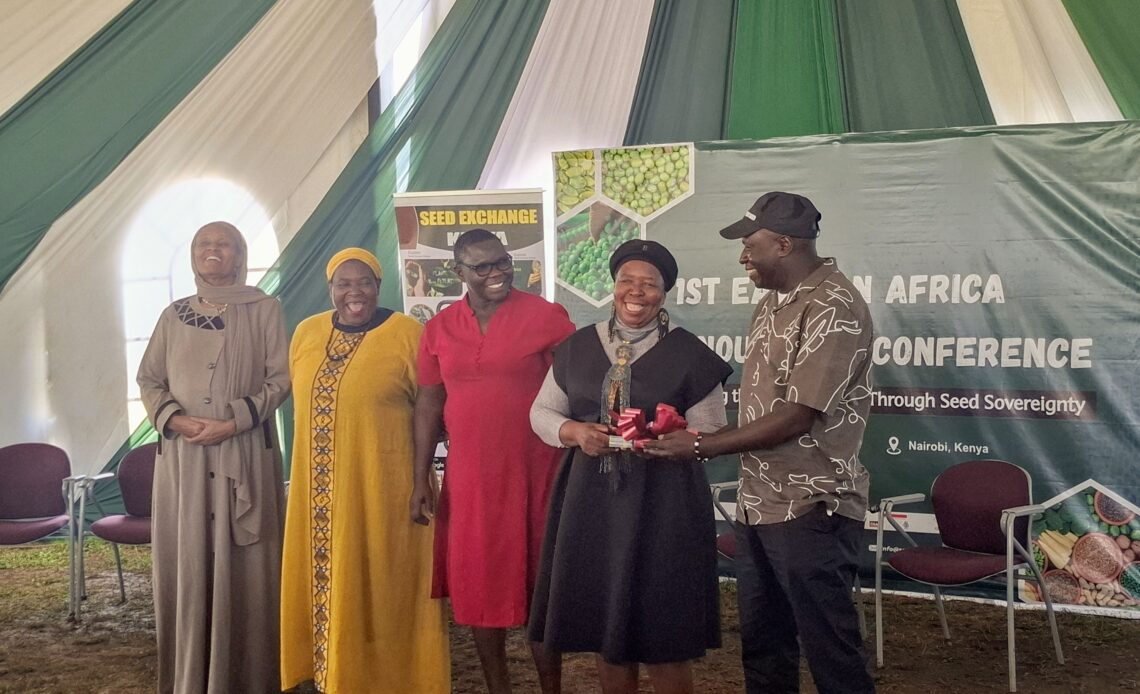
The First Eastern Africa Indigenous Seed Conference 2026 concluded its four-day programme with discussions on strengthening farmer-managed seed systems, preserving indigenous agricultural knowledge and promoting climate-resilient food production across Eastern Africa.
The discussions took place on November 19, 2026, during the final day of the conference, at a side event held at the Catholic University of Eastern Africa (CUEA), Karen, Nairobi.
Farmers, researchers, policymakers, women farmers and seed advocates explored the role of indigenous seeds in improving nutrition, strengthening community resilience and securing the region’s food systems.
The November 17–20 conference brought together stakeholders to champion seed sovereignty and promote farmer-managed seed systems, with particular attention given to the role of community seed banks in emergency seed response and climate resilience.
Discussions also focused on facilitating inter-generational knowledge sharing on indigenous seeds and farm diversity to support a climate-resilient and food-secure future.
A key highlight was a research findings launch by the African Women’s Collaborative for Healthy Food Systems, focusing on Indigenous Seeds, Nutrition and Resilience. The side event brought attention to farmer-led research examining the nutritional value of African food crops and the contribution of women’s knowledge to sustainable food production.
Speaking during the launch, Elizabeth Mpofu, Founder and Director of the African Women’s Collaborative for Healthy Food Systems, said indigenous seeds and traditional knowledge were essential to producing nutritious food and sustaining African communities.
The research presented two studies: the Empirical Study on Nutritional African Foods, which examined women’s experiences in Burkina Faso, Senegal, Uganda, Zambia and Zimbabwe, and the Nutritional Assessment of Ten Climate-Resilient Food Crops.
The nutritional assessment identified millet, rice, sweet potato, Bambara groundnut, cowpea, Amaranthus, pumpkin, banana, okra and mango as important sources of carbohydrates, proteins, dietary fibre, vitamins and minerals.
Among the findings were high iron content in millet samples from Burkina Faso and high protein and mineral content in Bambara groundnut samples from Zambia. The assessment also highlighted the nutritional contributions of cowpea, Amaranthus and banana.
Mpofu noted that women remained central to food systems as custodians of indigenous seeds and agricultural knowledge passed down through generations. However, she highlighted challenges including insecure land rights, limited access to productive resources, climate pressures and inadequate institutional support.
She called for increased investment in indigenous seed systems, stronger protection of women’s land rights, improved agroecological practices and support for local food processing to promote diverse and nutritious African foods.
The discussions on community seed banks highlighted their importance in helping farmers preserve locally adapted seeds and access planting materials during emergencies and climate-related disruptions.
Participants also emphasised the need to strengthen inter-generational knowledge transfer to ensure younger generations understand the importance of indigenous crop varieties and agricultural diversity.
The Collaborative urged researchers, farmers, policymakers, women’s organisations and development partners to work together to translate research findings into practical interventions.
The two research reports are available on the organisation’s website, www.africanfoodsystems.org.