


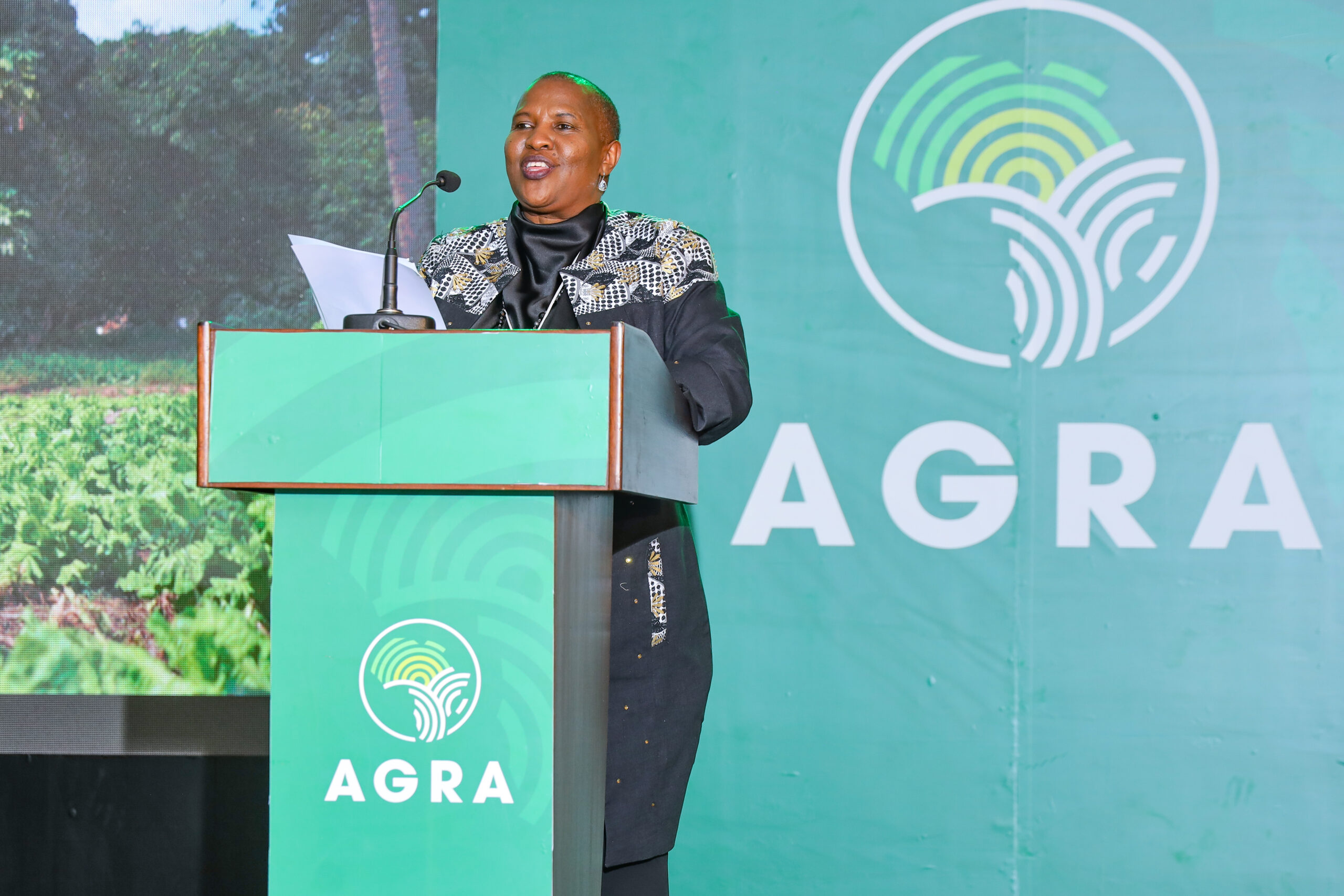
The Alliance for a Green Revolution in Africa (AGRA) has reaffirmed its commitment to transforming African agriculture, calling for renewed investment in smallholder farmers as the continent grapples with shrinking development financing and rising global instability.
Speaking at a high-level reception for partners, donors, and stakeholders, AGRA President Alice Ruhweza emphasized the urgent need for Africa to build resilience through homegrown solutions and increased collaboration. The event brought together government officials, diplomats, development partners, and private sector leaders.
“We gather at a pivotal moment in international development when the ecosystem of support we have known for decades is fast changing,” Ruhweza said. “This shift in the funding landscape demands greater efficiency, innovation, and collaboration from organizations such as AGRA.”
Recent analyses by the Institute for Security Studies warn that changing global development policies could push an additional six million Africans into extreme poverty by 2026, threatening progress across agriculture, health, education, and climate resilience.
Despite these challenges, Ruhweza affirmed AGRA’s unwavering resolve to deliver impact at scale. Over the past 20 years, AGRA has supported more than 26 million smallholder farmers across 11 African countries by improving access to quality seeds, affordable fertilizers, and dynamic markets. Its efforts have also indirectly reached 21 million farmers through policy reforms and partnerships.
“Agriculture employs 65 percent of Africa’s workforce and contributes up to 35% of GDP in many countries,” Ruhweza said. “Growth in agriculture is up to three times more effective at reducing poverty than growth in other sectors.”
AGRA’s strategic focus spans five key areas: strengthening policy and state capacity, developing robust seed systems, building inclusive markets, empowering women and youth, and fostering private sector engagement.
Notable achievements include the training of over 500 African agricultural scientists, support for 54 seed companies, and the promotion of sustainable soil practices that have boosted cereal yields by 61% on over 1.8 million hectares.
In Tanzania, AGRA has helped design an agro-industrial flagship initiative projected to create 1 million jobs. In Malawi and Uganda, targeted programs for women have increased productivity by up to 30 percent.
Ruhweza highlighted the transformative potential of the African Continental Free Trade Area (AfCFTA), calling it a “game-changer” for African farmers and agribusinesses. With a single market of 1.3 billion people and a combined GDP of $3.4 trillion, intra-African agricultural trade is expected to rise by more than 50 percent by 2025 and up to 574 percent by 2030.
“In a world turning inward, Africa must turn outward with confidence,” she stated. “Hunger knows no borders—and neither does opportunity.”
AGRA is also advocating for greater youth engagement in agriculture, noting that 11 million young Africans enter the job market annually. “Agriculture must be repositioned as a career of choice,” Ruhweza said, while stressing the economic potential of empowering women, who comprise 70 percent of Africa’s agricultural workforce.
As traditional sources of global development funding shrink, AGRA is urging African governments, philanthropists, impact investors, and the private sector to step up.
“To all who believe in Africa’s potential—invest in our farmers, back our innovations, and join us in ensuring that agriculture becomes a source of hope and prosperity,” Ruhweza concluded.