


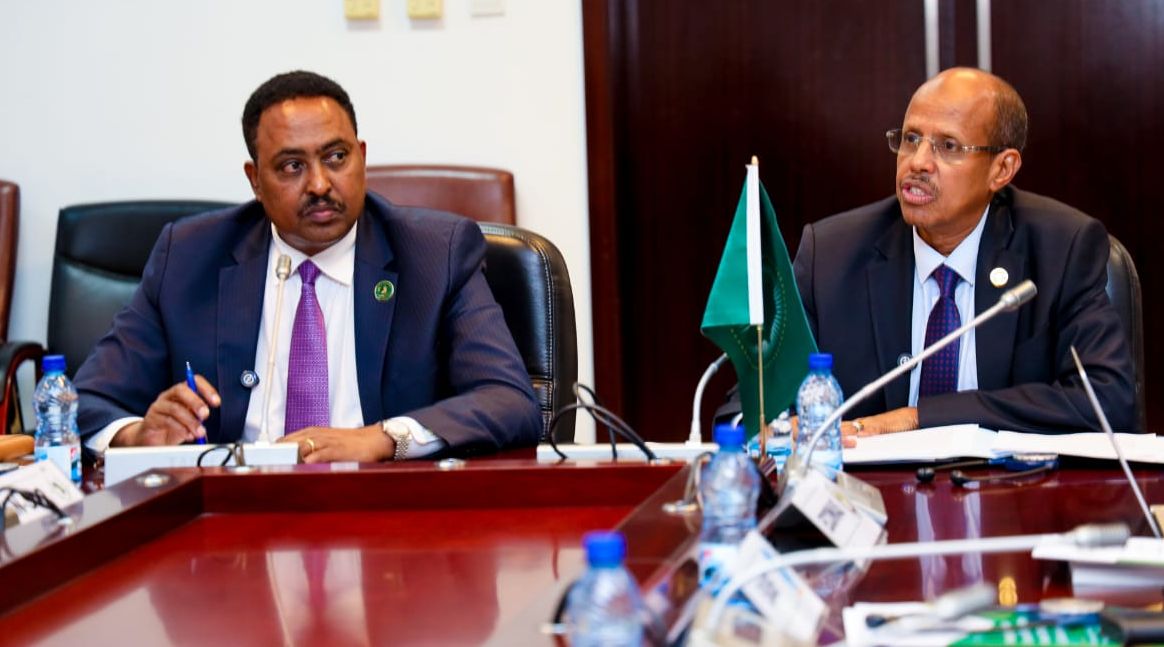
The Intergovernmental Authority on Development (IGAD) convened a pivotal Inter-REC/RM CEOs Coordination Meeting on the margins of African Union on July 12, 2025. The 7th African Union Mid-Year Coordination Meeting held in Malabo, Equatorial Guineato strengthen strategic coordination and align efforts in delivering the African Union’s Agenda 2063.
The session brought together heads of Africa’s Regional Economic Communities (RECs) and Regional Mechanisms (RMs) under the chairmanship of AU Commission Chairperson H.E. Mahmoud Ali Youssouf. to strengthen strategic coordination and align efforts in delivering the African Union’s Agenda 2063.
They reaffirmed the continent’s collective commitment to unity, integration, and the goals of Agenda 2063.
In his opening remarks, AU Chairperson Youssouf lauded the RECs for their central role in driving regional integration. He emphasized the importance of strategic alignment across all AU structures. “The African Union values the role of RECs as indispensable partners in delivering Agenda 2063. Our future lies in unity, alignment, and coordinated action,” he said.
IGAD Executive Secretary Dr. Workneh Gebeyehu, who chairs the Inter-REC Coordination Platform, highlighted the growing recognition of RECs as institutional partners rather than symbolic entities. “This meeting marks a turning point,” he said, citing progress on a dedicated budget for REC activities and advancing RECs’ visibility and influence within the AU Commission.
Furthermore, Africa and regional leaders addressed need for a specific budget line for REC initiatives. Also improved access to AU travel documents for senior REC officials. Including finalizing the Division of Labour Framework. The framework aims to clearly delineate responsibilities among AU organs, RECs, and Member States. This an essential step in eliminating duplication and improving coordination.
Dr. Workneh underscored the importance of institutional reform, resource mobilization, and political commitment to ensure inclusive development across the continent.
He however reaffirmed IGAD’s broader commitment to the core pillars of Agenda 2063—peace, trade integration, gender equality, youth empowerment, and sustainable development.
The leaders called on Africa to speak with one voice and act collectively in implementing the Second Ten-Year Implementation Programme of Agenda 2063.
Finally at Malabo, regional leaders noted the outcomes of the gathering provided a blueprint for deeper collaboration and more impactful delivery, reinforcing Africa’s determination to shape its own destiny through solidarity and unified action.