

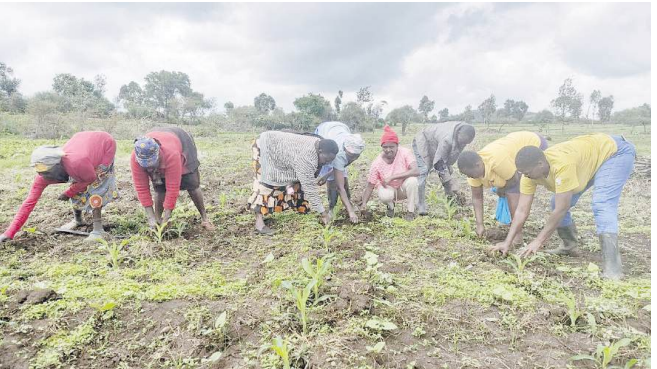
For maize farmer Shadrack Kisiero, farming in Trans Nzoia has always depended on more than favourable weather and fertile soils. Access to quality seeds, fertilisers, equipment, and timely financing can determine whether a planting season delivers a good harvest or leaves farmers struggling to recover their investments.
However, through a partnership between NCBA Bank and Kenya Seed Company, farmers such as Kisiero are gaining access to financial solutions, agricultural training, and market linkages aimed at improving productivity and strengthening their livelihoods.
In early 2026, more than 150 maize seed farmers gathered in Kitale for an agripreneurs’ forum organised under the theme, “Financing the 2026 Planting Season: Productivity and Market Linkages.”
The meeting brought together farmers and banking specialists for discussions on agricultural financing, financial literacy, and ways of improving access to markets. Farmers also received guidance on financial products designed around the seasonal nature of agricultural activities.
NCBA Director of Commercial and SME Banking Robert Kiboti said the bank’s approach extends beyond providing loans to building partnerships that connect farmers with essential agricultural services and reliable markets.
“Our approach goes beyond financing. We are building ecosystems that connect farmers to inputs, technical expertise, and reliable markets,” he said.
Agriculture remains central to Kenya’s economy, supporting millions of livelihoods, particularly in rural communities. However, limited access to affordable financing continues to affect farmers’ ability to invest in modern equipment, improve production, and expand their businesses.
NCBA has, therefore, developed financing solutions targeting different stages of the agricultural value chain, including working capital, asset financing, trade finance, agricultural insurance, and commodity risk management.
For crop farmers, input financing supports the purchase of certified seeds, fertilisers, pesticides, and irrigation systems. Dairy farmers can also access financing for animal feeds, veterinary services, artificial insemination, and milk-cooling infrastructure.
Under its Agribusiness Scheme Loan, contract farmers can access up to KSh6 million for agricultural inputs, with repayment schedules aligned to crop cycles. The facility also incorporates buy-back arrangements through participating seed companies and cooperatives, helping farmers secure markets for their produce.
Mechanisation is another area receiving attention, with NCBA partnering with Inchcape and Car & General to provide up to 95 per cent financing for tractors and agricultural implements, including Kubota and New Holland equipment.
Repayments are structured around harvesting seasons, with some facilities offering a 60-day grace period. Farmers can also access additional working capital of up to KSh500,000 to meet related operational expenses.
Women-led agribusinesses are equally benefiting from targeted financing initiatives. Through the Affirmative Finance Action for Women in Africa (AFAWA) programme, NCBA, working with the African Guarantee Fund, SME Support Centre and Unga Group, has supported approximately 80 women-owned agri-food businesses across two cohorts.
The first group of 38 women received approximately USD1.5 million in financing alongside business training. A second cohort of 42 women was launched in 2026, contributing towards a lending target of up to USD5 million.
The initiative targets businesses operating in human food and animal feed value chains, with an integrated approach combining finance, mentorship, skills development, and market access. It is expected to create approximately 300 jobs.
Individual businesses are also demonstrating the benefits of agricultural financing. Spice farmer Krisple Mwiti accessed asset financing for transport vans and project loans for cold-storage facilities, enabling business expansion and improved profitability and employment opportunities for up to 50 seasonal workers.
Through partnerships, agricultural forums, and tailored financing, NCBA is seeking to address challenges beyond access to credit.
For farmers across Kenya, the focus is increasingly shifting towards building sustainable agribusinesses that can withstand seasonal challenges, create employment, and supply reliable markets.
From the maize farms of Trans Nzoia to dairy, horticulture, and livestock enterprises, the bank’s approach seeks to strengthen agricultural value chains and support farmers in turning their investments into lasting economic opportunities.