


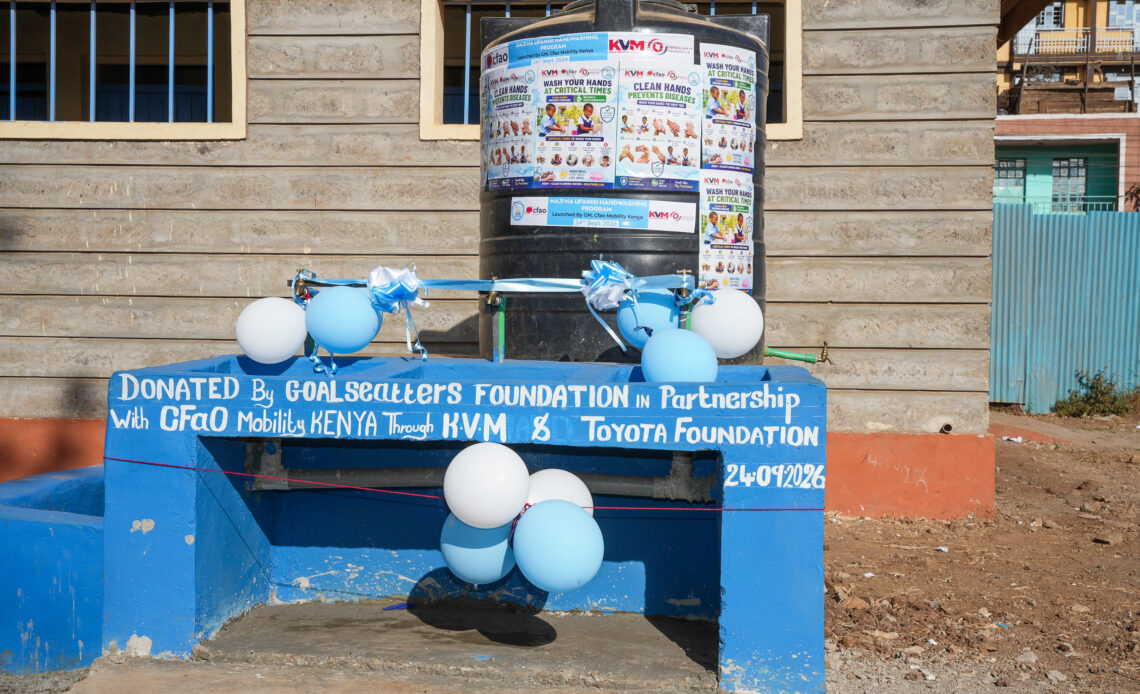
CFAO Mobility Kenya Limited, in partnership with Kenya Vehicle Manufacturers (KVM), Toyota Kenya Foundation and Goal Setters Foundation, has launched a KES 1.2 million initiative to improve water, sanitation and hygiene (WASH) services in five public schools in Kiambu County.
The project, dubbed Maji na Ufanisi: Transforming Hand Hygiene for Learners in Kiambu County, is funded through the global CFAO Solidarité Corporate Social Responsibility (CSR) grant scheme. It seeks to improve health, school attendance and learning outcomes by addressing hygiene infrastructure gaps and promoting sustainable handwashing practices.
The initiative was launched at Githunguri Ranching Primary and Junior School in Ruiru Sub-County under the national theme, Promoting Hand Hygiene for Healthy and Dignified Learning.
The programme will serve five public primary and comprehensive schools across Ruiru and Thika sub-counties, reaching a combined population of 11,507 learners.
Through the grant, the partners will support the construction and installation of functional, gender-sensitive handwashing facilities in the targeted schools. The programme will also strengthen hygiene knowledge and skills among teachers and school leaders while encouraging learners to adopt regular handwashing practices.
Structured School Health Clubs will provide a platform for learners to learn and practise daily hand hygiene behaviours, helping translate hygiene knowledge into lasting habits within schools and communities.
Beyond infrastructure, the programme will focus on strengthening community ownership. Parents, school management teams and local communities will be mobilised to participate in implementing and sustaining the WASH interventions after the project period.
Josephine Opoku-Bekoe, General Manager, Human Resources at CFAO Mobility Kenya, said the initiative would help address gaps in school hygiene infrastructure while supporting long-term behavioural change among learners.
The partners noted that access to clean water and adequate hygiene facilities remains important in creating healthy and supportive learning environments. Poor access to such facilities can increase exposure to hygiene-related illnesses, potentially contributing to absenteeism and disruption of learning.
The programme will therefore combine infrastructure improvements with education and behaviour-change activities. Teachers and school leaders will receive knowledge and skills to champion hygiene practices, while School Health Clubs will engage learners in maintaining good hygiene habits.
Goal Setters Foundation Chief Executive Officer Njoki Mwaura said community participation would be central to ensuring that the facilities and hygiene practices introduced through the programme are maintained beyond the project’s implementation period.
The initiative comes amid wider concerns over access to basic handwashing facilities. According to UNICEF, as of 2020, three in 10 people globally lacked access to a handwashing facility with water and soap.
Handwashing with soap and water is recognised as an important measure for reducing the spread of infectious diseases transmitted through contaminated surfaces, food and other routes.
By combining improved WASH infrastructure, hygiene education and community involvement, the Maji na Ufanisi project seeks to establish healthier learning environments for pupils and support sustainable hygiene practices across the five participating schools in Kiambu County.