


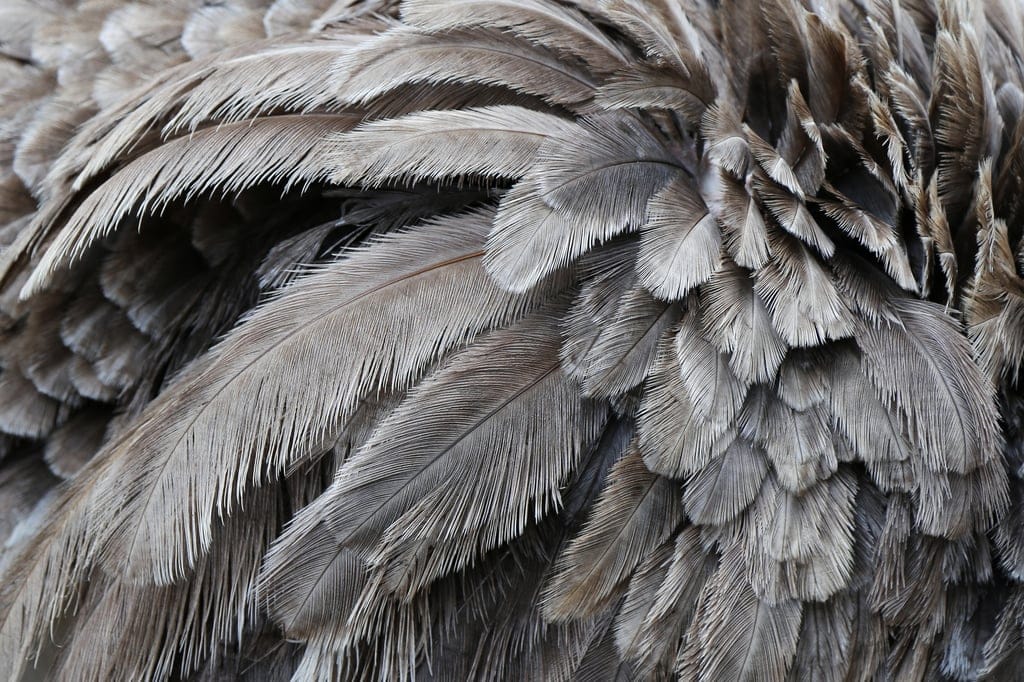
A new investigation by World Animal Protection and Collective Fashion Justice has raised concerns over the treatment of ostriches used to supply feathers to the global fashion industry, alleging that birds in South Africa are being subjected to live plucking and other painful practices.
The investigation, published on Tuesday, September 22, 2026, forms part of a report titled Blood Feathers, which examines commercial ostrich farms and feather-processing facilities in South Africa, a major global producer of ostrich products.
According to the organisations, investigators obtained rare video footage showing a male ostrich being cornered by workers, having a bag placed over its head before feathers were cut and forcibly removed from its skin using pliers. The organisations said the procedure was carried out without pain relief.
Investigators also reported finding evidence of feather cutting, where feathers are cut above the bloodline before being pulled from the skin with pliers at a later stage.
At one farm, investigators were reportedly told that ostriches were live-plucked every six months. The report said blood is sometimes found in the shafts of feathers removed from live birds, contributing to the term “blood feathers.”
The investigation further alleges that some farms and feather-processing facilities visited by investigators supply fashion brands including YSL, Louis Vuitton, Dior and Chanel, as well as fast-fashion retailer Shein.
The organisations said investigators also observed injured birds, aggressive behaviour and ostriches struggling to stand. Some birds were reportedly wounded after pecking at each other’s eyes and feathers.
World Animal Protection has submitted a complaint to South Africa’s National Council of SPCAs (NSPCA), asking the organisation to consider investigating the concerns under the country’s Animal Protection Act.
Edith Kabesiime, Wildlife Campaign Manager at World Animal Protection, said the fashion industry’s increasing use of feathers as an alternative to fur does not eliminate concerns about animal welfare.
“Behind the glamour of feathered fashion, there is a deeply distressing reality for ostriches,” Kabesiime said, adding that the birds are chased, restrained and subjected to feather removal with pliers.
Emma Håkansson, Founding Director of Collective Fashion Justice, questioned the industry’s continued use of ostrich feathers while some fashion companies and events have introduced restrictions on animal-derived materials.
The report also challenges the claim that ostrich feathers used in fashion are primarily obtained through natural moulting.
World Animal Protection said 150,000 ostriches were slaughtered in South Africa during the 2024/25 season for the feather, meat and skin trades, while more than 150 tonnes of ostrich feathers were exported from the country.
The organisations said ostriches bred for high-quality wing feathers can undergo years of cutting or plucking before being slaughtered, while birds bred for lower-quality feathers may be plucked once and killed at between 10 and 14 months old.
A public poll commissioned for the report across the United Kingdom, United States, Australia and New Zealand found that 47% of respondents believed ostrich feathers were collected during natural shedding, while only 16% believed live birds were plucked.
After being informed about the reported practices, 83% of respondents said farming and killing ostriches for fashion should be banned, while 81% said brands using ostrich feathers appeared less ethical and sustainable.
Some fashion retailers and events have already introduced measures restricting ostrich feathers. Selfridges, Wolf & Badger, ASOS and GANNI have adopted policies aimed at protecting ostriches, while Copenhagen, Berlin, Amsterdam and Australian Fashion Week have introduced wildlife-friendly policies that include restrictions on ostrich feathers.
The organisations are calling on fashion brands, retailers and fashion week organisers to adopt clear, time-bound policies to phase out ostrich feathers and other materials derived from wild animals.
World Animal Protection and Collective Fashion Justice also highlighted emerging alternatives, including plant-based feather substitutes such as FEVVERS, which has collaborated with luxury fashion brands including Stella McCartney.