


By Robai Ludenyi
Kenya’s internet landscape is undergoing significant changes as emerging technologies, including low- Earth-orbit satellites and advanced wireless networks, help expand connectivity and bring internet services to more people. The growth comes as telecommunications companies seek new ways to reach customers in areas where traditional infrastructure is difficult or expensive to establish.
Data from the Communications Authority of Kenya (CA) shows that fixed internet subscriptions increased by 32.4 per cent between June 2025 and June 2026, reflecting the continued expansion of the country’s broadband market.
Fibre optic connections remained the leading fixed internet technology, with subscriptions rising to 1.57 million in June 2026, up from 1.21 million during the same month the previous year. This represents a 29.7 per cent increase, highlighting the growing demand for reliable internet services among households and businesses.
However, other technologies are also gaining ground. Radio-based internet subscriptions recorded a
sharp 471.1 percent year on year increase, climbing from 1,507 in June 2025 to 8,606 in June 2026. The
Communications Authority attributed the growth largely to the rollout of radio technology by Airtel,
Jamii Telecommunication and Fiberlink Ltd.
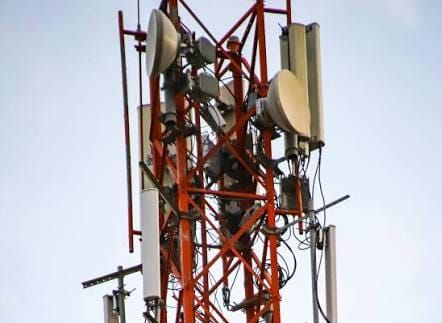
Unlike fibre connections, radio frequency internet uses wireless signals to deliver high-speed connectivity without requiring physical cables to reach every customer. This makes it useful in locations where extending conventional infrastructure may be challenging.
Satellite internet subscriptions also rose by 54.4 per cent, reaching 27,695 in June from 17,939 a year
earlier. The increase was linked to the entry and expansion of low-Earth-orbit satellite services, including
Starlink. These satellites operate closer to Earth than traditional satellite systems, allowing them to
provide lower-latency connections and higher speeds.
The shift towards satellite technology has also affected Kenya’s satellite bandwidth capacity, which declined by 19.1 per cent to 0.360 gigabits per second from 0.445 gigabits per second. The regulator attributed the reduction mainly to the migration from traditional very small aperture terminal technology to LEO systems.
Meanwhile, mobile internet remains the largest part of Kenya’s connectivity market. Mobile data subscriptions reached 64.3 million by the end of June, increasing from 58.6 million a year earlier. Mobile broadband accounted for 85.5 per cent of total subscriptions, while 4G remained the most widely used broadband technology, with 48.3 million users.
The expansion of 4G and 5G networks is supporting greater smartphone adoption as consumers increasingly rely on mobile devices for video streaming, online learning, remote work, shopping and other digital services.
To meet the rising demand, telecommunications operators are continuing to invest in infrastructure. Safaricom has spent more than Sh500 billion on capital expenditure over the past decade, including Sh55.8 billion in the previous financial year. Of this amount, Sh38.6 billion was directed towards network infrastructure, while other investments supported data centres, distribution infrastructure and software applications.
Airtel Africa invested $884 million, equivalent to Sh114.3 billion, in capital expenditure during the year ended March 2026, mainly supporting network expansion across its markets. The company added more than 3,250 infrastructure sites across its 14 African markets.
The Communications Authority said intense competition, the changing digital economy and aggressive infrastructure rollouts were driving the expansion of fixed internet services in Kenya. As more people and businesses depend on digital platforms, operators are turning to a wider range of technologies to deliver faster and more dependable connections.