

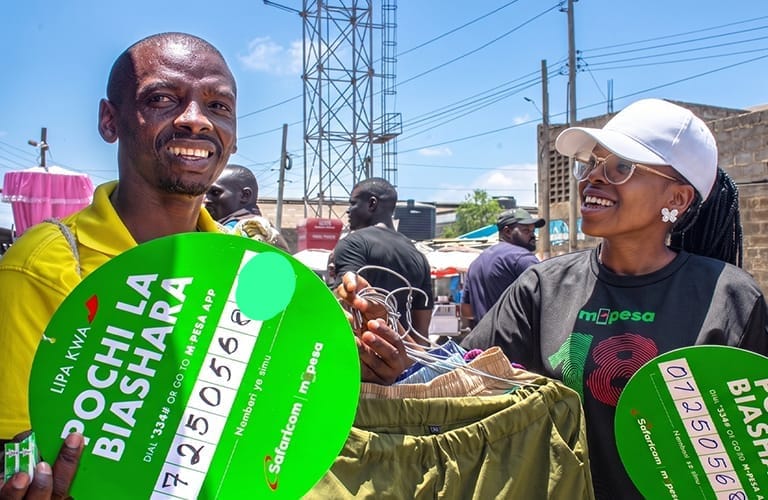
Merchants using Lipa na M-PESA Buy Goods will benefit from a new pricing structure, with Safaricom waiving the merchant collection fee on transactions of up to KSh500 under its PATA MORE campaign, reducing costs for everyday payments.
The telecommunications company has raised the Buy Goods Kadogo threshold from KES200 to KES500, meaning merchants will not be charged for customer payments of KES500 and below. The change is expected to offer relief to small businesses that depend on frequent, low-value digital transactions.
Previously, merchant payments of up to KES200 were free, while transactions between KES201 and KES500 attracted a 0.55 per cent charge. Payments above KES500 continue to attract a 0.55 per cent transaction fee, capped at KES200.
The adjustment puts transaction costs at the centre of the digital payment experience, particularly for kiosks, salons, food vendors, and other micro-businesses where small sales make up a significant share of daily income.
For a trader processing several KES300, KES400 or KES500 purchases during the day, eliminating the merchant charge on these transactions means a larger portion of the day’s sales remains available for restocking, paying expenses or supporting household needs.
The pricing change also addresses one of the concerns that can influence how businesses view digital payments: the cost of accepting electronic money.
As more customers choose to pay through their phones, merchants need payment systems that are not only reliable but also economical. Lower charges can make digital payments more attractive to businesses that operate on tight margins.
Meanwhile, customers continue to benefit from the convenience of paying through Lipa na M-PESA without needing to carry physical cash. Payments of up to KES500 remain free to customers, except at authorised fuel stations.
Safaricom is also making the payment process faster through Scan to Pay and Tap to Pay.
Customers can scan a QR code at participating outlets or tap their phones to make payments, reducing the time spent at checkout.
The changes could, therefore, only influence payment habits: when digital payments become easier for customers and less costly for merchants, there may be fewer reasons for either side to rely on cash.
The merchant benefits extend beyond receiving money from customers. Safaricom has announced a 50 per cent reduction in transaction costs when merchants use their Business Till to make payments to a PayBill, another customer or another till.
For small enterprises, the combination of cheaper incoming payments and reduced costs when moving money from the Business Till could help improve day-to-day cash flow management.
Businesses can access their tills through the M-PESA Business App or *234#.
Ultimately, the pricing changes place affordability alongside convenience in Kenya’s evolving digital payments landscape. The KES500 threshold may appear modest, but for a trader handling numerous small purchases each day, those saved transaction costs can accumulate into money that remains in the business.