


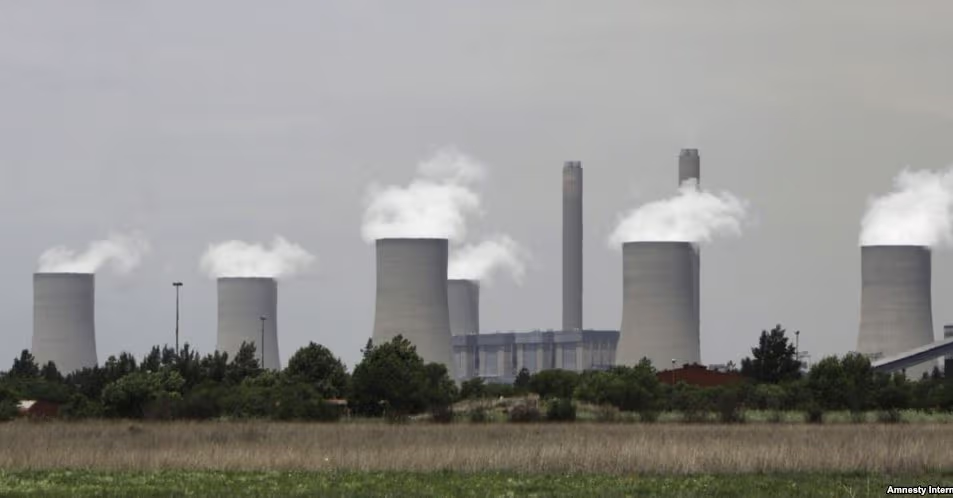
Kenya’s ambition to develop its first nuclear power plant has gained momentum after the Kenya Electricity Generating Company (KenGen) led a high-level delegation to Canada’s Ontario nuclear ecosystem to learn from one of the world’s most established nuclear markets.
The week-long Canada–Kenya Nuclear Engagement Program exposed Kenyan leaders to the technical, regulatory, operational and human-capital requirements needed to advance Kenya’s nuclear programme under the International Atomic Energy Agency (IAEA) milestones framework.
KenGen Managing Director and CEO, Eng. Peter Njenga, said the mission provided critical insights into building a sustainable nuclear programme anchored on safety, institutional capacity and long-term energy security.
“This trip is very strategic to us. It has helped us understand the owner-operator model and translate lessons from an established nuclear market into a long-term plan for Kenya’s energy system,” said Eng. Njenga.
Building Capacity Beyond the Power Plant
KenGen said Kenya’s nuclear journey will require more than constructing a reactor. The programme will depend on developing strong regulatory systems, skilled professionals, local supply chains, research partnerships and effective waste management structures.
KenGen has been designated as the owner-operator of Kenya’s first nuclear power plant in partnership with the Nuclear Power and Energy Agency (NuPEA). The company said the Canada visit helped refine the institutional roadmap required to transform the nuclear ambition into operational readiness.
The delegation also studied Canada’s approach to nuclear waste management, including the role of dedicated institutions and long-term funding mechanisms to ensure safe handling and disposal of used nuclear fuel.
Kenya Targets 2,000MW Nuclear Plant
Kenya’s first nuclear power development is expected to have a capacity of approximately 2,000 megawatts, with future expansion plans targeting about 6,000MW as part of the country’s broader goal of adding 10,000MW of electricity capacity.
The government views nuclear energy as a key component of Kenya’s strategy to strengthen energy security, support industrialisation and provide reliable low-carbon baseload power.
Eng. Njenga said reliable and affordable electricity would be essential for driving industrial growth, digital infrastructure, advanced manufacturing and green economic development.
“No nation has achieved industrial transformation without reliable, affordable and scalable baseload power,” he said.
Lessons from Canada’s Nuclear Industry
During the visit, the Kenyan delegation engaged with operators and institutions across Canada’s nuclear value chain, including exposure to CANDU reactor technology, which is used in Ontario and other countries.
Canada operates 16 CANDU reactors in Ontario and another in New Brunswick, while more than 30 CANDU reactors have been deployed globally.
At Bruce Power, the world’s largest operating nuclear power facility with an installed capacity of 6,400MW, the delegation learned how nuclear energy can support economic growth through job creation, industrial development and regional investment.
Canadian officials highlighted that nuclear programmes create opportunities beyond power generation by supporting engineers, manufacturers, research institutions and service providers.
Focus on Skills, Communities and Public Trust
The mission also underscored the importance of developing local expertise to sustain Kenya’s nuclear ambitions. Visits to institutions such as McMaster University demonstrated how Canada builds talent pipelines through specialised training programmes.
KenGen said Kenya must invest early in developing professionals across engineering, science, regulation, environmental management and community engagement.
The company also emphasised the need for public participation and stakeholder engagement, particularly among communities that will host nuclear infrastructure.
Nuclear Future Moving from Vision to Preparation
KenGen said the Canada mission marks a significant step in moving Kenya’s nuclear programme from aspiration towards structured readiness.
Eng. Njenga noted that success will depend on strategic partnerships, consistency and strong institutions capable of meeting international safety and operational standards.
“Kenya’s nuclear journey is not beginning from zero, but it will demand discipline, continuity and institutional depth to turn this national dream into a reality,” he said.
Through partnerships with experienced nuclear nations such as Canada, Kenya aims to build a safe, reliable and sustainable nuclear energy programme that supports long-term economic transformation.