

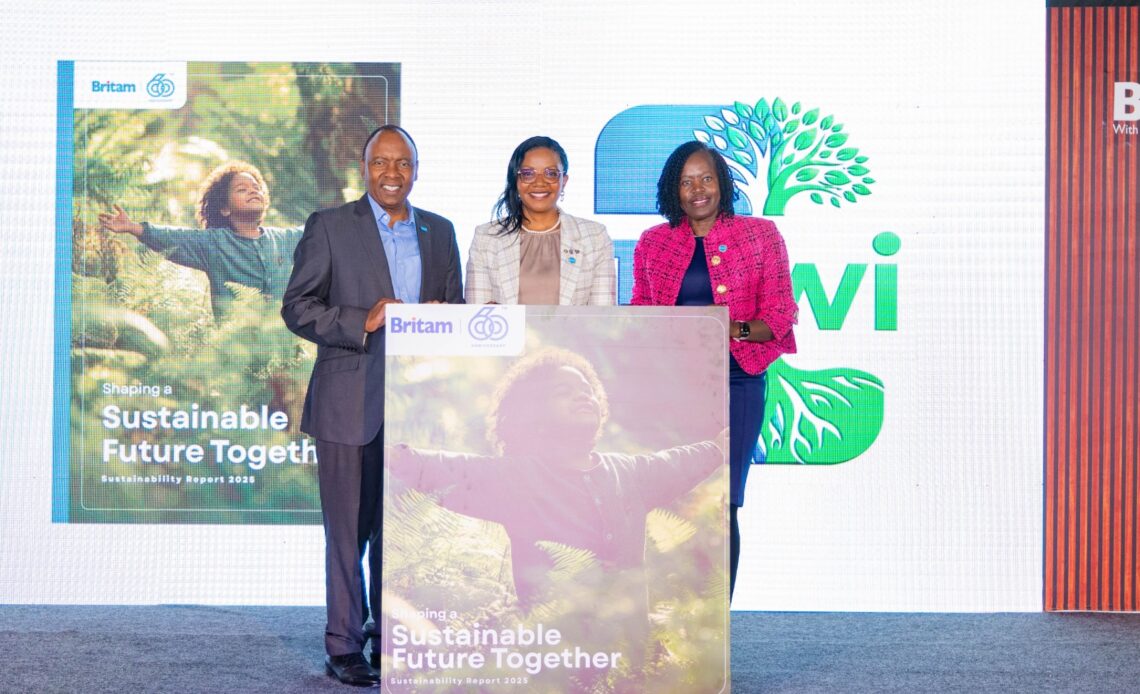
Britam has paid out KShs 97.3 million in insurance claims in 2025 to support more than 402,681 farmers and pastoralists affected by climate-related shocks across East Africa, reinforcing its role in advancing climate resilience through innovative financial solutions.
The payout highlights the Group’s expanding use of parametric insurance products that leverage satellite data and predefined weather thresholds to trigger fast and efficient compensation for vulnerable communities affected by drought, erratic rainfall, and other climate disruptions.
Expanding Access to Climate Insurance Solutions
According to Britam’s 2025 Sustainability Report, the Group significantly expanded access to climate insurance products, with crop insurance coverage growing by 83% year-on-year.
Coverage increased from 161,521 farmers in 2024 to 294,799 farmers in 2025, reflecting rising demand for financial protection against unpredictable weather patterns affecting agricultural productivity.
During the year, Britam paid KShs 80.4 million in crop insurance claims, offering a critical safety net for smallholder farmers facing climate-induced losses.
Strengthening Livestock Protection Across East Africa
The report also shows that 107,882 pastoralists across Kenya, Uganda, and Tanzania were covered under Britam’s livestock insurance programme.
A total of KShs 16.9 million was paid out in claims to affected households, helping pastoral communities recover from climate shocks and protect their livelihoods.
Britam said its focus remains on ensuring farmers and pastoralists are not left exposed as climate risks continue to intensify across the region.
Driving Climate Action Through Sustainability Investments
Britam Group Managing Director and CEO Tom Gitogo said the insurer is committed to building resilience through inclusive and innovative solutions.
“Through inclusive, sustainable and innovative solutions, we are enabling recovery, stability, and continued productivity even in the face of increasing climate uncertainty,” said Gitogo.
He added that the Group continues to scale solutions that support vulnerable communities in adapting to climate change.
Green Energy and Environmental Commitments
The sustainability report also highlights Britam’s growing investment in environmental conservation and clean energy.
In October 2025, the Group installed a solar energy system at Britam Tower, one of Africa’s tallest green buildings. The installation is expected to generate 390,000 kWh of clean energy annually, supply more than 50% of the building’s energy needs, and offset approximately 198 tonnes of carbon emissions each year.
This reduction is equivalent to planting an estimated 10,800 trees annually.
Reforestation and Community Impact Initiatives
Through the Britam Foundation, the Group planted 86,000 trees in the Mt. Elgon Water Tower region and restored more than 444 acres of degraded land.
These efforts also supported the creation of 1,358 green jobs in local communities, contributing to Britam’s broader goal of planting 60 million trees by 2030.
To enhance transparency and accountability in its environmental initiatives, Britam introduced the TAWI digital platform in May 2026 to track, verify, and measure tree-planting activities in real time.
Strengthening Social Impact and Governance
Britam also reported continued investment in social development initiatives, including its Lea Mama maternal health programme, which enrolled over 3,300 mothers in 2025.
The programme contributed to a 50% reduction in miscarriage rates and achieved a customer Net Promoter Score of 9.4 out of 10.
In its governance performance, the Group reported zero corruption incidents in 2025 and contributed KShs 3.1 billion in taxes across its seven markets. It was also certified as a Top Employer in Africa for the second consecutive year.
Advancing Integrated Sustainability Strategy
The 2025 Sustainability Report marks Britam’s third annual ESG disclosure and the first to consolidate operations across all seven markets under a unified sustainability framework.
The Group says the approach reflects a shift from sustainability reporting to full integration of environmental, social, and governance principles into its core business strategy.
Britam noted that sustainability remains central to its Ascend 2030 strategy, aimed at driving long-term, responsible growth across Africa.