


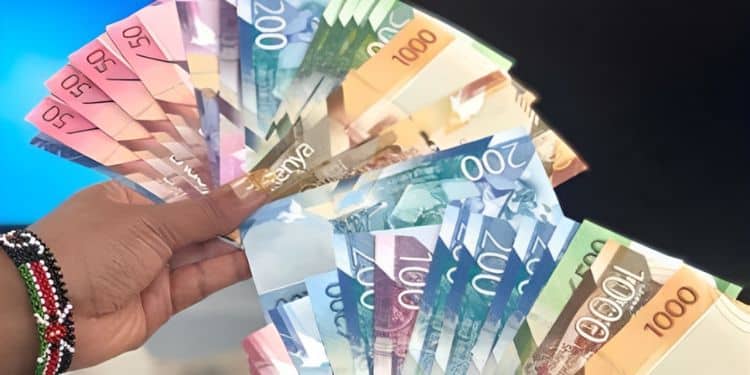
The Kenya Shilling remained largely stable against major international and regional currencies during the week ending May 21, 2026, reflecting continued resilience in the country’s foreign exchange market despite mounting global economic uncertainties.
According to the latest market update by the Central Bank of Kenya (CBK), the shilling exchanged at KSh129.57 against the U.S. dollar on May 21, compared to KSh129.27 recorded on May 14, indicating only a marginal depreciation during the period.
The relative stability of the local currency comes at a time when many emerging market currencies are facing pressure from elevated global inflation, rising energy prices, and geopolitical tensions in the Middle East.
Foreign Exchange Reserves Stay Above Statutory Threshold
Kenya’s foreign exchange reserves remained adequate, standing at USD13.21 billion as of May 21, equivalent to 5.6 months of import cover.
The reserve position remains comfortably above the Central Bank of Kenya’s statutory requirement of maintaining at least four months of import cover, offering a strong buffer against external shocks and supporting confidence in the country’s ability to meet international payment obligations.
Analysts view the healthy reserve levels as a critical factor supporting the stability of the shilling amid volatile global financial markets.
Money Market Remains Liquid
The domestic money market continued to experience ample liquidity during the review period, supported by active open market operations by the Central Bank.
Commercial banks maintained excess reserves averaging KSh6 billion above the required 3.25 per cent Cash Reserve Ratio, signalling comfortable liquidity conditions within the banking sector.
Meanwhile, the Kenya Shilling Overnight Interbank Average Rate remained unchanged at 8.75 per cent, the same level recorded a week earlier.
The average number of interbank transactions held steady at 20 during the week, while the average value traded increased significantly to KSh12.8 billion from KSh10.7 billion in the previous week, indicating heightened activity among banks.
Treasury Bill Auction Oversubscribed
Investor appetite for government securities remained strong, with the Treasury bill auction conducted on May 21 attracting bids worth KSh30 billion against an advertised amount of KSh24 billion.
This represented an oversubscription rate of 125.2 per cent, underscoring sustained investor confidence in government debt instruments.
Interest rates on the 182-day Treasury bills declined during the auction, while yields on the 91-day and 364-day papers increased marginally.
In the bond market, the reopened 15-year and 20-year Treasury bonds auctioned on May 20 received bids totalling KSh47.2 billion against an advertised KSh50 billion, translating to a performance rate of 94.3 per cent.
NSE Records Decline in Trading Activity
Trading activity at the Nairobi Securities Exchange weakened during the week, with key share indices posting declines.
The NASI, NSE 25, and NSE 20 share price indices fell by 0.43 per cent, 0.51 per cent, and 1.33 per cent, respectively.
Market capitalisation also declined by 0.43 per cent, reflecting reduced investor sentiment in equities.
At the same time, total shares traded and equity turnover dropped sharply by 22.68 per cent and 24.75 per cent, respectively, signalling subdued market participation.
Bond Market Activity Weakens as Eurobond Yields Rise
Turnover in Kenya’s domestic secondary bond market declined by 20.04 per cent during the review period, indicating reduced trading activity among investors.
In the international market, yields on Kenya’s Eurobonds increased by an average of 35.46 basis points, reflecting heightened investor caution amid rising global risks.
Similar upward pressure on yields was also observed in Côte d’Ivoire and Angola, highlighting broader concerns across African debt markets.
Global Inflation and Oil Prices Continue to Pressure Markets
Globally, inflation concerns remained elevated during the week, largely driven by rising energy prices linked to the ongoing conflict in the Middle East.
In the Euro area, headline inflation rose to 3.0 per cent in April 2026 from 2.6 per cent in March, while the United Kingdom’s inflation eased slightly to 2.8 per cent from 3.3 per cent but remained above target levels.
The U.S. Dollar Index strengthened by 0.4 per cent during the week as investors monitored the possibility of a near-term agreement aimed at ending the Middle East conflict.
Meanwhile, international oil prices continued their upward trajectory amid heightened geopolitical risks. Murban crude oil prices increased to USD97.51 per barrel on May 21 from USD94.84 per barrel recorded on May 14.
The rise in global oil prices is expected to sustain pressure on fuel-importing economies such as Kenya, potentially influencing inflation and the country’s import bill in the coming months.