


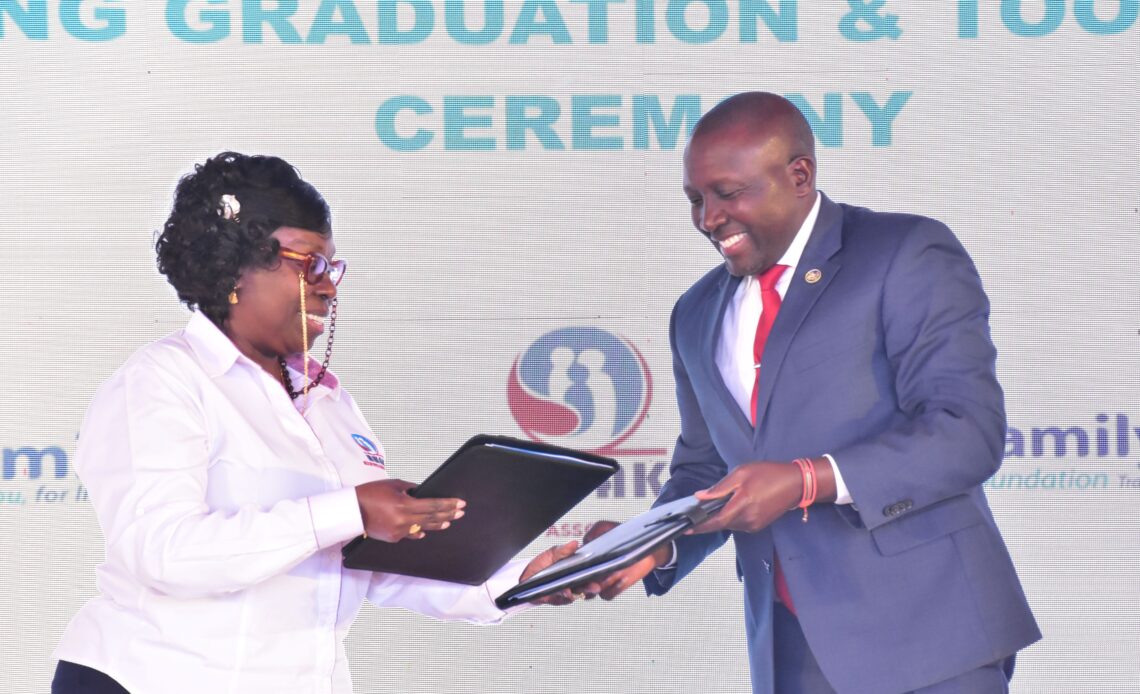
A new partnership between The Family Group Foundation and the Military Wives Association of Kenya is set to formalise and scale technical and vocational training for dependents of Kenya Defence Forces personnel.
Programme Targets Youth Empowerment
Launched to enhance employability and entrepreneurship, the programme has already benefitted 290 young people aged between 18 and 25.
The initiative focuses on equipping military dependents with practical, market-driven skills to improve their economic prospects.
Graduation of Fourth Cohort
The latest milestone saw 89 dependents graduate during the fourth cohort ceremony held at Embakasi Garrison.
Speaking at the event, Charles Kahariri, Chief of Defence Forces, praised the initiative for building both technical capacity and confidence among beneficiaries.
He noted that the programme is playing a critical role in preparing young people for both employment and entrepreneurship.
Growing Impact Across KDF Units
Since inception, the programme has expanded steadily across different KDF branches:
~51 graduates from Kenya Army dependents in the first cohort
~50 from Kenya Air Force in the second cohort
~100 from Kenya Navy in the third cohort
~The fourth cohort brings the total number of graduates to 290.
Financial Sector Backing Social Impact
Nancy Njau, CEO of Family Bank, emphasised the institution’s commitment to community development through education and mentorship.
She said the partnership reflects the bank’s broader goal of empowering youth and strengthening communities through sustainable opportunities.
Transition to Employment and Entrepreneurship
Graduates of the programme are already making strides in the job market, with some joining the Kenya Defence Forces as skilled tradesmen, while others have secured employment or launched their own businesses.
Expanding Scope Beyond Skills Training
According to Grace Kahariri, Chairlady of MWAK, the partnership will go beyond vocational training to include:
•High school scholarship programmes
•Psychosocial support initiatives
•Climate action and environmental conservation efforts
These additional components aim to build resilience and promote holistic development among beneficiaries.
Driving Inclusive Development
The collaboration underscores a shared commitment by both organisations to promote inclusive socio-economic growth, particularly among military families, by investing in education, skills development, and long-term empowerment initiatives.