


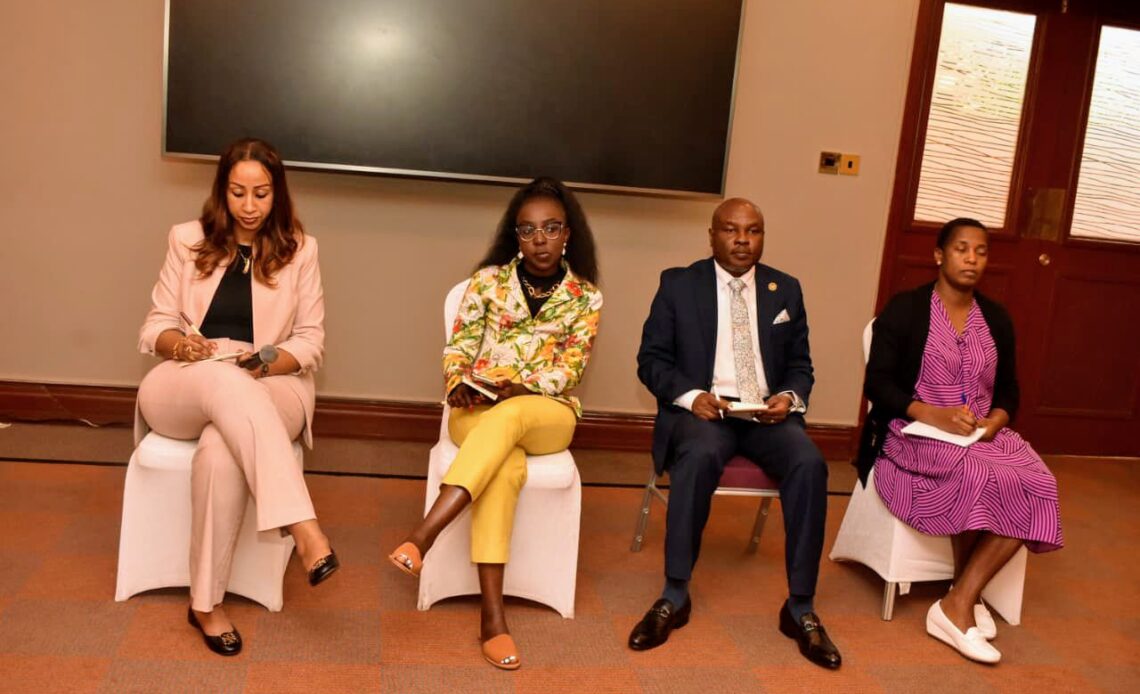
The International Labour Organization (ILO), through its Better Regional Migration Management (BRMM) programme, convened a media breakfast meeting in Nairobi on Tuesday to engage journalists on Kenya’s labour migration dynamics and policies.
The session aimed at strengthening media understanding of the government’s interventions on labour migration governance, fair recruitment practices, skills partnerships, and regional coordination efforts.
The forum brought together senior officials from the Ministry of Labour and Social Protection, representatives of workers’ and employers’ organizations, and media stakeholders. It created a platform to foster inclusive dialogue while encouraging accurate and informed coverage of migration governance issues.
Speaking at the event, Principal Secretary for Labour and Skills Development, Shadrack Mwadime, emphasized the central role of labour migration in creating opportunities for Kenyans abroad.
He disclosed that about 450,000 Kenyans have secured international employment in the last three years, underscoring government efforts to expand access to decent jobs in the global market.
“We are not only focusing on Kenyans accessing skilled jobs internationally but also professionals who can acquire new knowledge and return home to invest,” said Mwadime. “It is wrong for any Kenyan to end up with a job that is extremely wanting abroad. Our duty is to safeguard their interests and rights.”
The PS outlined several strategies under implementation, including the National Labour Mobility Policy and a proposed Labour Migration Bill. The Bill, he said, seeks to establish a welfare fund to support distressed migrant workers and their families. In addition, the Ministry is pursuing bilateral labour agreements with popular destinations such as Saudi Arabia and Gulf Cooperation Council (GCC) countries, where a significant share of diaspora remittances originate.
Mwadime further revealed plans to deploy more labour attachés in host countries to monitor Kenyans’ welfare and ensure compliance with fair working conditions. “We want government officers on the ground who can respond to issues of abuse, working hours, rest periods, and other rights concerns,” he noted.
On skills development, the Ministry is crafting a strategy that links training with international job market demand. Mwadime stressed that young people must pursue courses that guarantee employment outcomes. He added that legal professionals would be sent to study frameworks in destination countries to strengthen protection for Kenyan workers.
The ILO BRMM programme continues to support Kenya in aligning policies and institutions with international standards, with the media expected to play a crucial role in raising awareness, countering misinformation, and shaping a public narrative grounded in safety, rights, and dignity.