


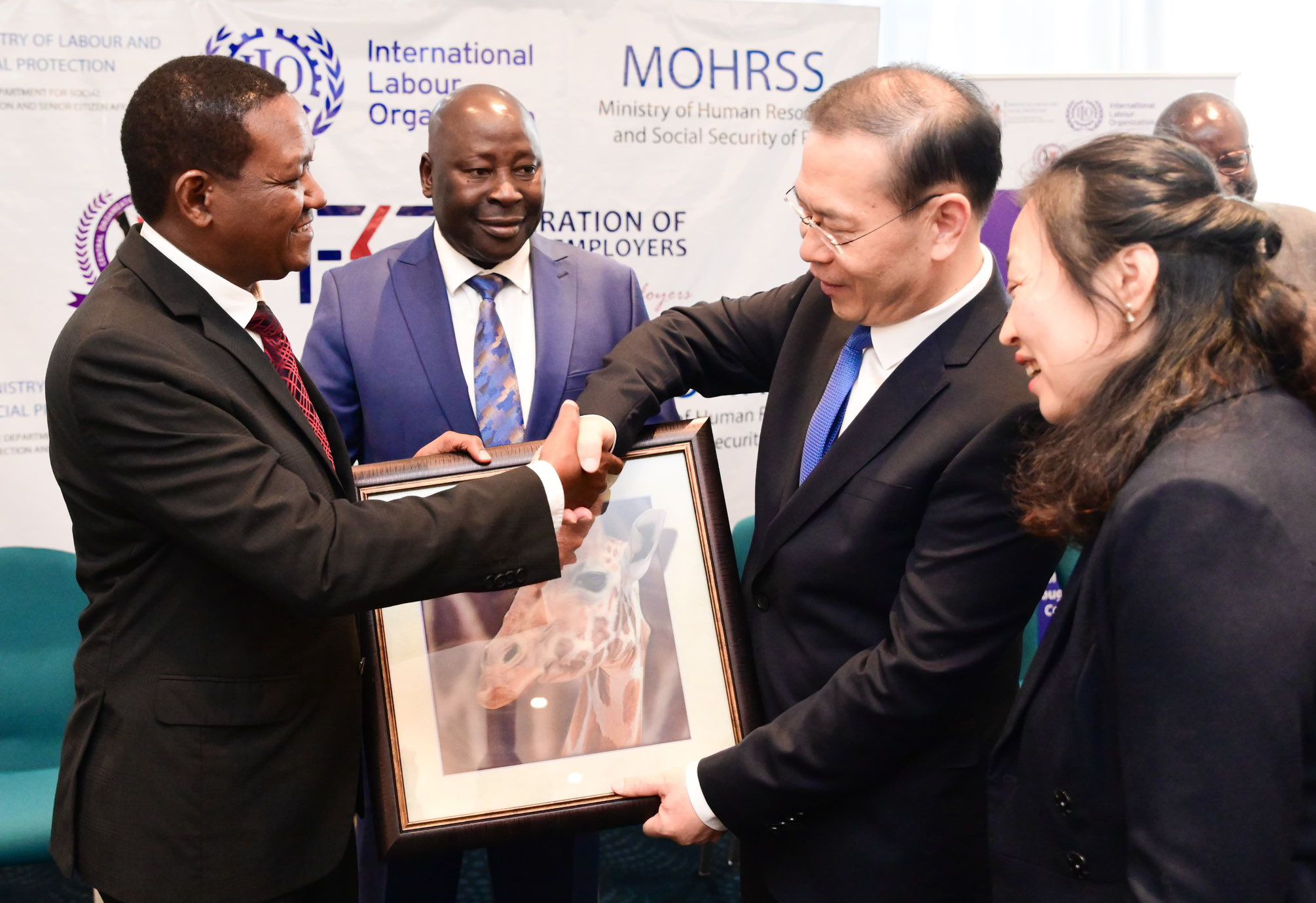
The governments of Kenya through the Ministry of Labour and Social Protection, government of China and the International Labour Organization (ILO) have launched a collaborative project to extend social protection coverage to workers in the informal economy in Kenya and Lao PDR.
The initiative, valued at $1 million annually for each country, seeks to address the significant gaps in social protection for informal workers, who often remain excluded from safety nets such as healthcare, maternity benefits, and old-age income protection.
Speaking at the launch, Dr. Alfred Mutua, Kenya’s Cabinet Secretary for Labour and Social Protection, underscored the government’s commitment to ensuring equal rights and benefits for all workers, regardless of their employment sector. “Our mission is to change the narrative by building a comprehensive framework that extends social protection to informal workers, leveraging digital transformation to bring more people under the safety net,” Mutua emphasized.
The informal sector is a vital component of Kenya’s economy, accounting for 84 percent of the country’s workforce and contributing 33.8 percent to the GDP. However, informal workers estimated at 16 million often lack access to critical social protection schemes, leaving them vulnerable to poverty, illness, disability, and economic shocks.
Dr. Mutua noted that this new project is part of the government’s Bottom-Up Economic Transformative Agenda (BETA), is a significant step in addressing these challenges. The initiative aims to onboard informal workers into social protection schemes using community-based organizations and digital platforms.
The project is part of a broader South-South cooperation effort, leveraging the experience and resources of China’s Ministry of Human Resources and Social Security (MoHRSS), Lao PDR, and the ILO. It aims to enhance social protection policies, improve administrative efficiency, and develop operational systems that will ensure more inclusive protection for informal workers. This partnership highlights the importance of shared learning and resource pooling to address global development challenges.
Principal Secretary for Social Protection Joseph Motari highlighted that Kenya has already made strides in expanding its social protection systems. Programs such as Inua Jamii and NICHE (Nutrition Improvement through Cash and Health Education) support vulnerable populations, including mothers and children.
Additionally, the country has expanded its cash transfer programs from 1.2 million to 1.7 million beneficiaries and has shifted to mobile payments through M-Pesa, improving efficiency and accessibility. Despite these advances, significant gaps remain in reaching informal and rural workers, making this new project a critical intervention.
The Federation of Kenya Employers (FKE), represented by Dickens Ouma, also expressed strong support for the initiative. Ouma emphasized the crucial role employers play in shaping social protection policies, including contributing to health insurance, old-age income, and maternity protection.
He noted that while employers are committed to these discussions, sustainable financing mechanisms are essential for the project’s success. FKE called for continued social dialogue and collaboration among employers, the government, and civil society to ensure the creation of a conducive business environment that supports both enterprises and workers.
As Kenya finalizes the data collection for its Single Registry in all 47 counties, this comprehensive database will guide future social protection interventions, ensuring they are timely and effective. The collaboration between Kenya, China, Lao PDR, and the ILO is expected to pave the way for innovative and inclusive social protection policies that will benefit informal workers and contribute to the overall economic and social development of both countries.
The launch of the project marks a significant milestone in Kenya’s journey towards achieving comprehensive social protection for all, ensuring no worker is left behind in the pursuit of inclusive growth and economic transformation.