


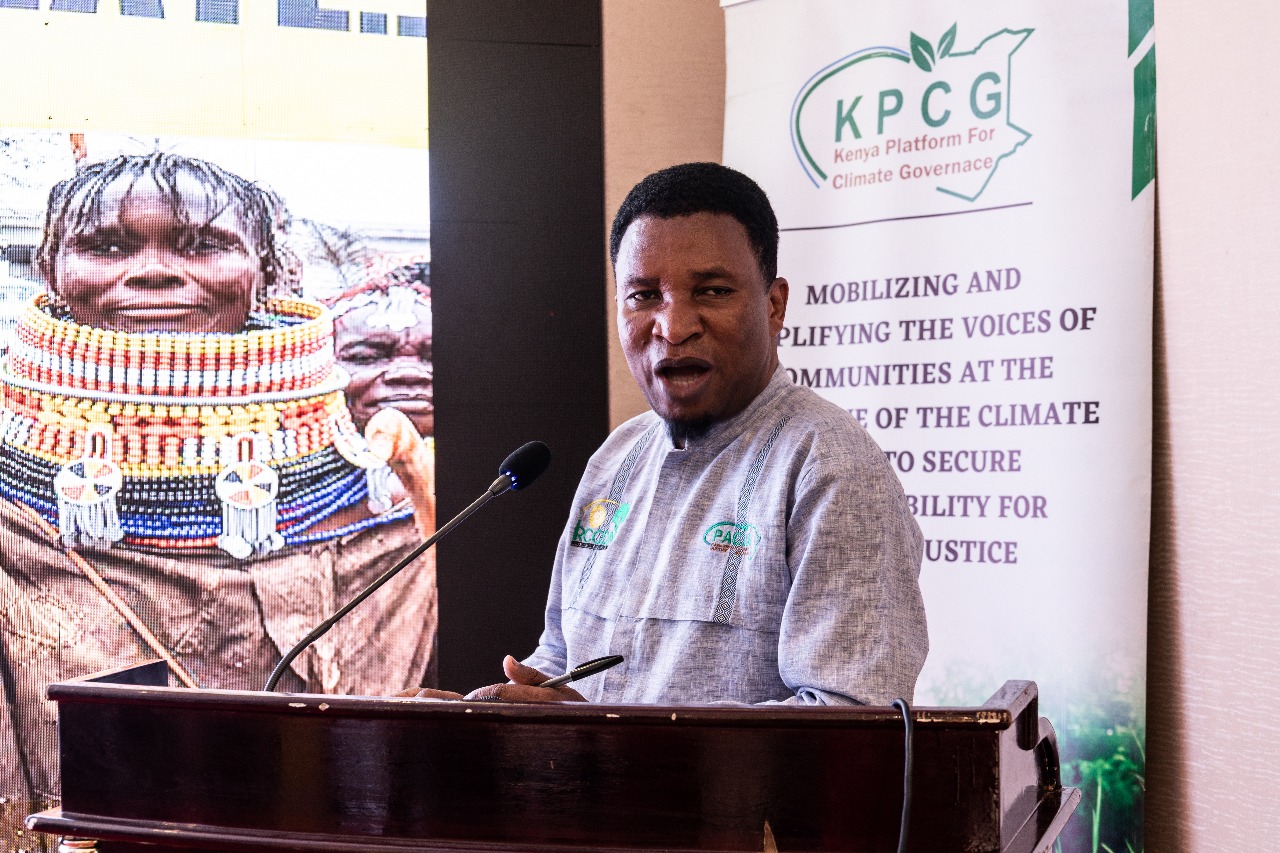
The Pan-African Climate Justice Alliance (PACJA) has launched a bold continent-wide climate and economic justice campaign. Demanding the cancellation of Africa’s unsustainable debts and radical reform of the global financial system. The campaign kicked off on Thursday with a fiery protest and high-level policy dialogue, drawing civil society groups, climate activists, and youth from across Africa.
PACJA Executive Director Mithika Mwendwa delivered a passionate speech, declaring that African nations must no longer be held hostage by financial institutions like the International Monetary Fund (IMF) and World Bank, whose policies, he said, prioritize foreign interests over African sovereignty and wellbeing.
“This is the moment of Pan-Africanism. Enough to exploitation. Enough to colonization. Enough to new forms of domination under the guise of climate finance and development aid.” Mwendwa proclaimed
Mwenda condemned the austerity measures and structural adjustment programs imposed by Bretton Woods institutions, arguing that these have led to cuts in public services and worsened inequality. He pointed to Ethiopia’s recent forced currency devaluation as an example of how such policies have devastated economies and increased suffering.
Africa’s debt burden is a direct barrier to climate justice. While the continent demanded $1.3 trillion in climate finance, it was offered only $300 billion—mostly in the form of loans, further deepening the debt crisis.
The PACJA protest also highlighted the gendered impact of austerity, noting that women and girls suffer the most from reduced access to healthcare, education, and social support. Demonstrators carried placards calling for an end to “loan traps” disguised as aid and the decolonization of global finance.
Mwenda outlined a five-point plan for achieving economic and climate justice: Cancel illegitimate debts, democratize global financial institutions, reject austerity, deliver climate finance as grants, and promote rights-based, equitable economies aligned with African priorities and soveignty.
He emphasized that 2025, a symbolic Jubilee Year, offers a critical moment for action, aligning with the African Union’s theme of reparations and justice.
“We are not victims. We are not beggars. We are builders of a just, green, and liberated Africa,” Mwenda declared. “The time has come to reclaim our sovereignty.”
PACJA’s campaign signals a growing Pan-African movement determined to place justice, equity, and sovereignty at the center of the global climate agenda.