


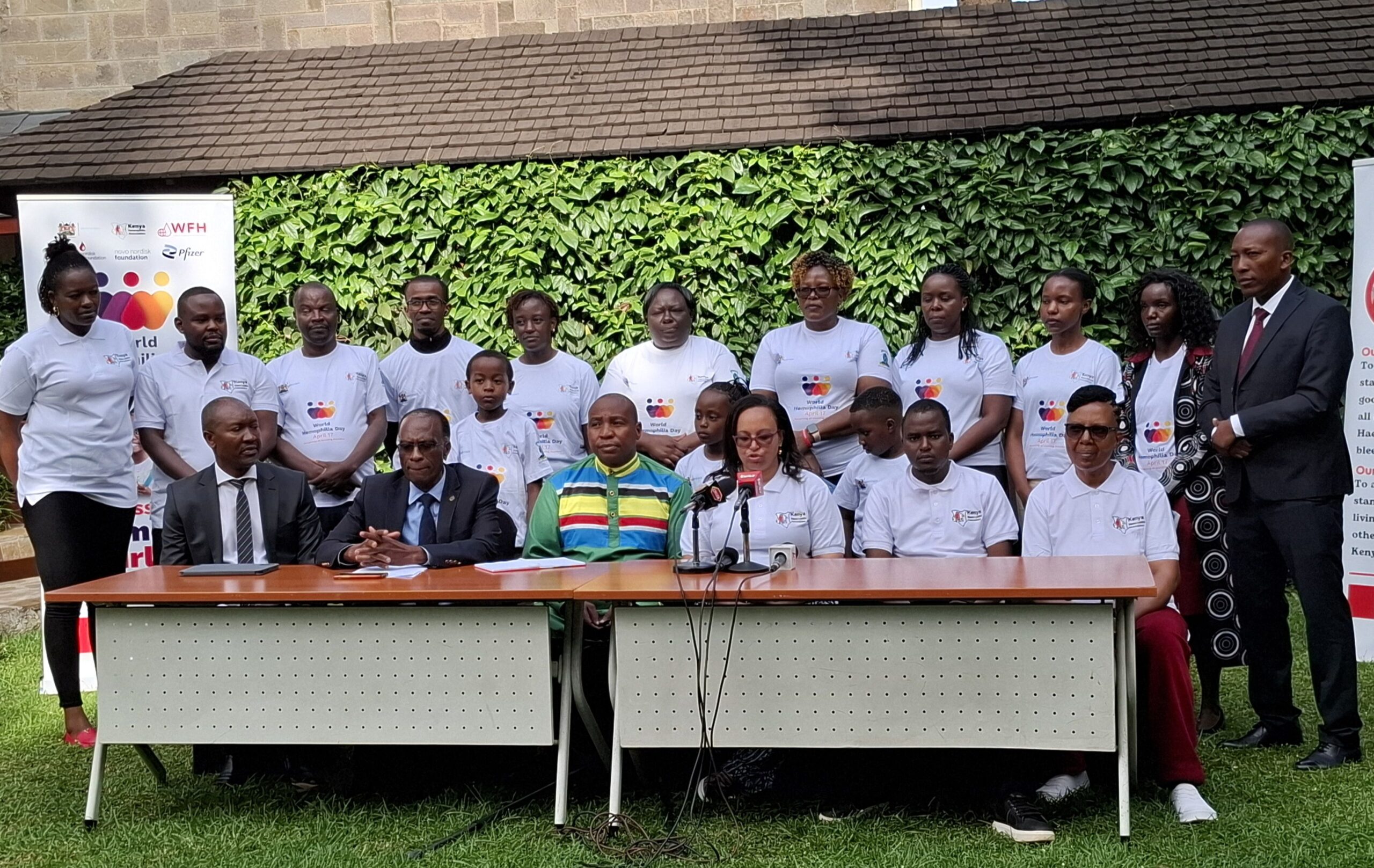
The Kenya Haemophilia Association (KHA) marked World Haemophilia Day with a powerful appeal to the Government of Kenya to prioritize care for people living with haemophilia — a rare but treatable bleeding disorder that continues to claim lives due to systemic neglect.
Held at a ahotel in Nairobi under the global theme “Access for All. Women and Girls Bleed Too,” the event brought together stakeholders from the Ministry of Health, civil society, healthcare professionals, and lawmakers. Together, they echoed a resounding message: no more lives should be lost to a manageable condition.
According to KHA, at least 25 people in Kenya have died from haemophilia in the past four years — not from the condition itself, but from preventable causes such as lack of access to clotting factor concentrates and delayed diagnosis. The association described the state of haemophilia care in Kenya as a “silent emergency,” citing critical gaps in the health system.
Among the key challenges highlighted were the lack of public funding for treatment products, absence of clotting factors in public hospitals, and the exclusion of haemophilia from the Social Health Insurance Fund (SHIF). Many hospitals remain unequipped to diagnose or treat the disorder, and even patients who can afford care face barriers due to the high cost and limited availability of treatment.
KHA also recalled a 2019 petition to Parliament led by Hon. Dr. David Ole Sankok, which called for government funding and recognition of haemophilia as a disability. While the petition was adopted and a KES 500 million budget approved, the funds were never disbursed.
In response, KHA issued a seven-point action plan urging the government to allocate sustainable funding, enhance training for healthcare workers, increase public awareness, support patient empowerment programs, and invest in research. It also called for national screening protocols and gender-sensitive care, particularly for women and girls who are often misdiagnosed or ignored.
With donor support declining, KHA warned that Kenya risks reverting to unsafe practices such as whole blood transfusions. The association proposed regional pooled procurement through the East African Legislative Assembly (EALA) to reduce costs and stabilize supply.
KHA’s message was clear: the lives of haemophilia patients are in the government’s hands. “Let Kenya be remembered not for the 25 lives lost, but for the lives it chose to save,” the organization urged.