


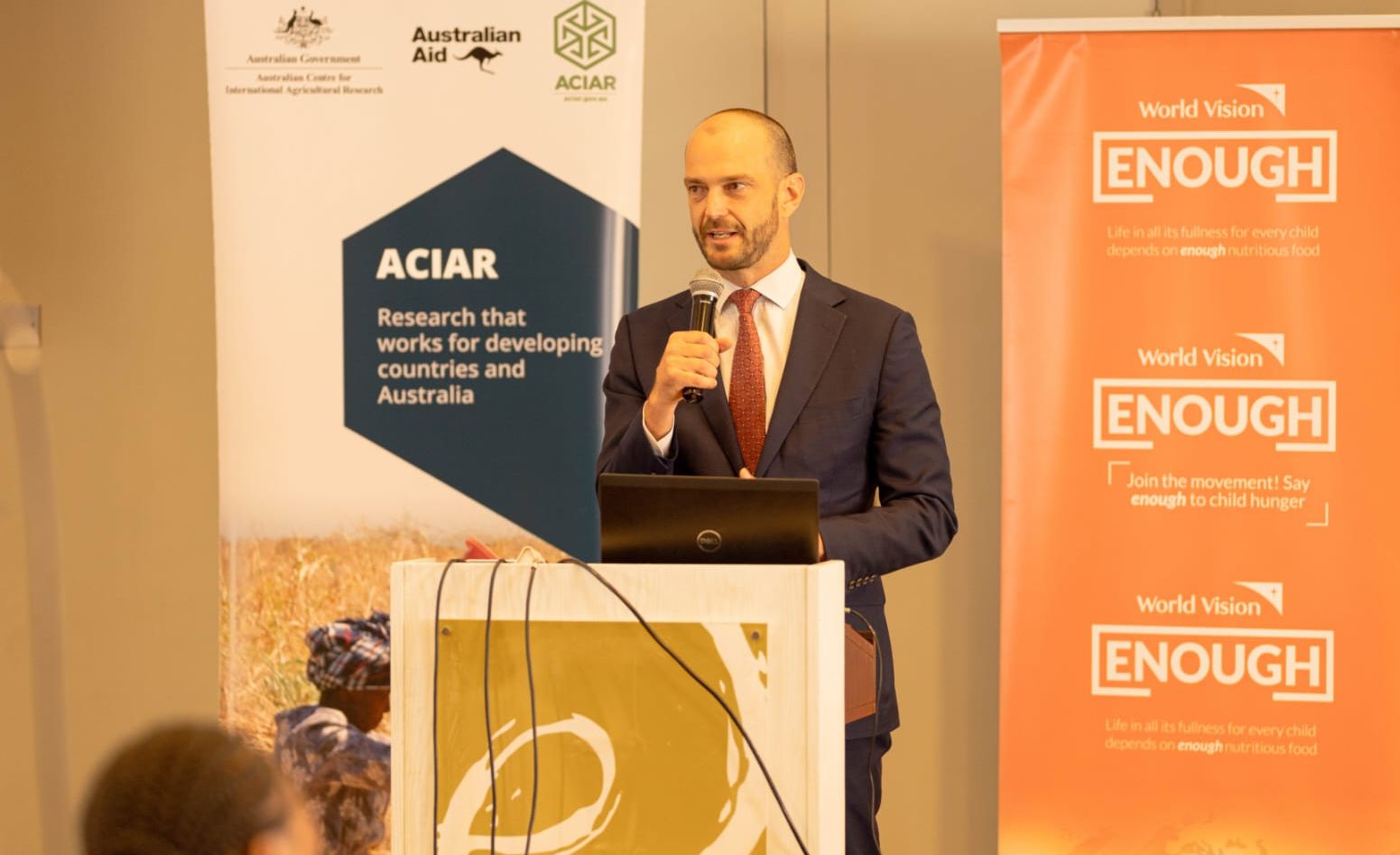
Kenya and Australia partner in KSh 287 Million initiative to restore degraded lands
Kenya’s ambitious land restoration efforts have received a major boost following the launch of a KSh 287 million (AUD 3.5 million) Australian-funded initiative aimed at accelerating regreening projects across the country.
The project, unveiled on Tuesday in Nairobi by Dr. Jane Njuguna, Director of the Kenya Forestry Research Institute (KEFRI), will focus on empowering communities with sustainable land management strategies to combat land degradation and enhance climate resilience.
Supported by the Australian Centre for International Agricultural Research (ACIAR), the initiative brings together leading environmental and research organizations, including World Vision Australia, World Vision Kenya, KEFRI, the Center for International Forestry Research (CIFOR-ICRAF), the University of Nairobi, and the United Nations University.
Kenya has set ambitious targets under its national land restoration strategy, aiming to rehabilitate 10.6 million hectares of degraded land and increase tree cover to 32 percent by 2032. This project aligns directly with these goals by driving community-led regreening efforts and developing practical, research-backed adaptation strategies.
“Our focus is to empower communities with the tools and knowledge needed to restore degraded landscapes while strengthening food security and climate resilience,” said Dr. Njuguna. “This partnership with Australia marks a significant step in our journey towards a greener Kenya.”
Community-Led Restoration – The project will equip farmers and local communities with innovative techniques to restore soil fertility, improve tree cover, and enhance biodiversity.
Strategic Partnerships – Collaboration with KEFRI, CIFOR-ICRAF, World Vision, the University of Nairobi, and the United Nations University will ensure an evidence-based approach to land rehabilitation.
Climate Resilience & Food Security – The research will focus on helping communities adapt to climate change, mitigate the effects of land degradation, and ensure sustainable agricultural productivity.
Support for Kenya’s National Goals – The initiative aligns with Kenya’s broader efforts to combat deforestation, soil erosion, and the adverse impacts of climate change.
Experts emphasize that reversing land degradation requires a holistic approach that includes policy support, scientific research, and active community participation. Through this project, stakeholders aim to develop scalable solutions that can be replicated in other regions facing similar environmental challenges.
Representatives from World Vision Australia and Kenya highlighted the importance of integrating local knowledge with scientific research to ensure long-term success. “We believe in working with communities to create lasting change. This initiative will not only restore land but also improve livelihoods and contribute to Kenya’s food security,” said a spokesperson from World Vision.
With land degradation posing a serious threat to agriculture, biodiversity, and livelihoods, initiatives like this are critical in securing a sustainable future for Kenya. As the project rolls out, stakeholders hope to see tangible improvements in soil health, increased tree cover, and greater resilience among communities facing climate-related challenges.
The launch of this initiative signals a strong commitment from both Kenya and Australia to champion environmental sustainability. As implementation begins, experts, policymakers, and local communities will be watching closely to measure the impact of this investment in Kenya’s green future.